New climate change report lays out grim future for the Northwest
Nov 28, 2018, 3:37 PM
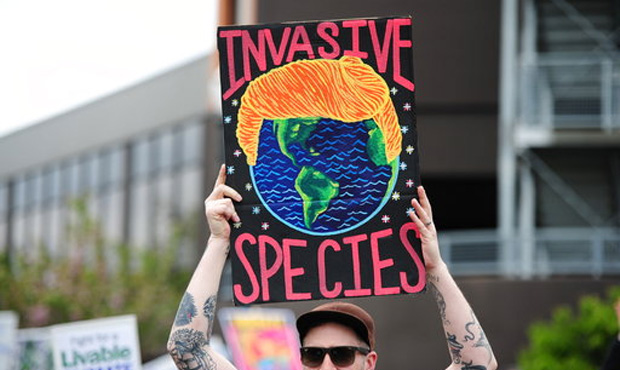
Protesters take part in the People's Climate March in Portland, Ore., on April 29, 2017 (AP)
(AP)
A new climate change assessment released by the federal government Friday paints a grim picture for the end of the next century in the Pacific Northwest.
RELATED: The effects of climate change in the year 2038
The National Climate Assessment (NCA) has been talked about in a political context since it was released, but what does it actually say? The report, released on Black Friday, breaks down the affect of climate change region by region in the United States. The portion concerning the Northwest goes in-depth on what people in the region can expect in the near — and distant — future.
First and foremost, the report predicts an average yearly temperature increase between 3.3 and 9.7 degrees Fahrenheit by 2070 to 2099, with the most significant increases to occur during the summer.
While hotter summers seem like an obvious assumption, the model also predicts that we will see up to a 30 percent decrease in rain and precipitation during summer months by the end of the century. Northwest summers are already dry as it is, and such a reduction in rainfall could directly lead to a dramatic increase in wildfires across the region.
Water related challenges
From there, the report outlines four “key messages,” the first of which is “water-related challenges.”
Changes in the timing of streamflow related to changing snowmelt have been observed and will continue, reducing the supply of water for many competing demands and causing far-reaching ecological and socioeconomic consequences.
This reduction in streamflow could lead to up to a 20 percent decrease in hydropower production, which in turn could have an economic impact numbering in the hundreds of millions of dollars per year.
Additionally, increases in river and ocean temperatures could threaten a number of Northwest fish populations, and especially increase the risk of death and disease for Chinook and sockeye salmon in the Columbia and Snake River basins. Overall, the NCA estimates a 22 percent reduction in salmon habitats by 2100, while suitable habitat for four species of trout could decline by as much as 47 percent by the 2080s.
Coastal vulnerabilities
The second key message involves “coastal vulnerabilities.”
In the coastal zone, the effects of sea level rise, erosion, inundation, threats to infrastructure and habitat, and increasing ocean acidity collectively pose a major threat to the region.
The study cites over 140,000 acres of coastal lands between Washington and Oregon that are within 3.3 feet in elevation of high tide. “As sea levels continue to rise, these areas will be inundated more frequently,” it warns, affecting coastal wetlands, tidal flats, and beaches. This in turn would harm habitats for shorebirds and forage fish, while increasing the risk of coastal storms to boot.
Additionally, “erosion, inundation, and flooding will threaten public and private property along the coast; infrastructure, including wastewater treatment plants, stormwater outfalls, ferry terminals, and coastal road and rail transportation, especially in Puget Sound.”
Impacts on forests
Third, the NCA outlines “impacts on forests.”
The combined impacts of increasing wildfire, insect outbreaks, and tree diseases are already causing widespread tree die-off and are virtually certain to cause additional forest mortality by the 2040s and long-term transformation of forest landscapes. Under higher emissions scenarios, extensive conversion of subalpine forests to other forest types is projected by the 2080s.
With dryer summers and increased wildfires, comes a trickle down of effects like loss of habitat for forest species, increased risk and exacerbation of respiratory illness and “particulate pollution.” Economically, this would “significantly” affect the local timber and bioenergy markets, as tree die-offs due to disease also increase.
Adapting agriculture
The final key message covers “adapting agriculture.”
While the agriculture sector’s technical ability to adapt to changing conditions can offset some adverse impacts of a changing climate, there remain critical concerns for agriculture with respect to costs of adaptation, development of more climate resilient technologies and management, and availability and timing of water.
Shortages in snowmelt and river-flow don’t just affect native species; they also directly impact agriculture, and in the future could lead to shortages in irrigation water. The risk of a “water-short year” could potentially increase from 14 percent in the late 20th century, to 32 percent by 2020, and then upwards of 77 percent by 2080.
More specifically, some of the state’s biggest agricultural industries in potatoes, apples, and wine would all suffer under such a shortage.
RELATED: How climate change could affect the Pacific Northwest
Follow @http://twitter.com/Mynorthwest