UW Medicine doctor explains study suggesting COVID enters the brain
Dec 17, 2020, 10:15 AM | Updated: Oct 2, 2024, 8:59 pm
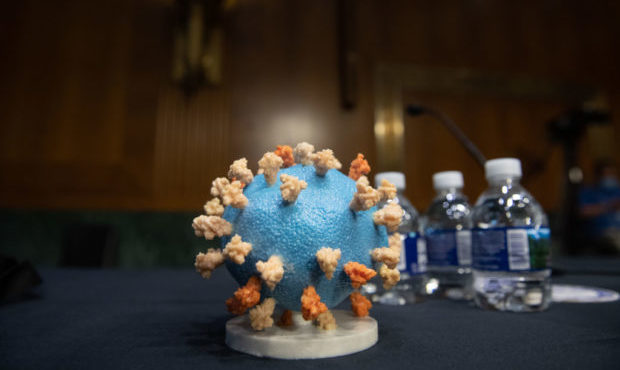
A model of COVID-19, known as coronavirus, is seen ahead of testimony from Dr. Francis Collins, Director of the National Institutes of Health (NIH), during a US Senate Appropriations subcommittee hearing on, July 2, 2020, on Capitol Hill in Washington, DC. (Photo by Saul Loeb-Pool/Getty Images)
(Photo by Saul Loeb-Pool/Getty Images)
New evidence indicates that COVID-19 can affect the brain by crossing the blood brain barrier.
Harborview doctor: Washington seeing ‘the tools that will allow us to end this pandemic’
Nature Neuroscience published a study that found that the “spike protein” — often pictured as little red arms on the COVID-19 virus — can enter the brains of mice. That’s a strong indication that the virus is getting in too, but one of the lead study authors, Dr. William Banks, professor of medicine at the UW School of Medicine, says the protein itself can do damage.
“Just the free protein getting in by itself is a significant finding,” he said. “… The viral proteins often detach themselves from the virus and circulate free, and many of the things that we blame on the virus are also due to or maybe even more so due to those free proteins circulating around.”
Dr. Banks says it’s not definitive that COVID is getting to the brain until the virus is shown to have crossed the barrier or virus is recovered from the brain, but the study’s finding is “another powerful piece of evidence.”
“Viral proteins themselves are often toxic once they get into the brain — they cause inflammation, they can cause all kinds of problems inside the brain,” he said.
The inflammation caused by the COVID-19 infection is called a cytokine storm. The immune system overreacts in its attempt to kill the invading virus upon seeing it, and the infected person is left with brain fog, fatigue, and other cognitive issues.
UW Medicine administers its first COVID-19 vaccinations
Finding that the viral protein and possibly the virus can cross the blood brain barrier, and is getting to the brain and the central nervous system, is likely to play a role in treatment of patients, Dr. Banks explained. It also could involve more consideration of how the brain may be involved in any post-COVID symptoms or long-term symptoms after infection.
KIRO Radio’s Heather Bosch contributed to this report.
Follow @http://twitter.com/Mynorthwest