
All Over The Map: Is sunken boat in Puget Sound just an old ferry or artifact of dark chapter of history?
Apr 2, 2021, 7:59 AM | Updated: Apr 5, 2021, 9:35 am

An old ferry boat that was involved in a dark chapter of wartime transportation history nearly 80 years ago also took a few strange journeys of its own.
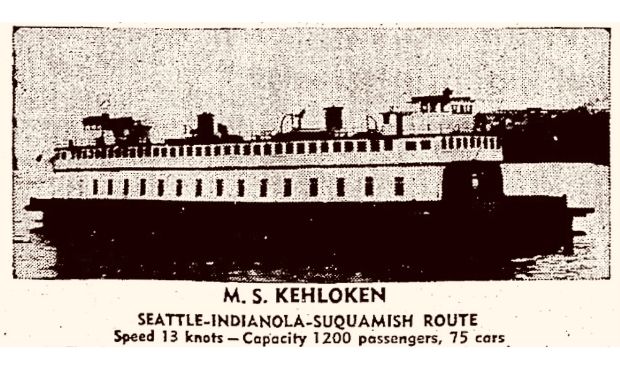
The “Golden State” was a wood-hulled car ferry built in 1926 in California. The vessel was about 227 feet long and could carry 75 cars. It served San Francisco Bay along with a fleet of other ferries crisscrossing the waters until the San Francisco-Oakland Bay Bridge opened in November 1936 and the Golden Gate Bridge opened in May 1937.
In late 1937, the “Golden State” – and a number of other no-longer-useful Bay Area ferries – were sold, and came north to Puget Sound.
The Black Ball Ferry operators – the privately owned predecessor to the Washington State Ferries – renamed each of the old California boats using “Chinook jargon,” the regional language spoken by Indigenous tribes and early traders.
The “Golden State” became “Kehloken,” which, in Chinook, means some kind of aquatic bird or waterfowl. A few Chinook dictionaries consulted align with contemporary newspaper accounts, with “Kehloken” said, at various times, to mean “swan” or “crane.” It probably does not mean “white dove,” as one old newspaper article said.
The dark chapter that the “Kehloken” was involved with was the wartime transport of 227 Japanese and Japanese-Americans from Bainbridge Island to Seattle on March 30, 1942.
Those Bainbridge Island residents were then placed on train cars, and most were taken to Manzanar, an “internment camp” in California. The actions on that long-ago March day amount to the first forcible removal of Japanese and Japanese-Americans under FDR’s Executive Order 9066 of February 1942.
In those years, a total of about 120,000 people would be incarcerated this way because we were at war with Japan and the Axis Powers. However, unlike our German and Italian enemies, Japanese and Japanese-Americans looked different from European-Americans, and were considered a threat to West Coast security.
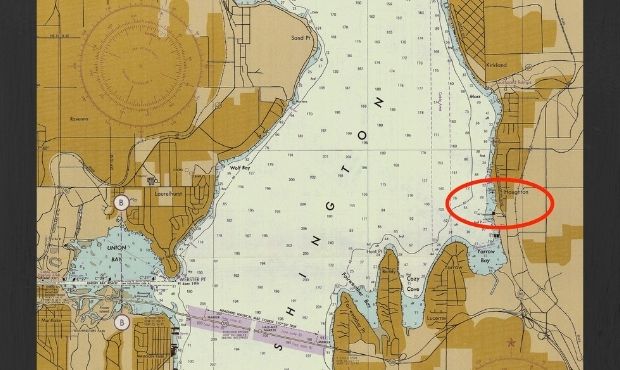
“Kehloken” was retired from service in 1972 and sold for $25,000 in 1975. It was moved to the old Houghton Shipyards in Kirkland, and plans were to turn the old ferry into a restaurant or nightclub. While “Kehloken” sat there along Lake Washington, it often served as a backdrop for team photos of the Seahawks, whose original training facility was built on old shipyard property in 1976.
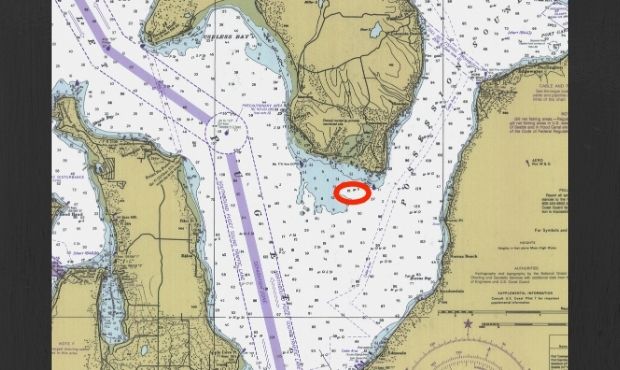
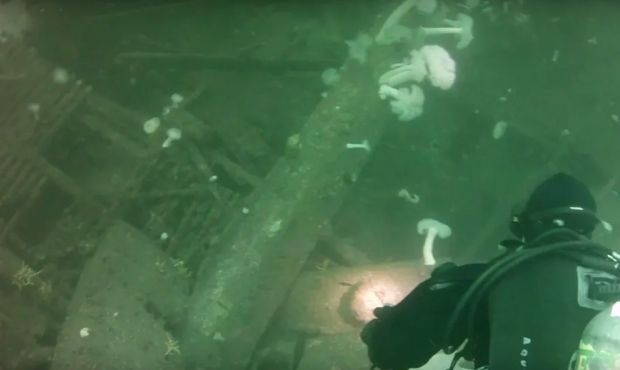
Unfortunately, the nightclub or restaurant was not to be. An arsonist torched “Kehloken” in September 1979 and it burned to waterline. Then, in the early 1980s, the remains were hauled to the south end of Whidbey Island and scuttled — intentionally sunk — to create an artificial reef. It’s now a popular – and photogenic – diving destination.
Four decades after she was scuttled, is “Kehloken” now just a collection of burnt timbers and rusting metal many feet below the surface of Puget Sound? Or is the old ferry something more?
One interpretation is that the vessel is an artifact of Japanese incarceration. It was a tool used by the federal government to enforce an ultimately unconstitutional policy that Densho and other organizations are committed to never forgetting. But, another interpretation is that it was just a ferry; if not “Kehloken,” it could just as easily have been any number of Black Ball vessels called on to do that particular duty on that particular day in 1942.
Frank Abe is a devoted historian of Japanese incarceration and a Japanese American activist who organized the first Day of Remembrance in 1978. He’s produced documentaries and written books – including a new graphic novel called We Hereby Refuse – and studied the World War II time period for most of his adult life.
“It was just a vehicle,” Abe wrote in an email to KIRO Radio. “I don’t think anyone blames the vehicle. We blame those who ordered the eviction. I know of no infamy attached to it. It could have been any vessel.”
“Of course,” Abe continued, “it’s easy for me to say ‘no hard feelings’ since I wasn’t there. To us, it’s historical.”
And, Abe wrote, he knows “toddlers who were removed that day who may feel personally shaken to see the actual ferry boat again.”
Like all compelling history, it seems that the story of “Kehloken” is not easily categorized or filed away. There are many chapters – California, infrastructure, transportation, Indigenous languages, wartime America, Japanese American incarceration, 1970s entrepreneurism – and within those chapters, are many stories, and countless interpretations.
You can hear Feliks every Wednesday and Friday morning on Seattle’s Morning News, read more from him here, and subscribe to The Resident Historian Podcast here. If you have a story idea, please email Feliks here.


