Ross: The latest attempt to undo a national embarrassment
Mar 3, 2023, 7:46 AM
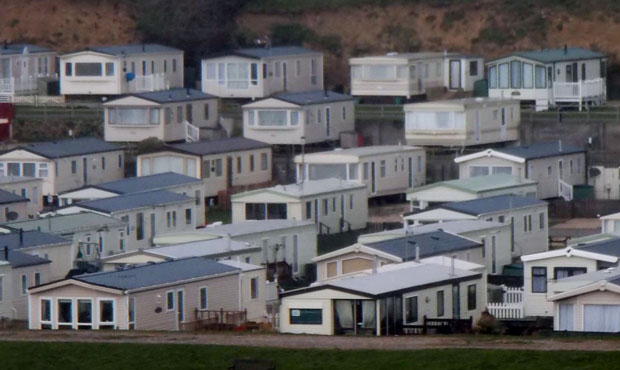
Until 1968, Washington state, like most states, allowed restrictive housing covenants. Which spelled out who could, and who could NOT, live in certain neighborhoods, explains Dave Ross. (MyNorthwest File)
(MyNorthwest File)
Until 1968, Washington state, like most states, allowed restrictive housing covenants. Which spelled out who could, and who could NOT, live in certain neighborhoods.
“Imagine reading those deeds and you see no Blacks, no Asians, no Jews, no Latinos, no Native Americans,” said state Rep. Jamila Taylor (D-Federal Way).
Rep. Taylor refrained from using the actual language in those deeds – because it’s pretty crude – and urged her colleagues to approve her bill, HB 1474, to create what’s called a Covenant Home Ownership Account.
“Washington state can be a leader in addressing the harms of its own peculiar past in a direct and focused way,” said Rep. Taylor.
Seattle voters deciding on social housing initiative
I’m surprised this bill hasn’t gotten more publicity, because it’s set up as a type of reparations program.
It creates an agency which would provide loans targeted to lower-income first-time home buyers who can show that past discrimination against their ancestors might have unfairly shut them out of the housing market.
That means these loans would be based, at least in part – on race.
Which you might think would be unconstitutional – except that the Supreme Court has carved out an exception.
“U.S. Supreme Court precedent has taught us that racially specific remedies violate the U.S. Constitution except in instances of well documented, explicit, illegal discrimination,” said state Rep. David Hackney (D-Tukwila). “Racially restricted covenants absolutely qualify for a racially specific remedy.”
There WAS some pushback from Republicans.
“They’re right, there was a lot of racism back then,” explained state Rep. Alex Ybarra (R-Walla Walla). “We need to stamp it out, but I don’t think increasing the price of the home is the way to do it.”
More from Dave Ross: Changing the climate of mental health is a bill away
He’s referring to how this loan program would be financed by adding a fee of $100 to all home sales. But supporters argued that’s a pretty small price to pay for what this bill is trying to accomplish.
“For many decades restrictive real estate covenants prohibited certain folks from buying homes in many, many neighborhoods all across the state,” explained former House Speaker Frank Chopp. “The state of Washington not only recorded those documents, but the state defended the racist discrimination in front of the state Supreme Court. It’s in writing that wrong was done. The question is ‘What are we going to do about it?'”
The bill passed 53-43.
This bill may be aimed just at housing, but my guess is this bill will be a model for the national discussion on reparations which is going to happen sooner or later, so I’ve posted some of the language below, in case you need a cheat sheet when the discussion heats up, which I think it will.
SELECTED EXCERPTS FROM HB 1474: (To read the entire bill: Washington State Legislature)
…Existing state and federal programs and other race-neutral approaches are insufficient to remedy that discrimination and its impactson access to credit and homownership for black, indigenous, and people of color and other historically marginalized communities in Washington. The legislature finds that race-conscious programs, such as the special purpose credit programs authorized by section 6 of this act, are necessary to remedy the past discrimination in which the state was complicit and to remove the structural barriers that persist.
The initial covenant homeownership program study must:
(i) Document past and ongoing discrimination against black, indigenous, and people of color and other historically marginalized communities in Washington state and the impacts of this discrimination on homeownership in the state, including access to credit and other barriers to homeownership in the state;
(ii) Analyze whether and to what extent existing programs and 36 race-neutral approaches have been insufficient to remedy this discrimination and its impacts
(iii) Recommend and evaluate potential programmatic and policy changes, including creation of one or more special purpose credit 3 programs, to remedy this discrimination and its impacts;
…The contract must authorize the commission to use the remainder of the contract funding to provide down payment and closing cost assistance to program participants. This portion of the contract funding may not be used to provide any type of assistance other than down payment and closing cost assistance…
If the covenant homeownership program study identifies an economically disadvantaged class or classes of persons that share one or more common characteristics such as, race, national origin, or sex, and the board of the commission finds it necessary to consider this information in tailoring a special purpose credit program to provide credit assistance to economically disadvantaged classes of persons, the commission may consider these characteristics in designing and implementing the program.
At minimum, a special purpose credit program authorized under this section must:
(a) Provide loans for down payment and closing cost assistance to program participants that can be combined with other forms of down payment and closing cost assistance;
(b) Require a program participant to repay loans for down payment and closing cost assistance at the time that the house is sold; and
(c) Be implemented in conjunction with the commission’s housing finance programs….
(4) To be eligible to receive down payment and closing cost assistance through a special purpose credit program authorized under this section, a special purpose credit program applicant must:
(a) Have a household income at or below 100 percent of the area median income;
(b) Be a first-time home buyer; and
(i) Be a Washington state resident who:
(A) Was a Washington state resident on or before the enactment of the federal fair housing act on April 11, 1968, and was or would have been excluded from homeownership in Washington state by a racially restrictive real estate covenant on or before April 11, 1968; or
(B) Is a descendant of a person who meets the criteria in (c)(i)(A) of this subsection;
(ii) Records that show a person’s address on or about a specific date or include a reference indicating that a person is a resident of a specific city or area on or about a specific date may be used to provide proof that a person satisfies the criteria in (c)(i) of this subsection, such as genealogical records, vital records, church records, military records, probate records, public records, census data, newspaper clippings, and other similar documents…
Check out the entire bill on the official Washington State Legislature website.
Follow @http://www.twitter.com/thedaveross
-
 Tune in to KIRO Newsradio weekdays at 5am for Dave Ross on Seattle's Morning News.