Sound Transit critic proposes bill to hold Board more accountable
Jan 26, 2017, 9:41 AM
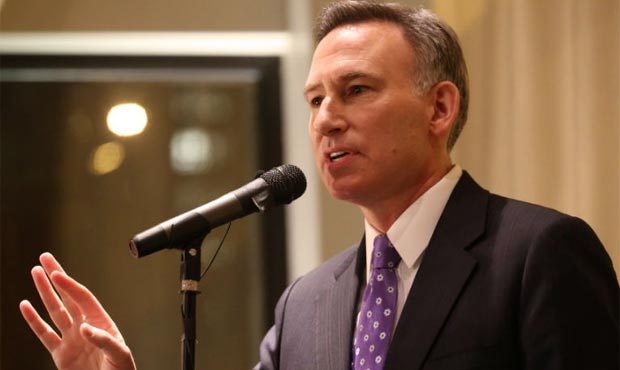
King County Executive Dow Constantine said "Access for All would build stronger communities. (King County)
(King County)
Voters in King, Snohomish and Pierce counties voted to give Sound Transit $54 billion in new tax money to expand light rail across the region.
But the people who decide how that money is spent are part of an un-elected board of directors. There’s now a bill in Olympia that would change that.
Related: More people riding Sound Transit light rail, data shows
Sound Transit has long been criticized for having an un-elected board. Opponents say that those appointed board members don’t have to answer to the public at the ballot box. They also contend that the board doesn’t represent the entire taxing district and that it’s too Seattle-centric, not giving other areas equal representation.
A bill working through Olympia this session would require the Sound Transit Board be elected. It would create a 19-member board that represents 19 districts throughout King, Pierce, and Snohomish counties in the taxing district.
Todd Woosely, with the Eastside Transportation Association, testified in favor of the bill on Wednesday.
“[The Sound Transit Board], to my knowledge, [has] never delivered a project on time or on budget based on what they promised the voters they would if we just vote them another tax increase,” he said. “They moved the goal post and changed that, but I think we would have more accountability and better performance with a directly elected board.”
But looking at the 18-member board today, 17 of them are elected — just to other positions. They are elected to other jobs, such as mayor, city councils and county executive.
This bill would prevent board members from holding other elected offices during their terms.
I sat down with Sound Transit CEO Peter Rogoff recently and asked him about this.
“We actually have a very high-functioning board today that exercises considerable oversight in how we do our jobs,” he explained. “But the concept of the original Sound Transit Board structure, we believe, is still sound.”
And he believes having local elected leaders on the board helps them finish projects across regional borders.
“In order to get these projects built so the taxpayer can get the service as soon as possible, having local elected officials … helps make that happen,” he said.
Rogoff says an elected board can have its downsides, too.
“I know of one major transit agency where citizens are just elected as board members,” he said. “Two of their board members were fired, disgruntled, former employees of the transit agency. That is not the folks you necessarily want doing oversight and governance of taxpayer money.”
This bill didn’t go far last year. It’s unclear if it has the juice to go the distance in 2017.
Follow @https://twitter.com/newsguysully