
Ross: Looking for red flags and ‘The Twilight Zone’
Oct 30, 2018, 6:59 AM | Updated: 7:02 am
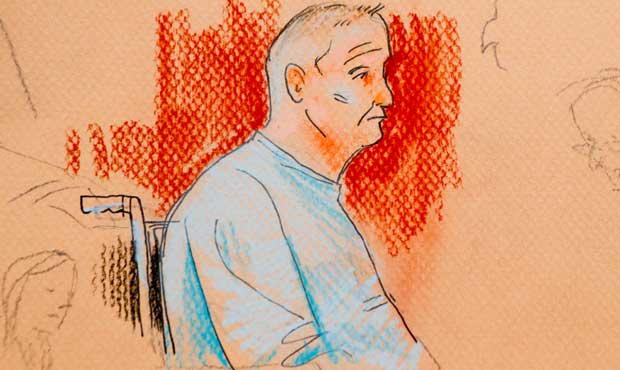
This courtroom sketch depicts Robert Gregory Bowers, who was wounded in a gun battle with police as he appeared in a wheelchair at federal court on Monday, Oct. 29, 2018, in Pittsburgh. (Dave Klug via AP)
(Dave Klug via AP)
I recently heard a rather dark statistic on the Evening News.
“We checked and found that last year there were more than 16 million tweets involving hate speech,” Jeff Pegues reported on CBS. “That far outnumbers tweets mentioning the Super Bowl and the television show ‘Game of Thrones.'”
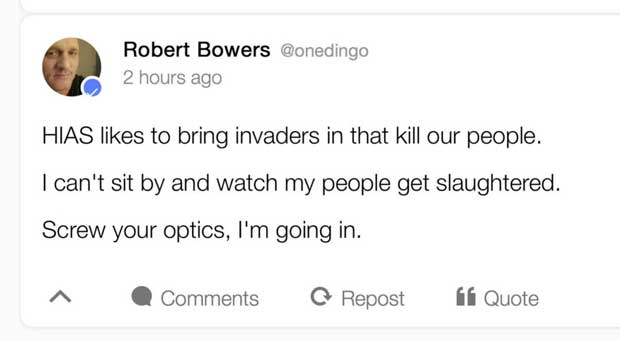
But what should we do with that information?
There’s a 1961 episode of the “Twilight Zone.” It’s about an ordinary fellow named Hector Poole (played by Dick York), who suddenly finds, as he walks to his job at the bank, that he can hear everything the people around him are thinking.
“Clumsy idiot” he hears of what is not said out loud.
“You miserable dirty …” the thoughts continue.
And as he arrives at work, he hears the thoughts of a coworker planning a robbery: “I wonder how long it will take them to discover that the money is gone.”
Hector immediately reveals the thieving plot. But when the security guard orders the suspect to empty his briefcase, there is only a sandwich inside — no money.
The supposed robber, you see, had merely been daydreaming.
“I was thinking of filling my briefcase with the bank’s money,” the suspect says. “It’s a little dream of mine. Have you ever had a dream, Mr. Poole?”
Hector Poole learned his lesson: even if you know exactly what people are thinking, it’s not enough.
“We do things without thinking about them at all,” Hector says. “And we think things without having the slightest intention of doing them.”
What looks like a red flag, after the fact, can be just a more seductive form of hindsight.
-
 Tune in to KIRO Newsradio weekdays at 5am for Dave Ross on Seattle's Morning News.