
Woodland Park Zoo wants you to report cougar, bear, and otter sightings
Aug 29, 2019, 12:41 PM | Updated: 12:48 pm
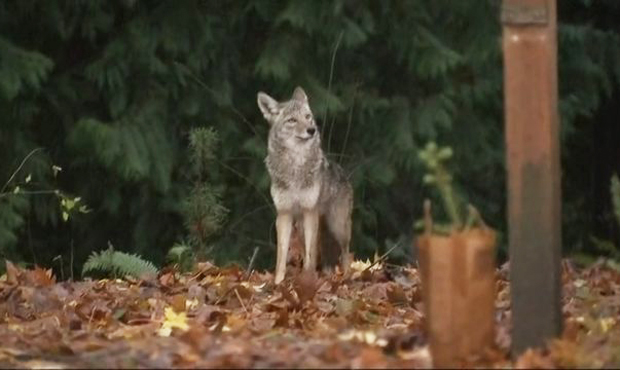
Coyotes are a common sight throughout the Seattle area. (KIRO 7)
(KIRO 7)
As part of a new collaboration, Woodland Park Zoo and Seattle University are calling on residents throughout the Greater Seattle Area to report wildlife sightings.
The project pays an especial focus to sightings of black bears, bobcats, cougars, mountain lions, coyotes, opossums, raccoons, river otters, and red foxes. Ultimately, the hope is to understand how these animals coexist with humans in urban areas.
“Our interest is in how some of these species navigate urban or suburban landscapes with people, and what species occur where,” Woodland Park Zoo’s Robert Long told KIRO Radio’s Dave Ross.
While we don’t always see these animals, they’re still very much a part of the local ecosystem. In fact, some are actually more present than we might think.
Should Seattle pet owners be concerned about uptick in coyotes?
“Certainly coyotes and raccoons on the outskirts of Seattle [and] bobcats are pretty common,” said Long.
The goal is to help people understand how we share our homes with a variety of animals, and what we can do to live in harmony.
Their presence tends to vary across species, depending largely on the density of human populations. While coyotes have adapted to living close to people, raccoons and opossums will often reside in dense, urban areas.
If you do encounter one of these animals, snap a photo and report it on the Carnivore Spotter website. The site has a map of all sightings laid out, showing black bears around Cougar Mountain, a smattering of cougars near Bellevue, a couple river otters in Magnolia, and a heavy concentration of coyotes in northern Seattle.
And most importantly, if you happen upon this wildlife in your backyard, it’s best to drive them off.
The great Woodland Park Zoo red panda escape
“We’re actually encouraging that people do some light hazing,” said Long. “If a coyote is coming into your yard or up onto your porch, you need to be clapping your hands or banging a pot or pan, and those animals typically will go running. What we want to do is really keep them a little afraid of people in terms of coming in so close.”
-
 Tune in to KIRO Newsradio weekdays at 5am for Dave Ross on Seattle's Morning News.