Bellevue greenlights funding for $200M pedestrian, bike bridge over I-405
May 21, 2026, 9:56 AM
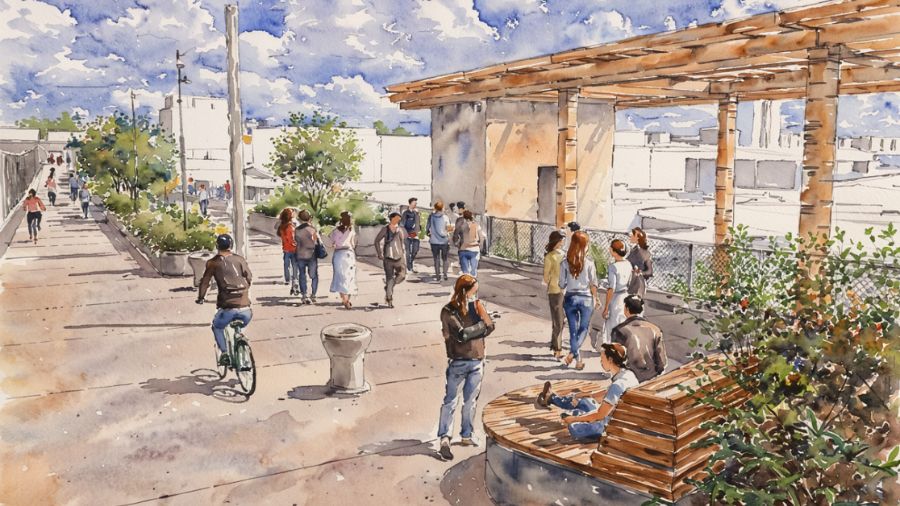
An artists illustration of the Grand Connection Crossing in Bellevue over I-405. (Photo courtesy of the City of Bellevue)
(Photo courtesy of the City of Bellevue)
The Grand Connection Crossing in Bellevue is moving forward after a unanimous vote from the city council to fund the more than $200 million pedestrian and bicycle corridor.
The council pushed through the vote to create a tax increment financing (TIF) district that would fund the footbridge crossing over I-405, connecting downtown Bellevue with Wilburton and the Eastrail, according to KOMO News.
“It’s going to expand light rail station access, and probably most importantly, it’s going to make our redevelopment in the Wilburton neighborhood just to the east of the freeway really come alive,” Bellevue Deputy City Manager Genesee Adkins said.
1.5-mile corridor linking downtown Bellevue to 175 miles of regional trails
The 1.5-mile corridor is slated to be the main attraction of the broader Grand Connection program, which focuses on creating a vast network of pedestrian-oriented public spaces spanning from Meydenbauer Bay Park through downtown, across I-405, to Eastrail.
“It really creates a pedestrian and bike connection to over 175 miles of regional trails,” said Katherine Hollis, the executive director of Eastrail Partners, according to KOMO News. “We are going to see connections to affordable housing, to business, to greenspace, so it’s all those pieces coming together.”
The TIF district allows Bellevue to fund the construction costs for the project through future increases in property tax revenue that is generated by redevelopment. City officials noted that the financing plan does not implement a new tax.
“It lets us, for the benefit of funding the project, retain that growth in property taxes here in Bellevue, instead of sending it out to other different taxing districts,” Adkins said.
The TIF zone would encompass more than 63 acres near the planned crossing route, including publicly owned parcels expected to be redeveloped over the next 25 years. The district would take effect on June 1, 2026.
RELATED STORIES
Corridor includes 30-foot-wide bridge, landscaped gathering spaces
The TIF area would generate approximately $68 million over the next 25 years, which would cover between 15% and 30% of the project’s estimated cost, according to city estimates.
The corridor offers a vehicle-free option over I-405 to be used by cyclists and pedestrians. Project plans forecast the bridge to be at least 30 feet wide, expanding as much as 40 feet over the freeway. Lanes on the bridge will also separate bikers and walkers to increase safety.
Also included in the project are landscaped public areas and gathering spaces on either side of the crossing. Public access points will be located at N.E. 112th and 116th avenues and will be equipped with elevators and stairways. The city also has plans to alter the City Hall Plaza to improve access for cyclists and pedestrians traveling back and forth from the bridge.
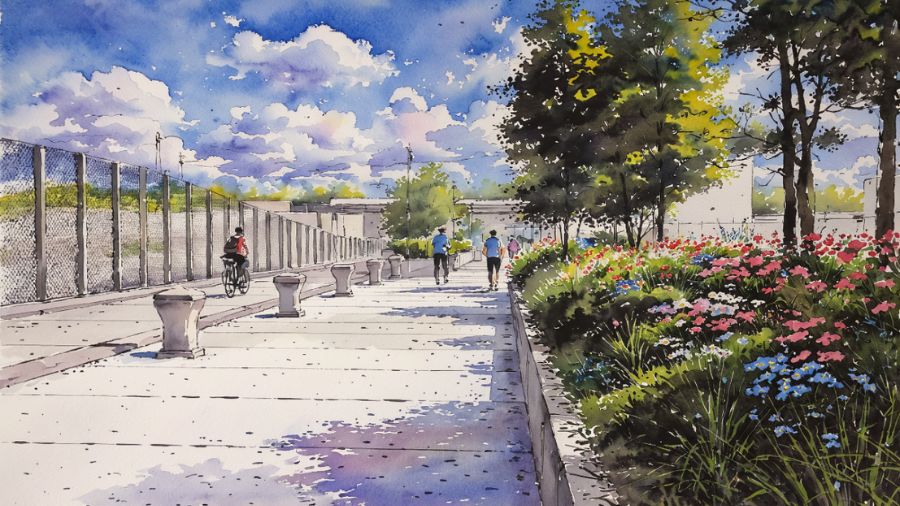
An artist’s illustration of the Grand Connection Crossing in Bellevue over I-405. (Photo courtesy of the City of Bellevue)
City officials noted the project should bolster connections between downtown Bellevue, two light rail stations, and the 42-mile Eastrail corridor that runs from Snohomish County to Renton.
“I think it’s going to become a new, regional legacy project where people are going to be able to feel at home and excited to enjoy Bellevue,” Adkins said, according to KOMO News.
Supporters of the project said it could inspire transit-oriented development and introduce long-term tax revenue through increased property values and construction activity.
“It is not just a city of Bellevue project,” Hollis said. “This is a regional project that is going to connect people in new ways, from housing to jobs to transit and everything in between. It’s all about connections.”
Bellevue anticipates that the crossing linking City Hall Plaza to Eastrail will open before 2030.