Temps could exceed 90 degrees as the longest day of the year arrives in western WA
Jun 20, 2026, 5:00 AM

People enjoy the beach in Pierce County during the summer. (Photo: Julia Dallas, MyNorthwest)
(Photo: Julia Dallas, MyNorthwest)
The summer solstice this weekend is early on Sunday morning, the 21st at 1:24 a.m., marking the longest day of the year in Seattle at just a fraction of a second under 16 hours. Sunrise will be at 5:11 a.m. and sunset at 9:10 p.m.
The summer solstice is also the beginning of astronomical summer, or more commonly called the start of summer. After June 21, days will gradually get shorter heading to the autumn equinox in late September.
Warm weather kicks off summer
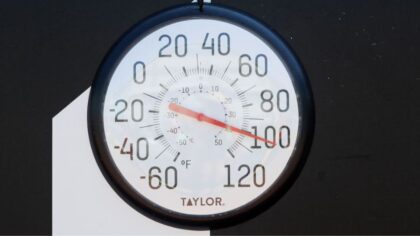
The weather is also going to feel like summer as well. Sunshine and warm temperatures are in store for the first day of summer, and on Monday and Tuesday, temperatures are expected to soar well into the 80s. In many parts of western Washington, such as the south interior and the Cascade foothills, exceeding 90 degrees is quite possible.
Higher pressure aloft off the coast is forecast to move over western Washington on Monday. At the surface, low-level air flow is also anticipated to turn offshore from the interior toward the Pacific Ocean. That weather pattern combination will generate the unseasonably warm conditions, as it did a week ago.
The region needs the rain, though. In reviewing longer-range forecast charts, no rain is in sight. Much of western Washington has fallen behind on the total rainfall so far this year. For instance, Olympia is nearly two inches below average for the year to this point.
Parts of western Washington are considered abnormally dry, according to the U.S. Drought Monitor. In contrast, eastern Washington is in moderate or severe drought, and in the past week, over a dozen wildfires have broken out.
History of the Summer Solstice
Through human history, many have observed the summer solstice with celebrations and rituals. For instance, ancient Greeks marked the solstice as the start of the New Year, and started the one-month countdown to the opening of the Olympic Games, true to this day.
Ancient European pagans welcomed the solstice with bonfires amid hopes of a good fall harvest. Bonfires were also associated with magic, banishing evil spirits, and often led maidens to their future husbands.
Stonehenge in the south of England is aligned with the direction of the summer solstice sunrise – one of many theories about the purpose of this megalith monument, where thousands gather each year to commemorate the longest day of the year in the Northern Hemisphere.
Many Native Americans participated in solstice rituals still practiced today. For example, the Sioux perform a ceremonial Sundance while wearing symbolic colors.
Today, many still celebrate the summer solstice. Parades and festivals are most common. In Northern Europe, bonfires are lit, and homes are decorated with garlands. In parts of Scandinavia, people dance around Maypoles.
RELATED STORIES

Seattle’s Fremont Solstice Parade
Seattle has one of the more free-spirited summer solstice parades in the country – the Fremont Solstice Parade. The 35th annual parade is Saturday, June 20, starting at 1 p.m. More than 60 community-based ensembles are expected to be part of the parade starting from 3rd and Leary Way and finishing on North 35th Ave near the Fremont Rocket.
In addition to the parade, two music stages of live local bands will be a part of the festivities, along with many booths with handmade goods and art, plus fair food, colorful Seattle Art Cars, and more.
This weekend, celebrate the start of summer with summerlike weather conditions. Just be sure to use sunscreen, wear a wide-brimmed hat and sunglasses, and have fun!
Ted Buehner is the KIRO Newsradio meteorologist. Follow him on X and Bluesky. Read more of his stories here.