‘Nothing like the King County Regional Homelessness Authority’: Pierce County executive pitches ‘unified’ homelessness strategy
Aug 18, 2026, 9:50 AM | Updated: 3:24 pm
The City of Tacoma is weighing whether to join a countywide effort that Pierce County Executive Ryan Mello is calling a “Unified Regional Approach” (URA), which would coordinate all homelessness services within the county.
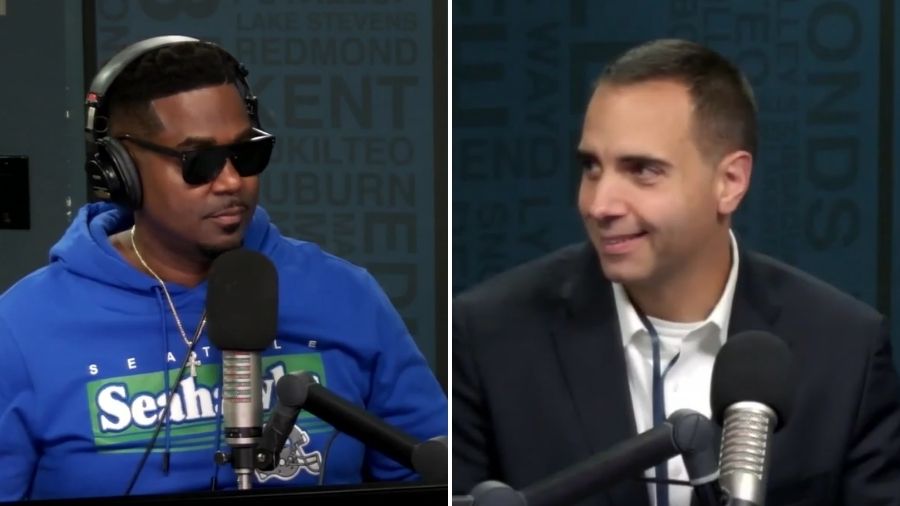
“For too long, like so many communities up and down the West Coast, homelessness has been getting worse,” Mello said on “The Gee and Ursula Show” on KIRO Newsradio. “Especially through the pandemic, we’ve seen more and more people fall into homelessness. So this is an urgent problem; it’s an urgent crisis, and the problem with homelessness, too, is the face of homelessness is changing, especially over the past handful of years. Folks who are becoming homeless are actually older adults, folks fleeing domestic violence, and people with families, so folks with kids.”
KIRO host Gee Scott asked whether the plan, which involves cities including Tacoma, Lakewood, University Place, Gig Harbor and Fife, is a done deal.
“Thanks to Pierce County’s leadership for the past couple of years, we’ve been working to have really collaborative, open dialogue with elected leaders from many of the communities in Pierce County,” Mello said. “We’ve been moving about these different cities over the past handful of months, getting commitments via resolution passed by local city councils to say, yes, we want to commit to working differently and more collaboratively on this really pressing challenge.”
Mello’s plan differs from the King County Regional Homelessness Authority
KIRO host Ursula Reutin pressed Mello on how the URA would differ from the King County Regional Homelessness Authority, which she said has been a disaster in her opinion.
“This is nothing like the King County Regional Homelessness Authority,” Mello said. “This is not directive. This is more deliberative and collaborative. This is not about Pierce County and Tacoma pooling their funds and saying where all the money goes and telling all the different agencies what they’re going to do.”
Mello said the city of Tacoma currently hosts 80% of homelessness services in the county, and that the plan is designed to spread services closer to where people experiencing homelessness actually live.
“The data shows that folks experiencing homelessness come from every single zip code,” Mello said. “You’re going to see Pierce County opening its first tiny home village before the end of the year. That’s new, that’s different.”
Ursula also raised concerns from listeners about accountability, noting that some King County homelessness funding remains unaccounted for.
“We have a real commitment to data management and using best practices to inform our decisions,” Mello said. “The communities that are joining in this collaboration will commit to using one data system, so we can track how we’re using the dollars together. This is not about pooling funds. This is not about creating a new bureaucracy. The various jurisdictions will retain their budgets and their funding, but we’re going to be working together in a collaborative way.”
Crime is trending down as sheriff’s office staffing remains a challenge
Gee asked about Pierce County’s budget, noting more than three-quarters of the county’s general fund goes toward public safety.
“That’s all aspects of our criminal justice system — that’s the sheriff’s department, both law enforcement officers on the street and corrections officers staffing our jail, the juvenile justice facility, our courts, our prosecutors and our public defenders,” Mello said. “Based on a recent report from the Washington State Sheriffs and Police Chiefs Association, crime is down. Violent crime is down 14%, property crime is down 20%. Those are statewide numbers, but when you look at our local data, it’s trending very much in the same direction.”
According to Mello, a recently adopted justice fund will go toward staffing the county jail and adding new technology for officers.
“One of our limiting factors is full staffing in the jail, and we’ve got to staff up the jail,” Mello said. “We need to get violent offenders off the streets and keep them off the streets.”
RELATED STORIES

Mello addresses November ballot measure on the sheriff’s office
Ursula asked Mello about a November ballot measure that would let voters decide whether the Pierce County sheriff should continue to be elected or instead be appointed by the county executive and confirmed by the council.
“I’m going to work with whoever is sheriff,” Mello said. “If the voters decide that I’ll select the sheriff like I select the public works director and the other 13 directors who report directly to me, we’re going to do a nationwide search. We’re going to find the best and the brightest to serve the people of Pierce County based on merit, not based on popularity.”
The measure stems from Pierce County’s Charter Review Commission, a 21-member elected body that meets every 10 years to review the county’s charter.
“They deliberated for six months and came away with about half a dozen governance options for voters to consider,” Mello said. “At the end of the day, the voters decide.”
New behavioral health crisis unit opening in Parkland
Asked what’s coming up in Pierce County that hasn’t made headlines yet, Mello pointed to a new crisis stabilization unit set to open in Parkland before the end of the year.
“Behavioral health crisis is real, and it cuts across all of us,” Mello said. “This crisis stabilization unit is a place where, if you are in the middle of a behavioral health crisis, there is somewhere other than a jail and other than an emergency room that you can drop that person off and have access to behavioral health workers who are experienced in this, to be able to support that individual for several days while they figure out what the next step is.”
Watch the full discussion in the video above.
Listen to Gee and Ursula on “The Gee and Ursula Show” weekday mornings from 9 am to 12 pm on KIRO Newsradio.