Hurricane-force winds in Washington? The Columbus Day Storm showed what’s possible
Oct 12, 2026, 5:00 AM
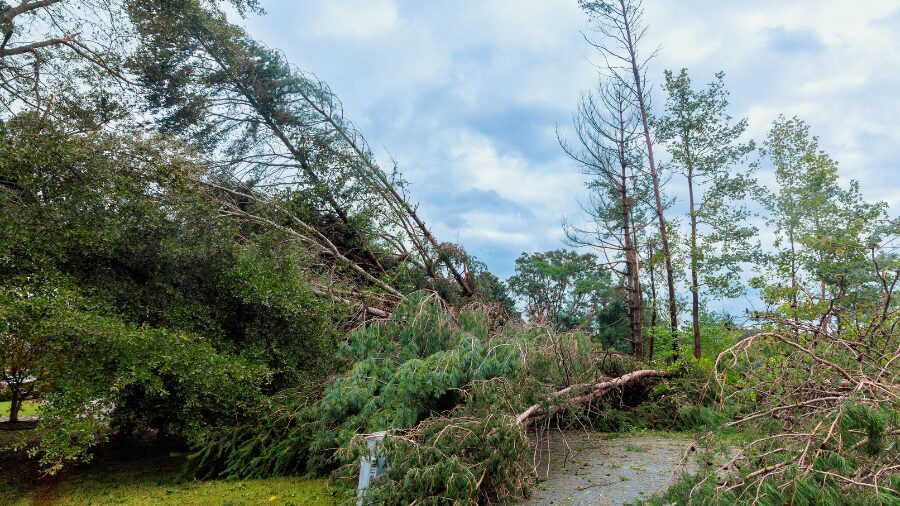
Downed trees block a driveway after a storm. (Photo: photovs via Envato)
(Photo: photovs via Envato)
Hurricane season in the Atlantic and the Pacific Oceans usually wraps up around Nov. 1. In the Gulf and Atlantic regions, it has been a quiet season thanks to the developing El Niño. The only landfalling hurricane was on Friday night as Hurricane Isaias tracked inland across the Florida Panhandle into Alabama and Georgia.
In the eastern Pacific, warming tropical waters from El Niño have spawned a very active season. Hurricane Simon is the latest tropical cyclone to develop in the region.
Can the Pacific Northwest get hurricanes?
But do hurricanes reach the Pacific Northwest? The short answer is no, but the region does get hurricane-force winds.
Hurricanes are tropical cyclones fueled primarily by warm sea surface temperatures of 80 degrees or warmer. The waters in the tropical eastern Pacific, Gulf, and Caribbean have quite warm temperatures in the mid and upper 80s, giving an exceptional jolt of energy, rapidly intensifying tropical cyclones into hurricanes.
As those who venture into the ocean along the outer Washington coast know, the waters in the northern Pacific are much cooler than 80 degrees. Yet strong, dangerous windstorms can and do develop. In fact, they frequently happen across the northern Pacific during the fall and winter seasons.
Storms that intensify rapidly are called meteorological bombs or the new term some have adopted — bomb cyclones. These are North Pacific storms that intensify by a drop of 24 millibars of atmospheric pressure or more in 24 hours or less. We often do not hear of these storms until they approach western Washington.
The last strong, widespread, damaging windstorm to strike western Washington was the Hanukkah Eve Windstorm of December 2006. Winds along the coast peaked over 100 mph, while in the western interior, wind gusts reached up to 80 mph, blowing hundreds of trees down. Over 1.5 million people lost electric power, some without power for well over a week.
The “bomb cyclone” in November 2024 remained offshore, yet packed a punch for parts of western Washington with wind gusts of over 70 mph, knocking power out for over one million customers and resulting in two fatalities.
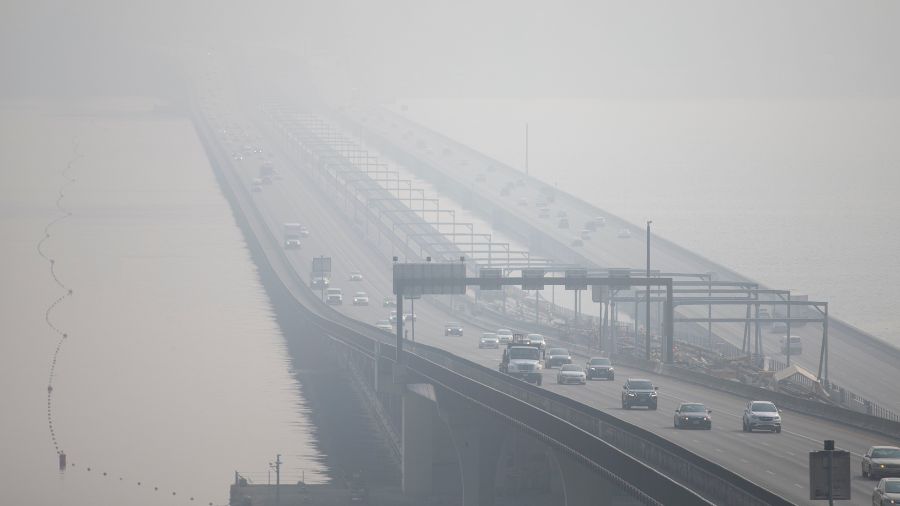
Other memorable big, strong, impactful windstorms in recent decades include the 1993 Inauguration Day Storm that packed winds up to 65 mph, the 1979 Hood Canal Storm that had winds of 80 mph bringing down the floating bridge, the December 12, 1995, storm with winds up to 80 mph, and the November 14, 1981, windstorm which had gusts up to 75 mph.
Columbus Day Storm left widespread destruction and weeks without power
Yet the granddaddy of them all, the windstorm all other windstorms are compared to, is the 1962 Columbus Day Storm, the strongest non-tropical windstorm to ever hit the lower 48 in American history. Winds along the Oregon and Washington coast had gusts up to 150 mph, and western interior winds from Eugene, Oregon, north to Vancouver, B.C., were in excess of 100 mph.
The storm along the west coast claimed 46 lives. Hundreds were injured, thousands of buildings were destroyed, and power outages affected millions from the San Francisco Bay Area to British Columbia. It blew down 15 billion board feet of timber from the coast to western Montana, enough lumber to build a million homes.
The Washington State Climatologist’s Office estimates the region gets a strong, damaging windstorm with winds up to 60 mph about every 10 to 20 years. Windstorms with hurricane-force winds occur far less frequently, yet they do impact the region with downed trees and power and communication outages for extended periods of time.
In the wake of the Columbus Day Storm, many did not have power restored until close to Thanksgiving.
Utility crews from all over the nation moved into the region to help restore power. The effort was exceptionally challenging since even those big BPA transmission towers carrying hydroelectric power from east of the Cascades were toppled to the ground.
In the Hanukkah Eve windstorm of December 2006, Puget Sound Energy noted that they lost 70 percent of their infrastructure, including the loss of power lines and power poles by the hundreds.
The 1962 western Washington population was about 1.25 million residents. Today, the population is close to 7 million.
RELATED STORIES

Getting prepared
What if another storm like the Columbus Day Storm struck the region today? The impact would be immense, leaving millions without electric power for days if not weeks.
As it happened with the August 2023 Maui wildfire, cell phone towers would be without power, leaving cell phones likely useless. As it did in the Columbus Day windstorm, uprooted trees would knock out water and natural gas lines too. Gasoline would be in short supply since most service stations do not have backup power generators to operate their pumps.
With the Great ShakeOut earthquake drill coming up on Oct. 15, a major earthquake would also disrupt power, communications, and water and gas service for an extended period of time.
Could the region handle being without these services for an extended period of time while response teams work to rebuild the infrastructure of these services? That is a good question, and one everyone should ask themselves, and then consider what actions to take in advance of any kind of major disaster.
As the 64th anniversary of the 1962 Columbus Day Storm arrives today, you may be motivated to take action and better prepare your home, business, car, pets, and more. Visit ready.gov or your local emergency management organization’s website for helpful lists and tips. Getting started on preparing in advance is the big first step and does not involve large expenses.
Ted Buehner is the KIRO Newsradio meteorologist. Follow him on X and Bluesky. Read more of his stories here.