‘A profound benefit to Washington’: Jake pushes back as Spike questions Amazon’s overall impact on the state
Oct 19, 2026, 4:46 PM

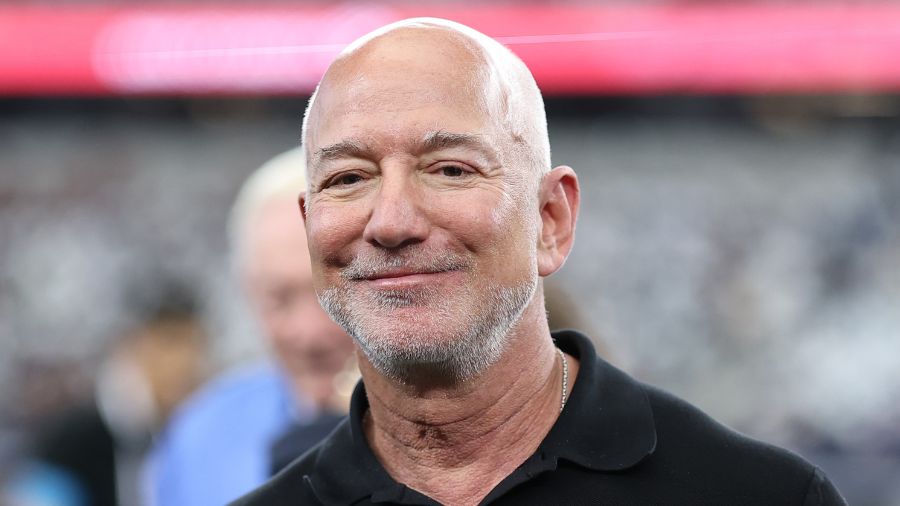
Amazon founder Jeff Bezos moved from the Seattle area to Miami in 2023, saying he wanted to be closer to his parents and Blue Origin’s launches. The relocation also meant his subsequent stock sales would not be subject to Washington’s capital gains tax.
Bezos’ departure and ability to avoid the state’s capital gains tax prompted co-host Spike O’Neill to question Amazon’s overall benefit to Washington during “The Jake and Spike Show” on KIRO Newsradio, while co-host Jake Skorheim defended the company’s jobs and economic contributions.
“I think a good impact on the economy in the state of Washington is when you make your billions here, when you make your bread and butter here, that you pay something back to the community,” Spike said. “He didn’t pay taxes on the money he made because he moved to Florida. I think there’s a problem with that. That’s all.”
Bezos’ personal relocation was separate from Amazon’s corporate operations. CNBC’s reporting on the tax consequences concerned his sales of Amazon shares, not the company’s tax obligations.
“He went to Florida, not Amazon. Personally, he moved to Florida,” Jake said. “I think Amazon is a profound benefit to Washington. You can quote me on that.”
“I’m not saying it’s his fault. I’m just saying what he chose to do at that point, I think, has a negative effect on the state,” Spike responded. “Whether or not he’s a net positive or a net negative, there are so many different factors that come into that conversation.”
Jobs and employee spending are part of the economic picture
A company’s economic footprint extends beyond its own tax payments. Employee purchases, homeownership, and spending at other businesses are additional ways wages circulate through a community.
“The money that those people who earn high salaries are then paying into sales taxes and property taxes and buying cars and starting businesses and all these different things,” Jake said. “The amount of money that they are putting back into the state’s coffers just because those high-paying jobs exist.”
That broader economic activity is distinct from the taxes an individual shareholder owes when selling stock. In February 2024, CNBC estimated that Bezos’ planned sale of 50 million shares could save him at least $610 million in state taxes after his move.
“The same people who are telling you that, ‘Hey, you need to give us more money,’ are the same people who got them into the problem where they said we need more of your money because we’re so broke,” Jake said.
“It wasn’t all mismanagement of funds. I’d say a large part of it,” Spike said. “But it’s not the only factor. It’s the only factor we ever cite.”
RELATED STORIES


Housing demand and construction enter the discussion
The hosts’ disagreement also reflected two sides of housing affordability: the purchasing power of high-paying jobs and the supply of homes available to buyers and renters.
“Amazon’s high-wage-earning worker base has raised the cost of housing in this city,” Spike said. “It is a positive thing, but you also, I hope, would acknowledge that that then creates a population that can’t afford to live in its own city.”
Jake saw more housing construction as the answer to rising costs.
“I would say that the city has a responsibility to make it easier to build housing, and if they did that, more housing means less cost, supply and demand,” Jake said.
“I’m with you that we need to make it easier to build,” Spike responded. “We got our filthy fingers in every part of this pie from a local government perspective. I’m with you there.”
Watch the full discussion in the video above.
Listen to “The Jake and Spike Show” weekdays from noon to 3 p.m. on KIRO Newsradio 97.3