Curley: ‘Right-on-red’ ban another attempt to punish Seattle drivers
Sep 4, 2015, 9:13 AM | Updated: 1:37 pm

Right turns on red lights will no longer be allowed at 10 downtown Seattle intersections, in an attempt to prevent car vs. pedestrian collisions. (Creative Commons/Clay Junell)
(Creative Commons/Clay Junell)
Seattle is putting a stop to right turns on red lights at 10 downtown intersections in an attempt to prevent collisions between cars and pedestrians.
Drivers will no longer be able to take the right turns, KING 5 reports, because they are the worst intersections for car versus pedestrian collisions. They include:
• 5th Avenue and Union Street
• 5th Avenue and University Street
• 5th Avenue and Spring Street
• 5th Avenue and Seneca Street
• 6th Avenue and Pike Street
• 6th Avenue and Spring Street
• 6th Avenue and Cherry Street
• 6th Avenue and James Street
• 6th Avenue and University Street
• 7th Avenue and Olive Way
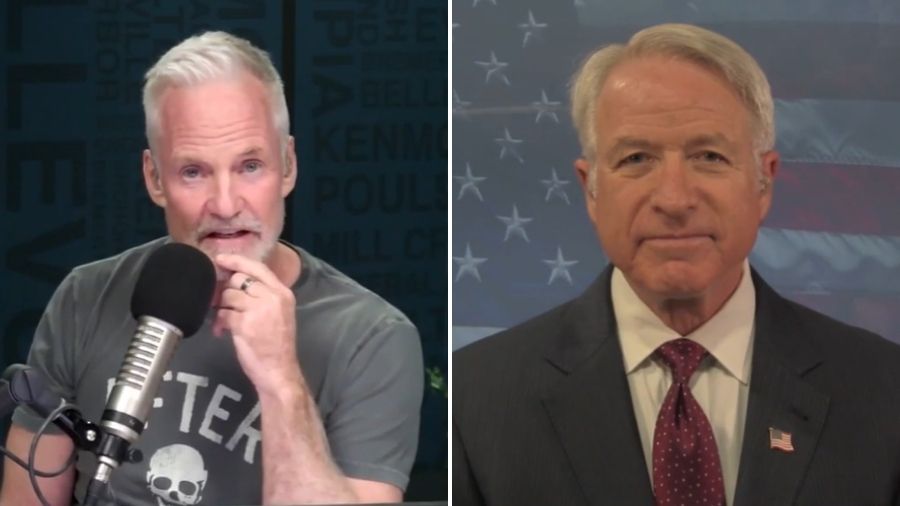
“So the best way to get rid of [car vs pedestrian collisions] is no more right-on-red? So there you sit wasting gas, destroying the ozone, and causing glaciers in Alaska to melt. Those are dead polar bears on your head, City of Seattle!” KIRO Radio’s John Curley quipped.
“It’s just one more piece of the ground we’ve lost as a driver in Seattle,” he said.
KING 5 reports that there have been 143 collisions between cars that are turning and pedestrians in the past three years in Seattle. That number is out of the more than 600 car versus pedestrian incidents citywide during that same time period.
“That is not a lot,” Curley said. “I would say 143 is low.”
Co-host Tom Tangney couldn’t disagree more.
SDOT has said that while single cars may have to wait longer to make a turn, overall traffic should run relatively smoothly.
“If there’s a pedestrian who gets hit by a car on Second Avenue, that’s going to affect every north/south street and every east/west street,” SDOT director Scott Kubly told KING 5. “And so, to the extent we can prevent those types of collisions that are totally preventable, it will actually make the downtown system run better.”
The no-right-on-red move is part of the city’s Vision Zero plan, which has a goal of reducing traffic deaths and injuries by 2030.
“Listen, these things happen,” Curley said, further noting that punishing the driver is the wrong way to go. He points the finger at the other party.
“Are the pedestrians ever responsible for stepping out without making any eye contact with a car? So maybe we should ban pedestrians from crossing the road,” he said, speculating that more often than not, the pedestrian is walking against a red walking sign when a car is turning right.
Tangney argued that drivers are cheating by turning right on red. Further, waiting an extra minute at a red light is far less damaging to traffic than a collision investigation.
“If you hit a pedestrian, that’s going to shut down traffic for four hours with the way we deal with traffic accidents,” he said. “That’s a worse problem.”
SDOT said that the no-turn policy will go into effect by the end of 2015.
As part of the Vision Zero goal, the city is also reducing speeds in 10 zones, adding radar speed signs around town, adding 12 new cameras in six school zones, adding seven miles of protected bike lanes, 14 blocks of new sidewalk, and 40 crossing improvements.

-
 Tune in to KIRO Newsradio weekdays at 3pm for The John Curley Show.