Curley urges listeners to vote to repeal ‘millionaire’s tax’: ‘They’re not going to keep it just for millionaires’
Oct 5, 2026, 9:00 AM

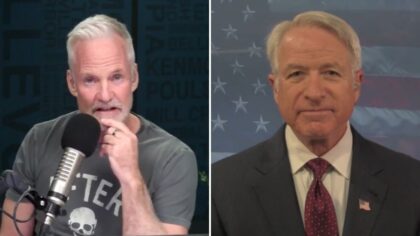
Washington voters will decide Nov. 3 whether to repeal the state’s new 9.9% tax on household income above $1 million, and KIRO host John Curley is urging listeners to vote yes.
“The reason they framed it that way is because they wanted to make it as confusing as possible for you, hoping that you don’t pay close enough attention and you just simply go, ‘Do I want an income tax? No, I don’t. I’m gonna put no,’ and then, ah, that’s the wrong answer, because now you got yourself an income tax,” Curley said.
Initiative 645, sponsored by Let’s Go Washington founder Brian Heywood, qualified for the ballot in July. A yes vote would repeal the tax, which lawmakers passed this year and Gov. Bob Ferguson signed in March, and it would also bar future state and local income taxes.
The tax would apply to income earned starting in 2028, with first payments due in 2029, and is projected to raise more than $3 billion a year. The ballot statement, written by the Attorney General’s Office, says repeal would reduce funding for K-12 education, higher education, and human services. Supporters of I-645 call that misleading because collections wouldn’t begin until 2029, and a DHM Research survey reported by KATU found the sentence moves voter support by 13 points.
“You know, and I know, if you’re really honest with yourself, they’re not going to keep it for just the millionaires,” Curley said.
Revenue from the tax would go into the state general fund, where K-12 education makes up about 43% of spending. Ferguson’s office says more than 41% of the money raised in the first full year would go back to families and small businesses through the Working Families Tax Credit and tax relief.
“Don’t believe when they say, ‘It’s going to take the money from the schools.’ No, it’s not, because they’re already directly funding the schools differently,” Curley said. “Now, a portion of it, maybe about 10% of it, will go towards schools, but that’s not where it’s going.”
Washington’s K-12 spending has grown 110% since 2013, to about $20,300 per student, according to an Edunomics Lab analysis. Results on the 2024 National Assessment of Educational Progress were mixed: the state’s eighth-grade math score of 274 was slightly above the national average of 272 but below Washington’s 2003 score of 281, and about 32% of fourth graders and 31% of eighth graders scored proficient in reading.
“We spend more money than we’ve ever spent before on schools, and we get worse results,” Curley said.
Curley said the answer isn’t more money but better methods, and pointed to Roland Fryer, the Harvard economist who designed Houston’s Apollo 20 program.
RELATED STORIES
The three-year experiment, launched in 2010, put 20 of the Houston school district’s lowest-performing schools through a charter-style overhaul: a longer school day and year, daily small-group math tutoring, frequent teacher feedback and a “no excuses” culture of high expectations. Houston ISD said the program cost about $56 million over three years, with $16.8 million from private donors.
“I am such a huge fan of Roland Fryer,” Curley said.
“We took the worst 20 schools in Houston, and made them above average in three years,” Fryer said in a clip Curley played on “The John Curley Show.” “Time on task. You know, longer days, longer years. That’s number one. Number two is how they provide feedback to their teachers.”
Fryer’s final analysis found the math gains were large enough to close the racial achievement gap within three years in elementary schools and cut it in half in secondary schools. Reading gains were small but positive, and the share of Apollo students applying to college rose from 62.3% in 2011 to 91.3% in 2013. Not every school kept its gains after the program ended.
“Those schools backslid, and now the district is under state control,” Fryer said. “And that’s why it’s so frustrating, because we’ve seen it work. It’s not theoretical.”
Watch the full discussion in the video above.
Listen to “The John Curley Show” weekdays from 3 p.m. to 7 p.m. on KIRO Newsradio 97.3 FM.
Follow @https://twitter.com/jcurleyshow

-
 Tune in to KIRO Newsradio weekdays at 3pm for The John Curley Show.