
Is it ethical or irresponsible to perform a head transplant?
Sep 6, 2016, 1:14 PM | Updated: 8:56 pm
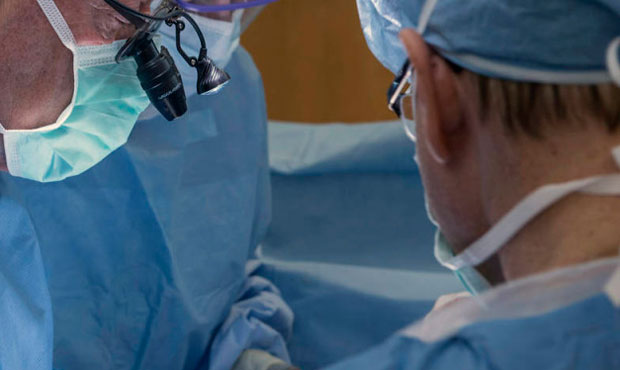
Would it be unethical to allow surgeons to transplant a man's head? KIRO Radio's Dave Ross wonders how that would mentally impact someone. (AP)
(AP)
A 31-year-old Russian man that has publicly volunteered to be the first human to have a head transplant brings up not only scientific questions, but ethical ones as well.
We’ve heard of kidney transplants. We’ve heard of heart and lung transplants. But this idea takes transplants to the next level.
Must we fight over the National Anthem?
Sam Kean, of The Atlantic, says doctors have discussed a head transplant for quite some time. The heads of mice and monkeys have been successfully transplanted in the past.
Kean says there have been several people who have volunteered, but Valery Spiridonov was the first to go public. Spiridonov has Werding-Hoffmann disease. It’s a genetic disorder that destroys muscle and motor neurons. Spiridonov has never been able to walk. This would essentially be his only chance at living a life without a wheelchair, Kean says.
But the way it would work now, someone would essentially have to donate their body for this to work.
“It would be a lot like what you see with kidneys,” Kean said.
It would be the most complicated surgery by a long shot. Surgeons would have to connect the nervous system.
One of the trickiest parts of the surgery, along with connecting the nervous system, would be keeping the brain alive. Kean says that could be done by using a saline solution but would still have to work quickly to make it happen.
The operation would cost between $10 million and $100 million, Kean reports. It would require about 80 surgeons.
But even if it was successful, who would you be afterward?
“That’s the part that I think is the most fascinating aspect,” Kean said. “Getting the surgery to succeed is tough, but what would it feel like to wake up with a different body?
“Even memory or personality could change with a new body.”
Is it ethical?
Kean says there’s a big debate with that. Many people say it’s not ethical, mostly because they don’t think it would succeed. Others disagree, arguing that Spiridonov volunteered for this.
Either way, if it works it could be the first step in saving people who are cryogenically frozen, Kean says. Or, at the very least, start repairing spinal cord damage.
Maybe we could bring back Ted Williams.
-
 Tune in to KIRO Newsradio weekdays at 5am for Dave Ross on Seattle's Morning News.