Return to school, business will require ‘slowly easing’ out of restrictions
Sep 15, 2020, 12:42 PM

A general view of an empty concourse at T-Mobile Park on Sept. 04, 2020 in Seattle, Washington. Fans are not allowed at games this season due to the COVID-19 pandemic. (Photo by Abbie Parr/Getty Images)
(Photo by Abbie Parr/Getty Images)
Cases have been declining in recent weeks across most of Washington state, but it hasn’t been enough for counties to be allowed to move forward to the next phase of the Safe Start plan or for a return to school.
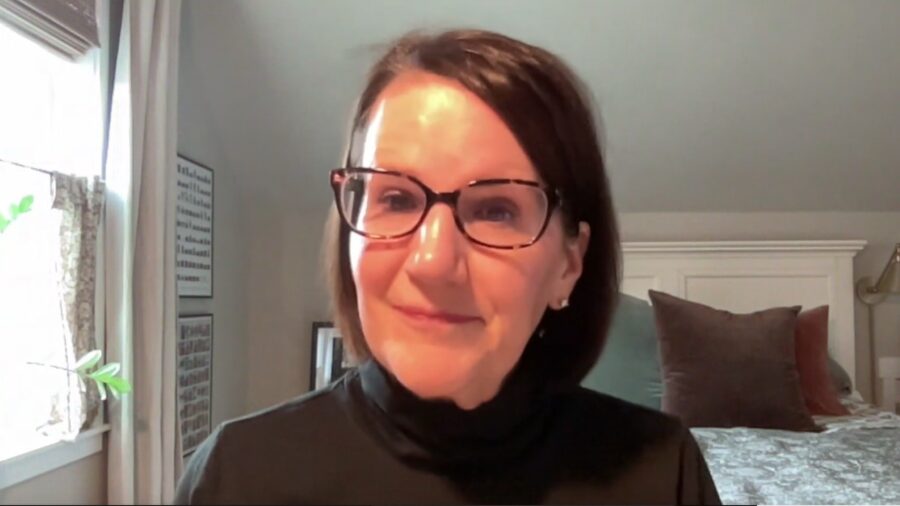
So what does Dr. Angela Rasmussen, virologist from Columbia University and weekly guest of KIRO Radio’s Gee & Ursula Show, think it will take for a phase change?
“It’s going to take something like what they’ve managed to do in New York,” she said. “There they’ve managed to keep cases really, really low by very slowly exiting these phases to bring people back for indoor dining, for example, and not being afraid to go back if the metric suggests that they should.”
“So one thing that we’ve seen in many places around the country is that as these restrictions are lifted, case counts go right back up again,” she added. “And that’s because there’s still enough transmission occurring in the community that once you sort of loosen those restrictions, you’re going to see the virus start spreading again. So we just need to be very vigilant looking at our metrics, making sure that our numbers stay down, and then very slowly easing into loosening of restrictions. But also not being afraid to put those restrictions back in place, should it look like our case counts are increasing.”
Some Washington counties can consider gradual return to in-person learning
Additionally, there still needs to be an increase in testing capacity and contact tracing, both of which are not adequate enough on their own to fully reopen businesses and schools.
“For a testing program to open schools back up, you’re basically talking about a testing program to open the entire community back up, and that’s going to involve routine testing of people, whether they’re symptomatic or not, whether they’ve had a known exposure or not,” Rasmussen explained. “So testing once a week, once every two weeks, something like that, as much as you can manage.”
“Then you also need to couple that with a robust contact tracing system so that anybody who does test positive can be rapidly isolated. Their contacts can be traced, and those contacts could be quarantined until they get tested,” she added. “Right now, in most of the country, we still have transmission that is too high to really effectively do that because our testing capacity is inadequate. And also, our contact tracing capacity is inadequate in many places, and also people aren’t always cooperating with the contact tracers.”
Before the United States can rely on testing and tracings to reopen, the capacity of both needs to be boosted dramatically, she says.
Explaining Canada’s success
Canada is an good example of what to do, and what the United States should have done but didn’t, Rasmussen said. For the first time since March, Canada reported no new deaths from COVID-19, but there is a lot that they’ve done differently to get to that point.
“First of all, most importantly, I think, their public health officials did not overly politicize the pandemic,” Rasmussen said. “They don’t have the same political hang ups with wearing masks, with physical distancing, with lockdowns, and so they’ve been able to keep transmission very low. At the same time, they also have increased their testing capacity, and they have people complying with contact tracing.”
In the United States, there are a lot of people who refuse to wear masks and people who don’t believe that staying home makes a difference, she says. Plus, there are many people who don’t have the ability to stay home.
“And then there’s the issue of their health care system as well,” she added. “So Canada provides health care to all of their citizens, all the people living in Canada. In the United States, that’s not the case. So differential access to health care is another big factor, especially with regard to the number of hospitalizations and deaths here in the U.S.”
Depending on multiple risk reduction measures
As far as wearing masks, the CDC is still recommending that people avoid buying the N95 masks and leaving them for health care workers. However, those are the only masks that would prevent us from catching COVID while helping with the wildfire smoke.
“It’s different in different places, depending on supply chains, but there is still a shortage of N95 masks for health care workers,” Rasmussen said, which is part of the reason they’re not recommended for general use. “The other issue with N95 masks is that they actually have to be fitted to your face. So every year, I have to take a fit test to make sure that my N95 that I would wear in the lab fits appropriately to my face. Because if there any gaps in that mask on my face, then particles could go in.”
“So people … have generally not been fit tested for N95, and if you wear an unfitted N95, you might as well not wear a mask at all,” she said. “I think that probably those two things — both the shortage as well as the correct use of an N95 — are the reasons why they’re being discouraged.”
Rasmussen suggests sticking to surgical or cloth masks, but also not relying only on a mask for prevention.
“You should depend on as many different risk reduction measures as possible to minimize your transmission risks,” she said. “So wear a mask, cloth or surgical is fine. Practice physical distancing. Don’t go to crowded events. Try to stay out of enclosed spaces with other people. Try to limit the number of other people that you’re in close physical proximity to for long periods of time. And of course, wash your hands. All of those things together can really reduce your risk quite a bit.”
Listen to the Gee and Ursula Show weekday mornings from 9 a.m. – 12 p.m. on KIRO Radio, 97.3 FM. Subscribe to the podcast here.