‘People need these dollars’: Rep. Travis Couture urges WA to join federal scholarship tax credit, criticizes Reykdal
Oct 17, 2026, 5:00 AM

A federal scholarship tax credit beginning in 2027 will let taxpayers claim credits for qualifying donations to organizations that fund students’ education expenses.
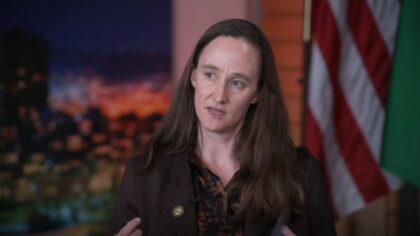
Speaking with “The Jake and Spike Show” on KIRO Newsradio, state Rep. Travis Couture urged Washington to participate and criticized Superintendent of Public Instruction Chris Reykdal’s recommendation against joining.
“It’s not just private school or homeschool; it could be public school students as well, many of which are falling behind, especially the special ed kids that he spoke about,” Couture said. “So this is just one way to get money.”
Couture argues students could benefit across school settings
The program provides a tax credit to donors, while participating scholarship-granting organizations distribute assistance to eligible students. Qualified expenses include tuition, academic tutoring, fees, supplies, and extended-day programs, according to the U.S. Department of Education.
Couture questioned treating the decision as a partisan issue.
“This really shouldn’t be a partisan thing,” Couture said. “The real reason is that he’s protecting a monopoly. He’s protecting an establishment instead of protecting Washington students and families who could benefit from these dollars. People need these dollars.”
Declining to participate would not undo the federal program, Couture noted.
“Not opting into the program doesn’t change the program at all,” he said. “It doesn’t change the fact that this is the law in the federal government.”
Reykdal’s objections frame the discussion
Before the interview, the hosts played Reykdal’s remarks from an earlier appearance. He recommended that Gov. Bob Ferguson not opt in and argued that Congress could instead have directly funded special education or tutoring.
Couture challenged that reasoning.
“The hypocrisy of saying, ‘Well, we should have done these other things that also increased deficit spending,’ while also complaining about deficit spending, kind of falls on deaf ears,” Couture said.
He also questioned objections to the program’s income eligibility.
“Almost all students could be eligible for this money. Well, I’m sorry. Is that an actual problem that we have near-universal access to this cash for Washington students?” Couture said. “I don’t think that’s a problem. That’s not a defect. That is the good purpose of it.”
Eligibility is limited to students whose household income does not exceed 300% of their area’s median gross income, adjusted for family size. Meeting that requirement does not guarantee a scholarship; awards depend on applications and available funds.
RELATED STORIES


Oversight questions remain part of the debate
KIRO host Spike O’Neill pressed Couture about Reykdal’s concerns over state oversight.
“He doesn’t get to control a federal tax credit,” Couture said.
States must identify qualifying organizations, which are subject to federal requirements covering scholarship distributions, eligibility, accounting, audits, and reporting. The law also limits states from imposing additional qualification requirements on those organizations.
Couture returned to accountability for student outcomes.
“Talk about accountability because who’s already accountable?” Couture said. “He’s saying that parents can’t be accountable for their own children.”
Watch the full discussion in the video above.
Listen to “The Jake and Spike Show” weekdays from noon to 3 p.m. on KIRO Newsradio 97.3