‘A big deal using the gang word’: Photog Steve explains what city lost when it disbanded its gang unit in wake of Bite of Seattle shooting
Jul 28, 2026, 6:22 PM | Updated: Jul 29, 2026, 12:21 pm

Seattle leaders confirmed the shooting at the Seattle Center on Sunday, which killed three people and wounded at least four, was gang-related.
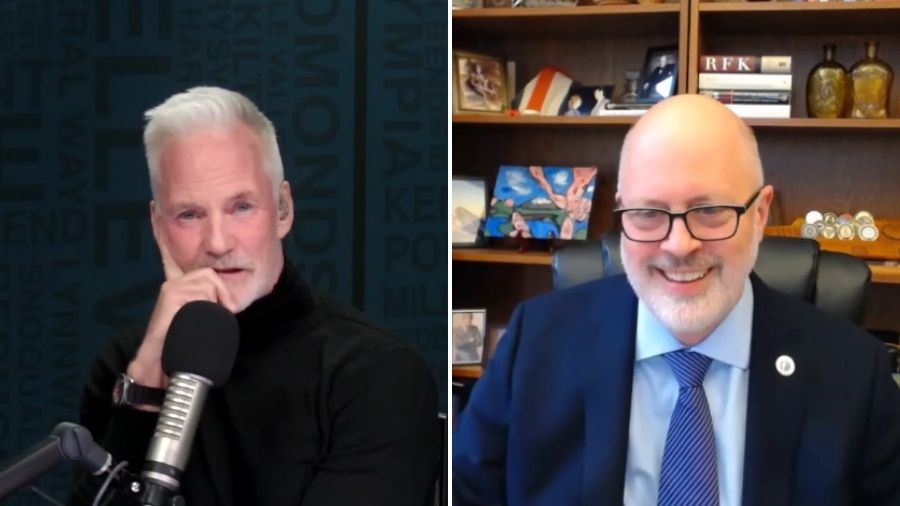
Citizen journalist Steve Hickey, known as @PhotogSteve81 on multiple social media platforms, told “The John Curley Show” on KIRO Newsradio that when Seattle officials used the word “gang” to describe the Bite of Seattle shooting, it carried more weight than most people realize.
He explained that the city once had a dedicated gang unit but disbanded it years ago, replacing it with the Gun Violence Reduction Unit (GVRU) after officials determined that the word “gang” carried negative connotations toward certain communities, a decision Hickey believes has blurred the line between organized gang activity and everyday crime.
“That was a big deal using the gang word,” Hickey said. “A while back we used to have a gang unit in Seattle, and then they got rid of it, and then they brought in GVRU. So they felt that gang, in itself, had negative connotations and was harsh towards certain parts of the community.
“I think what got missed and maybe isn’t seen now is, in some ways, you want to be able to say, ‘Hey, there is an entire community that we’re here serving, and then there’s this other thing. This is separate from the normal type of crime that we’re dealing with every day,'” he continued. “And it’s important to be able to segment that out and not blend it all in. I think that’s where the gang unit can be effective. Yes, it is saying something about a very specific community, but that’s the idea. This is different from the normal day-to-day law enforcement operation.”
‘They’ll be back home the next day’: Why gangs are sending younger and younger recruits
Hickey said social media has fundamentally changed how gangs recruit, allowing them to bring in younger and younger members without the traditional initiation rituals, and making it far easier for dozens of smaller factions to splinter off beneath the larger, more established organizations.
“Through social media, they’re able to recruit much more quickly,” he said. “And there isn’t the jumping them in, jumping them out type thing. It’s, ‘Hey, if you’re here with us, we’re talking. Here’s something we can do.’
Hickey said gangs have figured out that sending younger recruits to commit crimes is strategically advantageous, because minors face far fewer legal consequences than adults and are less likely to cooperate with law enforcement if caught.
“If they get caught, they’ll be back home the next day,” he said. “So if you send out a 13-year-old, a 15-year-old, a 16-year-old kid, or you send out somebody in their 20s, that person in their 20s is looking at a lot of consequences. They may talk, they may tell. Send the kid. There’s no reason for them to tell. ”
Hickey said the desire to belong is what initially draws young people into gangs, but in the beginning, it’s less about money or power and more about the thrill of being part of something.
“Somebody wants to belong to something, be part of something,” he said. “There’s a lot of camaraderie that comes in this type of thing. I think that’s kind of what they’re first in it for, and then from there, there’s access to money and guns and other things that they want to get a hold of. But in the beginning, it really seems to be more just the thrill of this. How many times do we see these things where they’ll document it and post it online? Which is just mind-boggling to me as somebody who’s studied crime for many years.”
RELATED STORIES



Bite of Seattle shooting fits a pattern of retaliation, Photog Steve says
As for the Bite of Seattle shooting, Hickey said the incident is rumored to be a retaliation shooting, a pattern he said is increasingly common among young gang members in Seattle who cycle through the justice system with escalating offenses, often starting with a robbery before being caught with a firearm.
“Many of these end up being retaliation shootings, and that’s another thing I think that the public and law enforcement, really city leaders — law enforcement understands it — but city leaders, these are not these once-in-a-lifetime fork-in-the-road type stories where you think you got a good kid, who then just ends up at this spot, and makes this one-time decision,” he explained. “These are repeat offenders.”
Watch the full discussion in the video above.
Listen to John Curley weekday afternoons from 3 – 7 p.m. on KIRO Newsradio, 97.3 FM. Subscribe to the podcast here.
Follow @https://twitter.com/jcurleyshow

-
 Tune in to KIRO Newsradio weekdays at 3pm for The John Curley Show.