‘Addiction machines’: Former Meta researcher tells Curley $17B settlement won’t go far enough
Aug 30, 2026, 6:37 AM

Meta agreed this week to pay $17 billion and adopt sweeping child-safety measures on Instagram and Facebook to settle claims from 47 state attorneys general that the company deliberately designed its platforms to hook young users. The settlement includes daily time limits, overnight pauses, stronger age verification and a ban on “beauty filters” for minors.
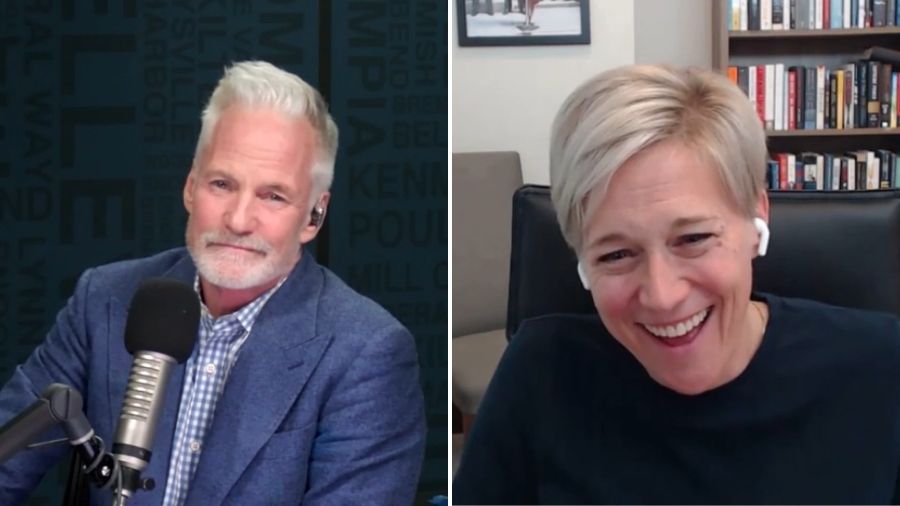
Dr. Anneke Buffone, a former Meta researcher who spent seven years working on child safety at the company and is now a senior practitioner fellow at USC and founder of the CLARA standards organization, joined “The John Curley Show” on KIRO Newsradio and said the settlement is a step forward, but not far enough.
“I think that what it shows me is that there really has been a moment where state legislators have said stop,” Buffone said. “But I also worry, like so many other people, that a lot of it likely will not be going far enough.”
Buffone said the settlement focuses heavily on time limits and age verification but barely addresses the mental health crisis, including suicide.
“If somebody even searches for suicide once, that should already be a flag,” Buffone said. “Really relying on things that are multiple-time searches, that’s a really difficult thing when it comes to something like suicide.”
KIRO host John Curley asked Buffone what changed inside Meta after the 2021 Frances Haugen whistleblower leaks, which revealed the company’s own research showed its platforms harmed teenage girls.
“There was actually some commitment to trying to do the right thing when I first got there, and I was actually really encouraged,” Buffone said. “But then really with these leaks, the culture seemed to shift very dramatically, and we were not allowed anymore to do the research in the way that I, as a scientist, would say is the right way.”
RELATED STORIES



Buffone compares social media to tobacco but says it’s harder for parents to avoid
Curley compared social media to the tobacco industry, noting that both products were knowingly designed to be addictive. Buffone agreed with the comparison but said the problem is harder to escape.
“The way that these social media apps are constructed is to maximize for people to spend as much time as possible by showing them things that keep them on,” Buffone said. “Beer isn’t inherently designed to be addictive. Beer is mostly optimized to taste good. These apps are designed to be addiction machines.”
Buffone said parents are in “a sort of unfair position” because phones are required for school, employers expect parents to be reachable at all times, and peer pressure makes it nearly impossible to keep kids off apps when their friends are on them.
“Parental controls really don’t work,” Buffone said. “There have been a lot of studies on how they really don’t do what they’re supposed to be doing. Some kids get around these different controls.”
When Buffone was asked whether Meta’s claim that it doesn’t make much money off children is credible, she paused.
“They’re an important group for the future,” Buffone said. “They’re the future consumers, the future people that buy, that look at ads. I don’t think that’s very meaningful.”
Buffone shared her personal rules as a parent of four children, including two teenagers.
“Phone isn’t in the bedroom overnight,” Buffone said. “After dinner, not being on the phone. No apps before the legal age. I really discourage time spent on short-form videos. AI apps are really a no-no until kids are at least 15. And a lot of conversation.”
She said the most effective defense is sitting with children and helping them think critically about what they’re being shown.
“We can’t wait for the platforms to change,” Buffone said. “We really have to take it into our own hands.”
Listen to John Curley weekday afternoons from 3 – 7 p.m. on KIRO Newsradio, 97.3 FM. Subscribe to the podcast here.
Follow @https://twitter.com/jcurleyshow

-
 Tune in to KIRO Newsradio weekdays at 3pm for The John Curley Show.