‘A pattern in this state of intimidation’: Let’s Go Washington founder urges Microsoft to join income tax fight
Oct 22, 2026, 12:05 PM | Updated: 3:04 pm

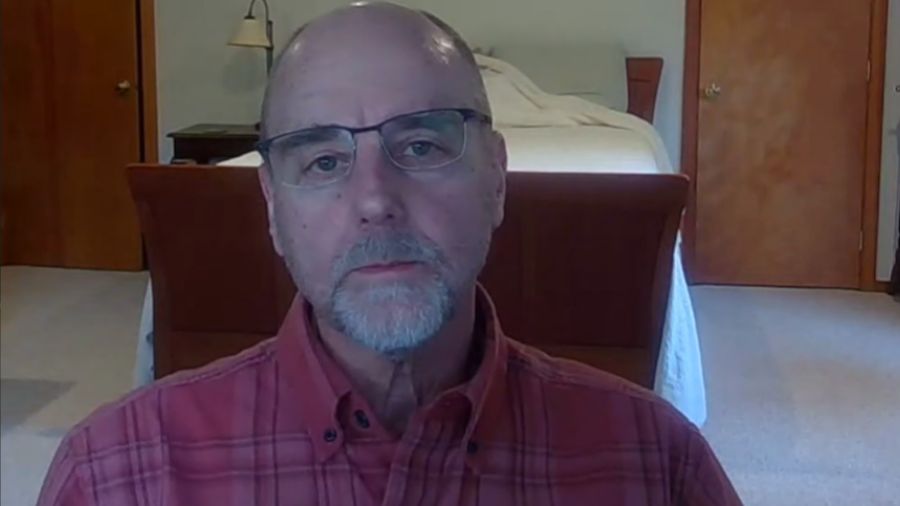
Brian Heywood, founder of Let’s Go Washington, wants Microsoft and other major Washington employers to help repeal the state’s new income tax, also known as the millionaires’ tax. Heywood argued that staying on the sidelines will not protect them from future taxes.
Joining “The John Curley Show” on KIRO Newsradio, Heywood accused lawmakers of intimidating businesses and warned that the Legislature’s spending demands would eventually reach corporations that believe they can avoid the current fight.
“There’s not enough money in this state to be able to afford the appetite of Olympia, right?” Heywood said.
Initiative 645 would repeal the income tax and prohibit future state and local income taxes. The tax applies to income earned beginning in 2028, with the first payments due in 2029. A yes vote would repeal it; a no vote would retain it.
Washington State Governor Bob Ferguson signed the new income tax into law in March, 2026.
Heywood argues corporate silence carries risks
Curley questioned why Microsoft, Amazon and Boeing had not taken the same visible role against the tax that major businesses took during Washington’s 2010 income tax fight.
Heywood offered two explanations: fear of retaliation and a shortsighted belief that avoiding this battle would protect companies from another one.
“There’s a pattern in this state of intimidation, and this isn’t the first time,” Heywood said.
He alleged that businesses considering support for an earlier effort to repeal the Climate Commitment Act had worried lawmakers would respond with harsher policies targeting their industries.
Heywood argued that large employers now face a similar calculation over the income tax and the possibility of a statewide payroll tax. In his view, allowing the income tax to remain would expose small businesses first without guaranteeing that larger corporations would escape additional taxes.
Curley suggested companies might see silence as the less expensive option: accept the income tax rather than risk a payroll tax that could directly increase their employment costs.
Heywood countered that major employers should use their economic influence to oppose both.
Pedersen ties payroll tax discussion to election outcome
Senate Majority Leader Jamie Pedersen previously discussed whether lawmakers would consider a statewide payroll tax next session.
“If the millionaires’ tax is upheld by the voters, then I think it is vanishingly unlikely that that will be something that we seriously consider in the next session,” Pedersen said.
Heywood characterized those remarks as a threat to businesses considering support for repeal. Pedersen’s recorded comments linked the likelihood of considering a payroll tax to the election outcome but did not explicitly threaten a particular company.
Curley argued that corporations could interpret the remarks as a reason to keep quiet and hope lawmakers would leave them alone.
Heywood maintained that Microsoft could instead publicly oppose the income tax and warn that an additional payroll tax would prompt it to move operations elsewhere. He presented that as a strategy the company should pursue, not an announcement of Microsoft’s plans.
Microsoft’s support could encourage other donors
Curley asked whether financial support from Microsoft and Amazon could change the repeal campaign’s prospects.
“Yeah, I do, and there’s two reasons for it,” Heywood said.
Heywood argued that corporate contributions would help the campaign reach voters. He also suggested a major employer’s public involvement could encourage other business owners to donate without feeling isolated.
“So the money would go a long way to getting the message out there, and I’ll talk about that in a second,” Heywood said.
He warned that companies should consider the broader direction of state spending rather than focus solely on whether this particular tax directly affects them.
RELATED STORIES



Dunn also questions businesses staying on the sidelines
Curley closed the discussion by playing part of an earlier interview with King County Councilmember Reagan Dunn, who predicted voters would narrowly retain the tax.
“I think because the big corporations like Microsoft and others are standing on the sideline,” Dunn said.
Dunn also warned that lawmakers could eventually lower the income threshold, an argument repeal supporters have repeatedly raised.
That prediction is disputed. State Rep. April Berg has expressed no intention of supporting a threshold below $1 million. The law’s exemption from Washington’s existing prohibition on new income taxes applies only while its standard deduction remains at least $1 million per household.
Heywood ended by urging listeners to vote for repeal.
“That’s the most important thing they do is get out and vote yes,” Heywood said.
Watch the full discussion in the video above.
Listen to “The John Curley Show” weekdays from 3 p.m. to 7 p.m. on KIRO Newsradio 97.3 FM.
Follow @https://twitter.com/jcurleyshow

-
 Tune in to KIRO Newsradio weekdays at 3pm for The John Curley Show.