Harger: The bill that could put homeless tents on your kid’s soccer field
Feb 5, 2026, 7:48 AM | Updated: Feb 6, 2026, 12:57 pm
Bill cutoff day was on Wednesday in Olympia. Plenty of proposals didn’t make it. But House Bill 2489, which would fundamentally limit the ability of cities and counties to clear homeless encampments, is still alive. And it’s got strong support from prominent Democrats.
Let me walk you through what this bill would actually do.
Right now, when a city clears out an encampment, they point to things like safety, sanitation, and needles on the ground. Or just, hey, this is a park, and kids need to use it.
RELATED STORIES



The homeless shelter standard almost no one can meet
Under this bill, all of that takes a back seat to one question: Did every single person here have access to a shelter that meets the legal definition? And the shelter has to check a lot of boxes. Open right now, no religious strings attached, no sobriety requirements. And they have to let you bring your dog, your girlfriend, and all your belongings. How many shelters meet that standard?
At a recent hearing on the bill, Redmond Police Chief Darrell Lowe put it bluntly: “Currently, I don’t believe there’s any shelter system in Washington that would actually meet these standards.”
Kent’s deputy city attorney, Kristina Shuck, warned the bill would “effectively eliminate the city’s ability to manage public camping” in “parks, soccer fields, sensitive environmental areas, levees, sidewalks.” She added: “Those standards are so rigid that almost no shelter would qualify.”
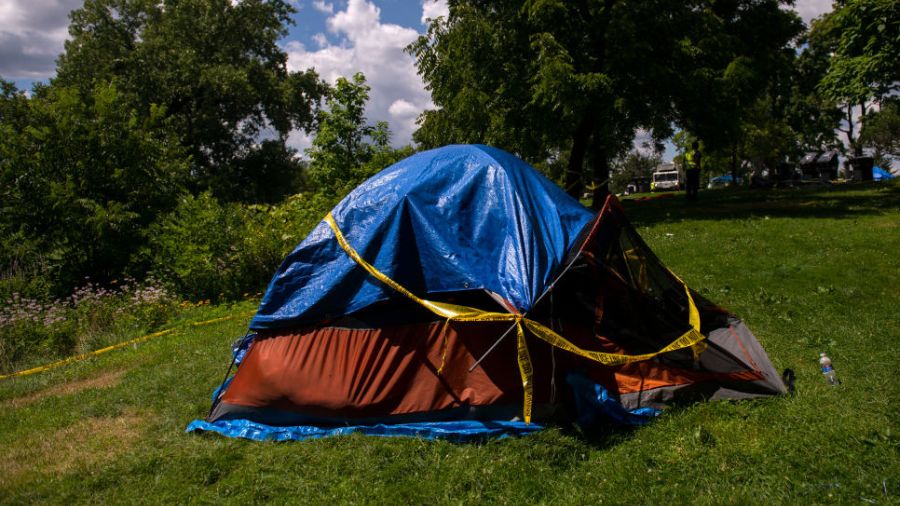
Think about what that means. A city wants to clear an encampment from a soccer field where kids are supposed to play. Under this bill, they can’t unless adequate shelter exists for every single person there. If the shelter system doesn’t meet the legal standard, which police leadership says it doesn’t, the tents stay.
And this isn’t just about downtown Seattle. This bill covers any public property in the state. Soccer fields and playgrounds, parks. The field where your nine-year-old has practice on Saturday morning. No carve-out. No exception for youth sports or school access.
There are carve-outs in the bill for imminent safety threats, blocked emergency access, and ADA issues. But those bars are high. A mom who wants her kids to use the swings without stepping over tents? Probably not going to qualify.
Chief Lowe noted that cities “cannot clear blocked sidewalks, address fire hazards under overpasses, or ensure public access to public spaces” under this bill. And he warned: “The public will then blame police for inaction when we’re following the law.”
So let’s step back. We’re about to make it nearly impossible to clear tents from parks, sidewalks, overpasses, and school fields. Just about any public space you can name.
I’m not saying we should criminalize homelessness. But can we be honest? This bill doesn’t ask anything of anyone. Not treatment or sobriety. Not even an attempt.
Instead, we’re designing a system that makes living in a tent acceptable. Bring your partner. Bring your pet. Bring your belongings. No rules you don’t like. No expectations. Stay as long as you want.
What if we tried something different?
What if we took all this energy and pointed it somewhere else? What if we actually focused on getting people sober? On intensive mental health treatment? On meeting people where they are and saying, “Let’s get you some help,” instead of waiting for them to ask?
Because right now, we don’t approach anyone about treatment unless they come to us first. We just let people sit in their addiction, in their crisis, and we call it compassion.
Sometimes people need a push. Sometimes the tent can’t be more comfortable than the treatment bed. I’m not talking about being cruel; I’m talking about actually helping people get better instead of helping them stay stuck.
Lisa Beaton, deputy city manager of Kennewick, told lawmakers her city does weekly outreach to homeless residents, offering services, housing, and treatment. They’ve found success with that balanced approach.
“If we want fewer individuals living on our streets,” Beaton said. “We need to have a balanced approach.”
That’s the conversation we should be having. Not how to make encampments permanent fixtures of public life.
The easy thing is to pick a side. Sweep them all out, or let them stay forever. The harder thing is to ask what actually helps. A tent in a park, with no expectations and no path forward, isn’t helping anyone. Not the person in the tent. Not the family who used to use that park.
We can do better than this. We have to.
Charlie Harger is the host of “Seattle’s Morning News” on KIRO Newsradio. You can read more of his stories and commentaries here. Follow Charlie on X and email him here.
Follow @https://twitter.com/kirocharlie