Harger: You know the income tax is on the ballot this year, right? Five times
Apr 1, 2026, 7:25 AM | Updated: 2:09 pm
You’ve probably heard lawsuits are coming over the new state income tax. You’ve probably heard there’s a repeal initiative in the works.
What you may not have heard is that the income tax is already on the ballot this year.
Five times.
That’s how many seats on the Washington State Supreme Court will be decided by voters this November. Five of nine. More than half the court. And if you’ve been paying attention, you know that whatever survives the lawsuits and the initiative process is eventually going to land right in front of those nine justices. The income tax. Natural gas policy. Drug laws. Sentencing guidelines. The governor’s whole agenda. All of it.
RELATED STORIES


How Governor Ferguson is building a WA Supreme Court, not just filling vacancies
Governor Bob Ferguson has done what governors do. He’s made appointments when justices retire in the middle of their terms. He’s filled vacancies with people he trusts. That’s legal. That’s his job. Nobody should be surprised by it.
But let’s not be naive about what’s actually happening.
Ferguson didn’t just pick placeholders. He picked people. Deliberately. This is a governor who came into office with an agenda, a legacy he started building from day one, and a clear understanding that the Washington Supreme Court is where that agenda either survives or dies. He knows his income tax will be challenged. He knows that every major piece of legislation he signs is eventually subject to review by nine justices. So he’s doing what any smart executive does: he’s stacking the odds.
WA Supreme Court 2026: Colleen Melody, Theo Angelis, and three open seats
Here’s how the five seats break down.
Ferguson’s two appointees are seeking election to keep their seats:
- Colleen Melody replaced retiring Justice Mary Yu. Ferguson appointed her. She’s now running to keep the seat.
- Theo Angelis will replace Justice Barbara Madsen when she retires mid-term in a few days. Also a Ferguson appointment. Also running for election.
Both were chosen by Ferguson. Both know why they were chosen. Appointed incumbents carry real advantages. They hold the title. They run with name recognition their opponents have to build from scratch in a matter of weeks. They arrive with the fundraising infrastructure that comes with institutional support.
Three seats with expiring terms:
- Raquel Montoya-Lewis (Position 3) announced in January that she will not seek a second term, leaving an open seat.
- Charles Johnson (Position 4), the longest-serving justice with more than 30 years on the bench, is ineligible to run again due to Washington’s mandatory judicial retirement age of 75 — another open seat.
- Chief Justice Debra Stephens (Position 7) is seeking reelection.
Five open seats. In a state where Washington Supreme Court races routinely go uncontested. In the last decade, at least six of roughly 15 seats up for election across five cycles had no challenger at all. Incumbents winning with 97 or 98 percent of the vote against write-ins only. Primaries canceled because nobody filed. This is not a court that voters have been paying close attention to. And that neglect has consequences.
WA Supreme Court filing deadline May 8: Serious candidates only
This is the part where I put down the news guy hat for a second and just talk to you like a neighbor.
Moderates, centrists, and conservatives, this is your window. And I mean that in a specific way. People who know the Constitution, respect the institution, and can walk into a courtroom or a debate without a predetermined answer to every question. People whose legal philosophy is grounded in the actual text of the law rather than the preferred outcome of the moment. People, your neighbor who votes differently from you could look at and say, “Fine, I can live with that.”
Not candidates whose entire pitch plays well on Fox News and in the rural counties where the margin is already baked in. Judicial races are officially nonpartisan, but everyone knows the score. If you want to win statewide in Washington, you need to peel off a meaningful slice of King County, push close to fifty percent in Snohomish and Pierce, and hold everything else. There aren’t enough votes anywhere else in the state to make up the difference. A candidate who can only excite one side of the electorate is not going to win statewide in 2026 Washington.
WA Republicans face a brutal 2026 election cycle
If you’re not solidly on the left in Washington right now, you’re running uphill. It doesn’t matter if you’re a moderate Democrat, a moderate Republican, or a full-blown MAGA candidate. The math is the math. There is real anger in this state, a fair amount of it aimed at President Donald Trump. Congress has some of the lowest approval ratings in memory. Republicans have been in national power for more than a year and can’t point to much they’ve actually gotten done. Bipartisanship is basically a historical footnote. The Left has the wind at its back right now, and nothing between now and November is likely to change that.
What you can control is who you put on the ballot.
We’ve seen this movie before. Several election cycles of statewide candidates running soundbites that only work on conservative talk radio. Then, the one time a center-right candidate like Dave Reichert finally emerged, the state Republican Party spent months wrestling over whether to endorse fringe candidate Semi Bird instead, ultimately handing Bird 72 percent of the convention vote. Reichert struggled partly because of that internal chaos and lost. You can’t starve voters of reasonable choices for years and then seem surprised when the reasonable candidate can’t quite get across the finish line.
Why the WA Supreme Court income tax challenge matters for every voter
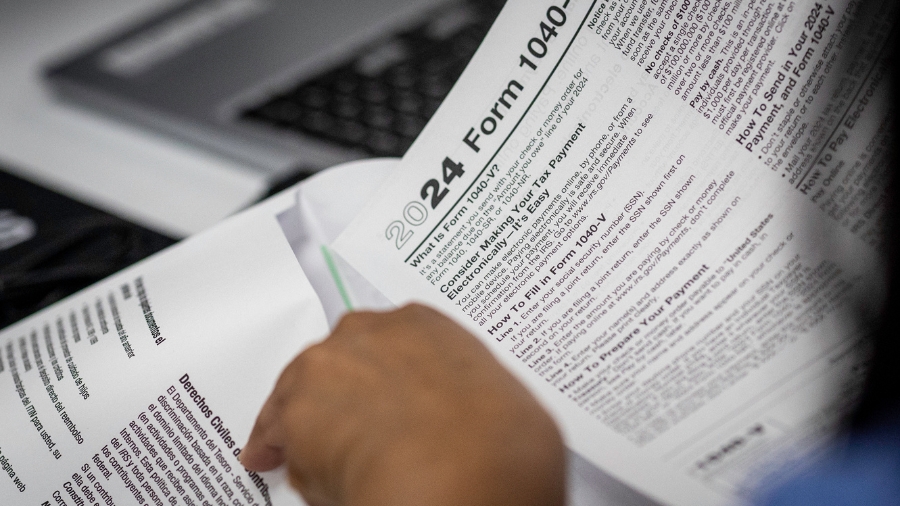
The income tax signed by Governor Ferguson will certainly face a legal challenge. Washington’s Constitution has been interpreted as prohibiting a graduated income tax, and that question will ultimately land before the state Supreme Court. The court’s composition at that moment will matter enormously.
Same with the drug possession laws that have been in flux since the Blake decision. Same with sentencing guidelines. Same with any significant environmental regulation, any major criminal justice reform, any redistricting dispute. The Washington Supreme Court is the final word on almost every major policy fight in this state. And right now, one person has had significant influence over who sits on it: Governor Ferguson.
Five WA Supreme Court seats. Five weeks. Show up.
Washington state has more than eight million people. Tens of thousands of attorneys. Former judges, former legislators, former prosecutors, former attorneys general, law school deans, appellate specialists, people who have spent entire careers thinking about how the law works and what the Constitution actually says. And we can’t find five? Five credible, serious, broadly appealing candidates willing to step up and make a case to voters? Not hard right. Not hard left. Just five people grounded in the law, capable of earning trust across party lines, who believe the court should interpret the Constitution rather than advance an agenda?
Because if the answer is no, and if May 8 comes and goes and these five seats are effectively handed to one side of the political spectrum by default, that tells a story about absence, not strength. And the people of Washington deserve better than a court shaped by forfeiture.
Five seats. Five weeks. The people who show up to run will tell us a lot about whether anyone has learned anything from the last few cycles.
I’ll be watching.
Charlie Harger is the host of “Seattle’s Morning News” on KIRO Newsradio. You can read more of his stories and commentaries here. Follow Charlie on X and email him here.
Follow @https://twitter.com/kirocharlie