Harger: An unelected Sound Transit board just decided which of your transit projects live and which die. You did not vote for any of them to do that
Jun 1, 2026, 5:57 AM

A Sound Transit train entering and exiting a station. (Photo courtesy of Sound Transit)
(Photo courtesy of Sound Transit)
Last Thursday, the Sound Transit board took 14-4, 13-5, and 18-0 votes on billions of dollars of regional transit money. They decided Ballard would get cut off at Seattle Center. They pushed South Kirkland to Issaquah to 2050. They raised a car rental tax. They deferred parking garages, station extensions, and Sounder South improvements until “resources are identified.”
“Resources are identified.” That is the official term for “we promised this, and now we’re not building it.”
It was the fourth time the board had done this. Board member Claudia Balducci of Bellevue used the word “realignment.” That is the word for what happens when a transit agency promises voters a system on a timeline, then quietly stretches that timeline until the original promise is unrecognizable.
You did not vote for these people to do this.
Not one of the 18 members of the Sound Transit board is elected to that seat. They are elected to other jobs. Snohomish County Executive Dave Somers, the chair. Pierce County Executive Ryan Mello, the vice chair. King County Executive Girmay Zahilay. Seattle Mayor Katie Wilson. Tacoma City Councilmember Kristina Walker. Redmond Mayor Angela Birney. State Secretary of Transportation Julie Meredith, appointed by the governor.
All of them got the Sound Transit job by appointment. The board has 18 members. King County controls 10 seats, Pierce County four, Snohomish County three, plus the WSDOT secretary the governor names. The three county executives sit on the board themselves and nominate the remaining county seats, which the county councils confirm. King County Executive Girmay Zahilay controls the largest bloc on the board.
The Sound Transit board is appointed, not elected. I would vote for Mike Macdonald to coach the Seahawks. I would not vote for him to also choreograph Swan Lake
Imagine going to the polls in 2024 and voting for Mike Macdonald to be the Seahawks’ head coach. Great hire. Defensive mind. Hit the ground running. Now imagine the Seahawks organization, a year later, appointing Macdonald to also choreograph the spring production at Pacific Northwest Ballet. He is talented. He is competent. He works hard. The job is just not the job he was hired for, and the people in the seats at McCaw Hall never got a vote on whether they wanted him there.
Sit back and enjoy the pirouettes.
That is what the Sound Transit board looks like.
Maybe you voted for some of these people. Maybe you will vote for some of them again. That is not the issue. The issue is that you voted for them to run a county or a city. You did not vote for them to allocate $34.5 billion in regional transit funding through a series of closed-room compromises across three counties. Nobody did. There is no ballot in Washington on which a voter can directly choose who represents them on the Sound Transit board.
Pierce County voted no on ST3 in 2016. Pierce County pays the tax anyway. Pierce County cannot directly vote out its board member
Consider a Pierce County voter. Pierce County voted no on Sound Transit 3 (ST3) in 2016. The measure passed regionally because King and Snohomish carried it. Pierce County pays the Sound Transit taxes anyway because Pierce County is inside the tax district. That is how the math works. Vote no, pay anyway.
That voter cannot, today, cast a ballot for the person who represents Pierce County on the Sound Transit board. Ryan Mello sits there because he is Pierce County Executive. The Pierce County voter who wants different transit decisions has only one move: vote out the Pierce County Executive. For unrelated reasons. In a county-wide election. For a job that has nothing to do with Sound Transit.
The structure produces the appearance of accountability without the substance of it.
The fourth Sound Transit realignment. ST3 voters approved a different deal in 2016
In 2016, voters approved ST3. The centerpiece was a fully tunneled line from Sodo through downtown to Ballard by 2035. That was the deal. Ballard riders, an estimated 70,000 daily passengers, voted for it. Tacoma riders voted for it. Lynnwood-to-Everett voters voted for it. The whole package, on that timeline, with those stations.
Voters did not approve a future board deciding, four times in a decade, that the deal had to be renegotiated because the agency’s cost estimates blew up. Voters did not approve cutting Ballard short. Voters did not approve a closed executive session about litigation. Voters did not approve raising the car rental tax to backfill the shortfall.
The board did all of that. The law lets them do it. Sound Transit is required by state law to pass an updated plan, said Alex Krieg, the agency’s enterprise planning director. The board is operating inside its lawful authority. The structure is the problem.
RELATED STORIES
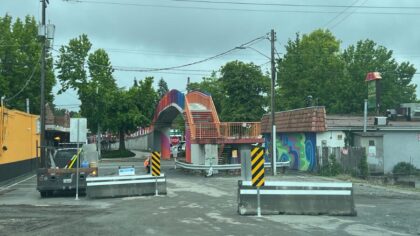
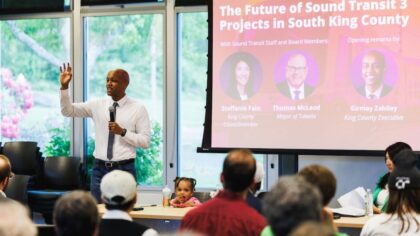

The Dan Strauss Ballard amendment lost 14-4. The amendment would have built the Westlake-to-Ballard segment first
Seattle City Councilmember Dan Strauss tried to amend the plan to build the Westlake-to-Ballard segment first. About 70,000 daily passengers in a corridor served today by slow buses. Strauss lost 14-4.
Even if you live in Seattle, you did not get to vote on that. You can vote against Strauss next time he runs for city council. You can vote against Mayor Wilson, who voted with the majority, when she runs for reelection. But you live in Seattle, so you cannot vote against Dave Somers from Snohomish County. You cannot vote against Cassie Franklin, Everett’s mayor. You cannot vote against the WSDOT secretary the governor put on the board. They made a multi-billion-dollar decision about Ballard, and Ballard riders have no direct ballot recourse against any of them.
This is governance by appointment, paid for by taxation without representation in the way the words usually mean.
Whoever made the call, voters did not pick them to make it. And the next time the board has to “realign,” the same 18 unelected-to-this-job people will do it again.
Hope you weren’t in a hurry to get to Ballard.
Charlie Harger is the host of “Seattle’s Morning News” on KIRO Newsradio. You can read more of his stories and commentaries here. Follow Charlie on X and email him here.