Washington’s first insect farm says bugs are the future of food
Aug 15, 2016, 5:59 PM | Updated: Oct 11, 2024, 9:58 am
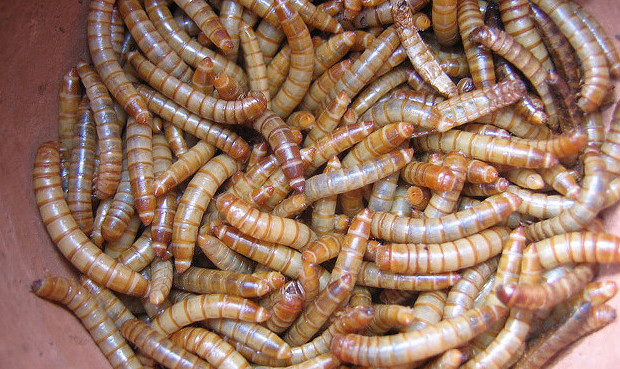
Dinner? (Photo by Hans Splinter, CC Images)
(Photo by Hans Splinter, CC Images)
Virginia Emery’s farm is unlike any other farm I’ve ever seen. There’s no soil. There’s no water. It’s located in a business park, above an upholstery shop, close enough to Sea-Tac Airport that every few minutes a plane roars overhead. Her farm is inside a room the size of a studio apartment, where she is currently raising 100 million individual livestock. This is where insect food comes from.
“We grow mealworms, which are a type of beetle,” Emery explains. “We dry them and we’re currently selling them for chicken food. So we’re producing mealworms as a high protein, high-fat feed ingredient for poultry, aquaculture and we’ve actually started getting some inquiries for human food, as well.”
Rachel Belle launches new podcast “Your Last Meal”
Emery has a doctorate in entomology, so she’s pretty smart when it comes to insects. Her company, Beta Hatch, is Washington’s first farm producing insect food.
“What we’re doing with Beta Hatch is farming for the future because we need to be rethinking how we’re producing food, how we’re farming. Instead of looking to insects as the enemy and something to be killing, we’re looking at them as a resource and something we should be harnessing and growing.”
She says insects are incredibly sustainable to raise and use for feed.
“When we talk about 2,000 gallons of water required to produce a pound of beef, that’s because that water is going into growing all the crops that we feed to those animals. So one of the best ways we can be improving the efficiency of our food system is to replace those feeds with something more sustainable. Insects really are a great alternative to the soys and the fishmeal and the animal byproducts that we use for protein in our food system right now.”
“A good way to think about it is how much feed you put in and how that converts out. So, from about three pounds of feed, we can get a pound of mealworms and two pounds of frass. There’s virtually no waste in our system, which is pretty incredible. There aren’t many operations that are producing protein that can say that.”
“Frass,” by the way, is the technical name for bug poo, which Beta Hatch sells as a super nutrient rich plant fertilizer.
Insect food … for people
Since insects don’t need water or soil or sunlight, they are also an environmentally sustainable protein option for human consumption.
“I would describe them as a little bit nutty,” Emery says. “When you prepare mealworms, especially, because they’re so high in fat, crispy chicken skin is one way that I’ve heard them described. As far as I know, the chickens think they’re delicious.”
If you can’t fathom eating a whole mealworm or a cricket, imagine them used as an ingredient in a dish or ground into a high protein flour that you can bake with. And the marketing folks are already working on a better name.
“‘Mealworm’ is not necessarily the most appealing if you’re thinking about eating them,” Emery said. “There’s a lot of conversation happening in the insect industry right now about how we change these words. We don’t call beef ‘cow.'”
Emery says the biggest hurdle isn’t trying to get Americans to eat bugs.
“One of the biggest challenges, I think, is scaling insect farming to a level that we can actually make an impact on the food system,” she said. “Moving from a cottage industry level to producing several tons a day. That transition is going to take a lot of science, a lot of engineering, a lot of process knowledge.”
One more perk of mealworms: they can digest and get energy from Styrofoam, a material currently plaguing our landfills. Just one more perk of raising insects for food.