All Over The Map: Hidden wartime landmarks of Vancouver, BC
Sep 13, 2019, 7:58 AM | Updated: 12:42 pm

A neighborhood near the Vancouver, BC airport is a reminder that Canada, and Seattle’s Boeing Company, entered World War II much earlier than the United States.
Wartime history found in secret compartment on Beacon Hill
Sometimes, Americans forget that World War II didn’t begin on December 7, 1941.
In Poland, the war began on Friday, September 1, 1939 when the Nazis invaded by land and attacked by air. In England, it began two days later, on Sunday, September 3, 1939, when Prime Minister Neville Chamberlain announced that Hitler had not responded to his demand to cease hostilities, and Great Britain was at war.
In London, the air-raid siren started wailing almost right away. It was a false alarm, but Nazi bombing of London would begin in earnest with the Blitz in 1940.
Much closer to home and just two hours north of Seattle, World War II began on Sunday, September 10, 1939, when King George VI approved Canada’s declaration of war against Germany.
CBC Vancouver marked the 80th anniversary earlier this week with “then and now” photos of landmarks that still remain from World War II in and around Vancouver.
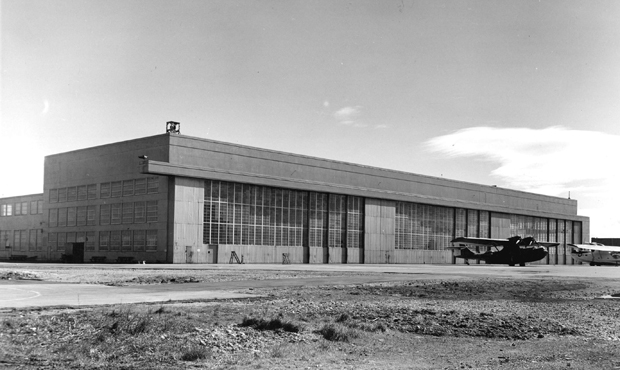
In 1939, Seattle’s Boeing Company built what became a major factory at what’s now Vancouver International Airport. The airport is in the middle of the Fraser River Delta on a big piece of land called Sea Island, which is officially located in the city of Richmond, BC.
Boeing Aircraft of Canada, Limited, as the subsidiary was known, built an amphibious aircraft there called the “Catalina,” which was a “Patrol Boat” (or “PBY”) designed by Consolidated. Because of wartime demand, the Consolidated design was manufactured by other companies, including Boeing.
Mike Lombardi, corporate archivist and historian for Boeing, says that these Canadian-built Boeing Catalinas were called “Cansos.” Later in the war, Lombardi says, the main work at the Sea Island plant was building center fuselage sections for the B-29 Superfortress.
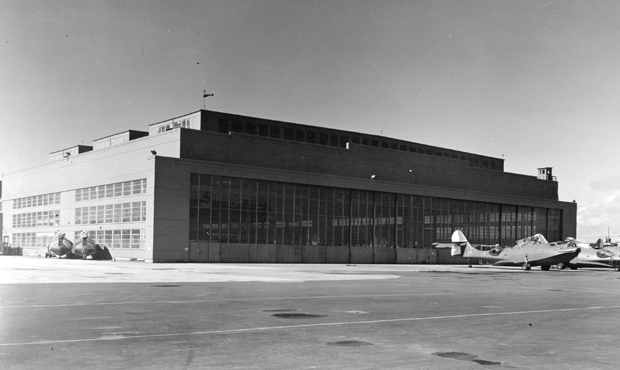
“Those sections were [sent] across the border and down to Renton,” said Lombardi. One of the old Boeing Canada hangars is still standing on Sea Island, nowadays being used by Harbour Air.
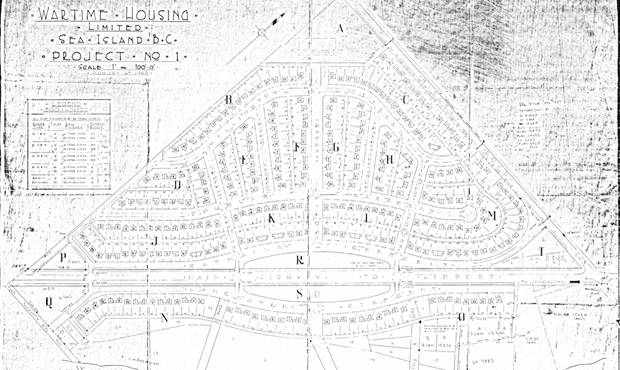
The workers at the Sea Island Boeing factory, which employed 7,000 people at its peak, needed places to live. Just like in Western Washington, wartime housing was scarce, as people moved into the area for war-related jobs.
Seattle’s forgotten connection to radio’s Jimmie Allen Flying Club
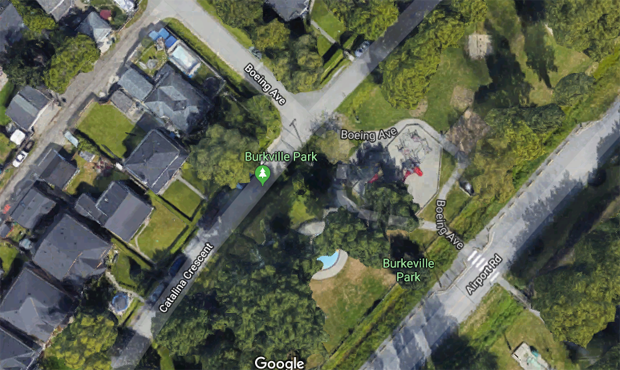
So, Boeing built a neighborhood of 300 cottages for workers and their families. The neighborhood was called Burkeville, named after Boeing Canada’s wartime president Stanley Burke, and it’s still there, and still looks very much the way it did 75 years ago.
Also still in Burkeville are streets named for American and British warplanes and airplane manufacturers: Catalina Crescent; Lancaster Crescent; Douglas Crescent; Wellington Crescent; Handley Avenue; Hudson Avenue; Stirling Avenue; and Anson Avenue.
And one more, of course: Boeing Avenue.
Elsewhere in the Vancouver area, there’s one more intriguing World War II large-scale artifact that’s hiding in almost plain sight.
The Museum of Anthropology at the University of British Columbia is famous for its collection of indigenous totems and contemporary indigenous works of art.
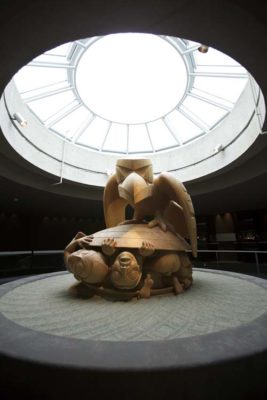
While totems are visible from the parking lot, it’s not obvious to visitors that the museum was built atop the concrete remnants of a World War II era defense installation called the Point Grey Battery. And, in fact, one of the iconic Bill Reid sculptures – “The Raven and the First Men” – is sitting right on top of a round concrete plinth where a huge artillery piece was once mounted.
The underground magazine and ammunition hoist are still there as well, out of sight just below the Bill Reid sculpture. Apparently, when the museum was designed and built in the 1970s, it was easier and cheaper to leave the massive concrete foundation in place.
Wartime British Columbia had a direct connection to Western Washington and to KIRO Radio during World War II, as KIRO’s newly-boosted signal easily reached Victoria on Vancouver Island. Before the US entered the war, KIRO listeners even raised money to buy toys and candy that were carried by Victoria resident Ken Stofer, a loyal KIRO listener and newly minted soldier, to orphans in Blitz-ravaged London.
Follow @https://twitter.com/feliksbanel