Crime drops across every major category in Washington, but officials warn the full picture is more complicated
Aug 3, 2026, 5:18 PM | Updated: 5:18 pm

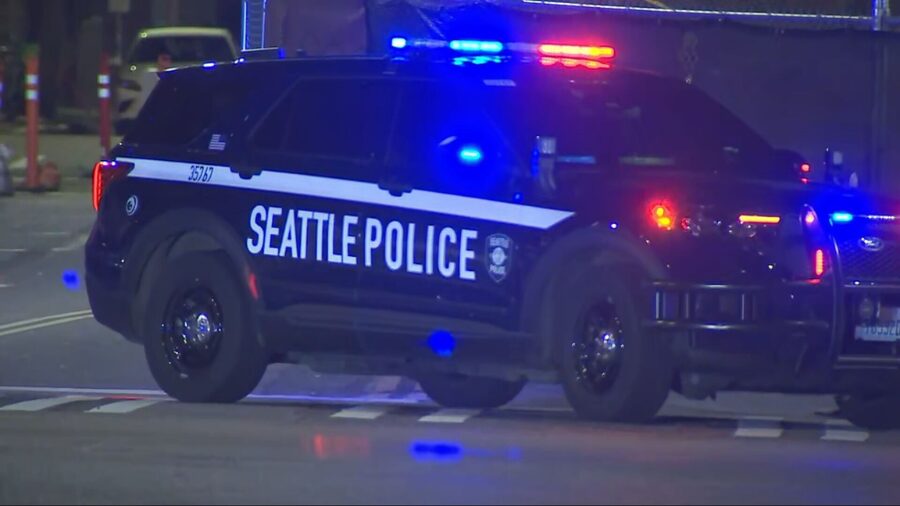
A Seattle Police Department vehicle at a blocked off crime scene. (Photo courtesy of KIRO 7)
(Photo courtesy of KIRO 7)
Crime declined across every major category in Washington in 2025, with sharp drops in murders, violent crime, and property crime, according to a new statewide report.
The annual Crime in Washington report, compiled by the Washington Association of Sheriffs and Police Chiefs (WASPC), tracks crime and arrest data submitted by law enforcement agencies across the state. The latest numbers show progress on several fronts, but also highlight ongoing challenges in staffing, court capacity, and public confidence in safety.
Murders down, but still above pre‑pandemic levels
In 2025, Washington recorded 236 murders, a 21.6% decrease from the 296 homicides reported in 2024. While that’s a significant improvement, WASPC noted the state’s homicide levels remain higher than they were before the COVID‑19 pandemic.
Overall, violent crimes dropped 13.8%, from 28,900 offenses in 2024 to 24,913 in 2025.
Crimes against persons, which include offenses such as assault, fell 7.3%, from 108,664 to 100,688. Domestic violence continues to make up nearly half of all crimes against persons.
Property crime sees major decline
The biggest drop came in property crime. Crimes against property fell 21.3%, from 308,044 offenses in 2024 to 242,542 last year.
Within that category, larceny‑theft accounted for 46.9% of property crimes, destruction of property made up 20.9%, and burglary/breaking and entering represented 10%.
Crimes against society, such as drug and weapon violations, declined slightly, down 0.9% from 27,992 to 27,754.
The report is based on an estimated state population of 8,114,915, with a total arrest rate of 18.5 per 1,000 residents. Juveniles comprised 5.3% of all arrests.
In 2025, 23,494 people were arrested for DUI, including 178 juveniles.
Reflecting national trends
The statewide trends mirror patterns seen across the country. The Council on Criminal Justice’s Crime Trends in U.S. Cities: Mid‑Year 2026 Update shows national homicide rates have fallen to their lowest levels since 1990.
Still, WASPC noted Washington’s homicide rate remains slightly above levels seen as recently as 2015.
“Any reduction in crime means fewer victims, and that is great news for our communities,” Steven Strachan, Executive Director of WASPC, said.
What’s behind the decline?
Strachan pointed to several factors that law enforcement leaders believe are contributing to the drop in crime, starting with improved policing practices, more proactive enforcement, and Washington’s pursuit laws that took effect in June 2024. Staffing levels have also improved at many departments, though some areas still face serious shortages.
He also credited the state’s investment in diversion, deflection, and reentry programs that address substance use disorder and behavioral health needs, along with more efficient court processing and faster case resolution. Community outreach and violence intervention programs aimed at preventing crime and addressing risk factors before they escalate have also played a role, Strachan said.
Reported crime vs. real victimization
At the same time, law enforcement officials caution that reported crime statistics do not capture the full picture.
Some chiefs and sheriffs believe fewer victims are reporting certain crimes, meaning actual victimization could be higher than what shows up in official data.
Later this year, the FBI is expected to release updated findings from the National Crime Victimization Survey, which measures victimization through direct surveys rather than police reports. That data may help clarify how closely reported crime tracks with people’s real‑world experiences.
Ongoing public safety challenges
Despite the encouraging numbers, WASPC warned several structural problems could affect future progress. The association pointed to chronic understaffing, as Washington has ranked last in the nation in law enforcement staffing per capita for more than a decade — a shortage that can strain response times, investigations, and community policing efforts.
New caseload limits for public defenders, adopted by the Washington Supreme Court, have contributed to the dismissal of cases in some jurisdictions. While local police agencies continue to respond to calls, investigate crimes, and submit cases for prosecution, limited court and defense resources may affect outcomes and accountability.
WASPC also cited limits on investigative technology. Restrictions on tools such as license plate readers and other public safety technologies can make some investigations more difficult. Law enforcement leaders, however, acknowledged the need for strong safeguards, transparency, and privacy protections when such tools are used.
RELATED STORIES


Looking ahead
Overall, WASPC said the reduction in crime and victimization across the state is a very positive development. Law enforcement agencies intend to continue monitoring trends, supporting victims, and working with communities to maintain progress.
“Public safety depends not only on reducing crime, but also on ensuring people feel safe in their communities,” the report noted.
Officials said the next challenge is making sure the recent gains are sustained and shared across all communities, even as Washington works through staffing shortages, justice system constraints, and debates over technology and accountability.
Follow James Lynch on X. Read more of his stories here. Submit news tips here.