Giant hornet trap finds potential tool for fighting second invasive pest
Dec 17, 2020, 12:42 PM | Updated: 3:42 pm
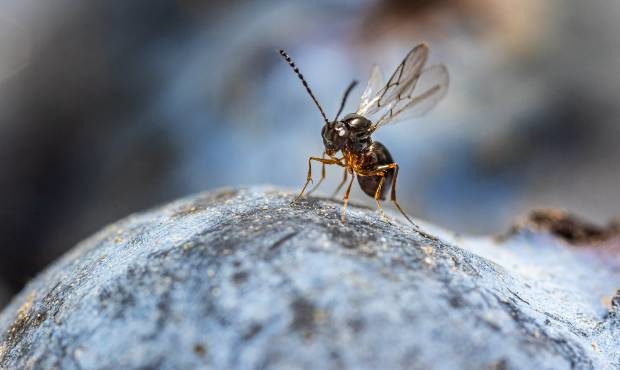
The parasitic wasp found in the trap could be an ally in the fight against an invasive fruit fly. (Warren H. L. Wong, University of British Columbia, Canada)
The Asian giant hornet traps are not only catching hornets — they have just yielded a discovery that could help get rid of another invasive pest.
One of the Whatcom County traps recently caught a Leptopilina japonica, a tiny, parasitic wasp that was the first of its kind found in the United States.
This type of wasp is a natural predator of the spotted wing drosophila, an invasive fruit fly that has done much damage to Washington orchards since it arrived here a decade ago.
“Most fruit flies only lay their eggs in overripe and rotting fruit, or fruit that has fallen off the tree, damaged fruit, that kind of thing. Spotted wing drosophila will lay its eggs in fruit that is just starting to ripen, isn’t ripe yet, and is not damaged,” said Karla Salp, public engagement specialist for the Department of Agriculture. “So it lays its eggs in perfectly usable fruit, and so that’s a big problem for fruit growers here in Washington.”
Asian giant hornet trapping to wrap up in December before hibernation
Now that this wasp is known to live in Washington, it could potentially be bred as a biological control against the invasive fruit flies.
“It could potentially lead to the development of some biological controls that could be used in the state to help growers out,” Salp said.
Right now, fruit-growers have to rely on pesticides to combat spotted wing drosophila, but with this new biological tool, they would have a natural means of getting rid of the harmful flies.
“Having basically a biological control for that pest in the area is really welcome news,” Salp said.
In the fight against the other, more famous invasive insect, the Asian giant hornet traps will remain up until about Christmas, as the hornets are going into winter hibernation. Over the winter, Department of Agriculture scientists will analyze trap catches that have been submitted by residents.