Can we really blame climate change for Puget Sound’s oyster problem?
Jun 27, 2018, 8:08 AM
University of Washington Climatologist Cliff Mass has taken heat from all sides for talking about climate change — pointing out what is fact-based and what is hype. His latest target is the Puget Sound.
RELATED: How global warming will affect the Northwest
Mass does not deny that human activity is causing the climate to dramatically change. He says people will be living under different conditions by the end of the century because of human influence on the climate, largely through CO2. But in a recent blog post titled “How Climate Change Exaggeration Can Hurt People and the Environment,” Mass argues the environmental concern can be hijacked for political purposes, hampering honest efforts to help solve the problem.
Whether it’s carbon taxes or wildfires, the only certain fact is that humans are to blame.
In California, politicians blamed climate change for recent, tragic wildfires. Mass argues this got the state off the hook for failing to maintain the power lines which sparked the blazes.
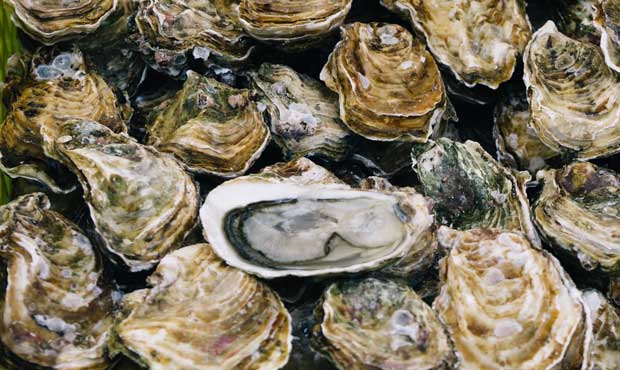
In Washington, however, different stakeholders have played a bit of a shell game over the health of Puget Sound and its oysters. As Mass writes:
Local environmental activists, regional politicians (like our Governor), and some local media (like The Seattle Times) have been fixated on the impacts of increasing CO2 on oyster production. They have claimed that increasing CO2 has caused the failure of oyster larvae to flourish in factory nurseries.
A detailed analysis reveals that none of this is true and that the factory nurseries made mistake in their intake of upwelled water at the wrong time of the day. An error that has been remedied (thanks to the advice of the University of Washington!), with oyster production flourishing today.
But this fixation on the wrong problem (CO2 increases) has given the shellfish industry a pass on some very bad practices, such as spraying herbicides and pesticides over our State’s waters, polluting our coastal zone with a lot of plastic, and churning up our tide beds. Politicians, wishing to show their environmental credibility, have been loud about CO2, but have neglected the issues of sewage run-off and the quality of our sewage treatment facilities.
Seattle’s massive failure at a wastewater treatment facility is one good example. Simple mistakes led to 235 million gallons of untreated wastewater into Puget Sound near Discovery Park.
That’s just one incident. The Seattle region frequently spills raw sewage into Puget Sound and nearby lakes — about 134 times each year. Sewage pipes overflow into area waters when heavy rains flood the system with stormwater. King County and Seattle have both been fined for the number of times this happens. This doesn’t even address the issue of street and sewer runoff. Ultimately, you end up affecting Puget Sound, and even with oysters testing positive for opioids.
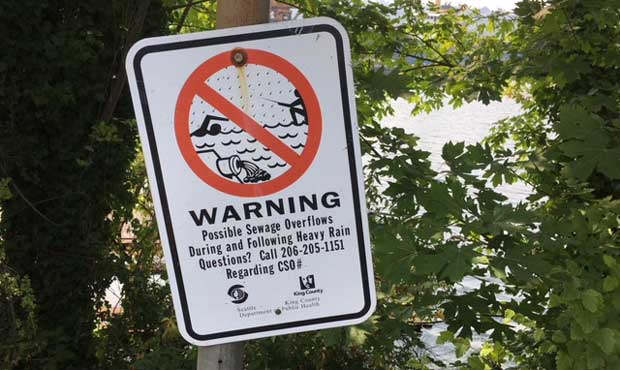
A sign on the banks of Seattle’s Lake Union warning that sewage spills into the lake during heavy rainfall. (Dyer Oxley, MyNorthwest)
“Not as sexy as increasing greenhouse gases, but very important,” Mass writes.
Climate Change in Washington
The issue of climate change, global warming, carbon footprints — pick your term — is real according to the majority of experts. The United States has warmed by about 1.6 degrees over the past 30 years. It is a relatively short time frame in the grand scheme of climate history which spans thousands of years.
As the Seattle’s Time’s FYI Guy Gene Balk points out, however, Washington has been spared from much of this warming. We’ve only warmed by about half a degree (unless you’re Yakima which is about 3 degrees hotter than 30 years ago). The ocean is keeping Washington generally cooler than many other areas of the United States.
This all doesn’t mean that climate change isn’t as significant of a concern as alarmists claim. Mass also points out that even if we cut down on CO2, by 2038 we will still be facing climate-related crises. Oceans will be dying from pollution. Poor soil conditions will affect food supplies. Wildfires will continue to char the state after years of forest mismanagement.
As Mass concludes: “…climate hype and misinformation hurts the environment and our citizens, no matter which side is doing it. Facts matter and environmental issues go far beyond the concentration of one gas in the atmosphere.”
Follow @http://twitter.com/Mynorthwest