State to spray sinister spongy moths, should you stay inside?
May 8, 2024, 1:22 PM | Updated: May 9, 2024, 11:39 am
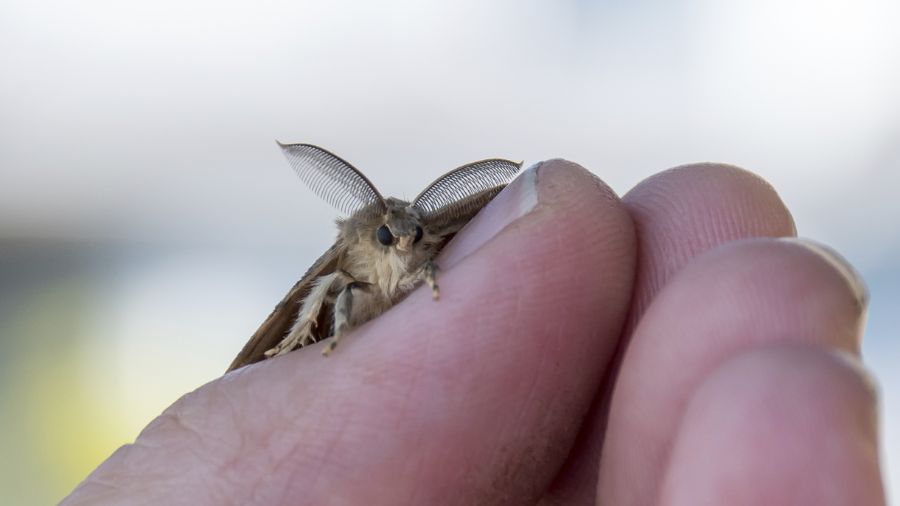
An adult male spongy moth. (Photo courtesy of the WSDA)
(Photo courtesy of the WSDA)

Washington Gov. Jay Inslee has declared an emergency over spongy moths, formerly called gypsy moths.
According to a news release from the Washington State Department of Agriculture (WSDA) on Wednesday, the insects could seriously threaten our state’s environment.
“The spongy moth is one of the most destructive forest pests introduced into the United States,” stated the WSDA’s website.
According to the WSDA, spongy moth caterpillars feed on over 300 types of trees, plants and shrubs and the insect has “defoliated millions of acres of forest and urban trees.”
The department cited that in 2017, spongy moth caterpillars stripped a third of the entire state of Massachusetts’ foliage. In 2018, the state lost around one-quarter of its hardwood trees and three-quarters of its oak trees.
“If spongy moth were to become established in Washington, it would threaten forest ecosystems, defoliate or kill trees and shrubs in backyards and parks, lead to quarantine restrictions on forest products and horticulture and result in long-term increased homeowner pesticide use,” stated the news release.
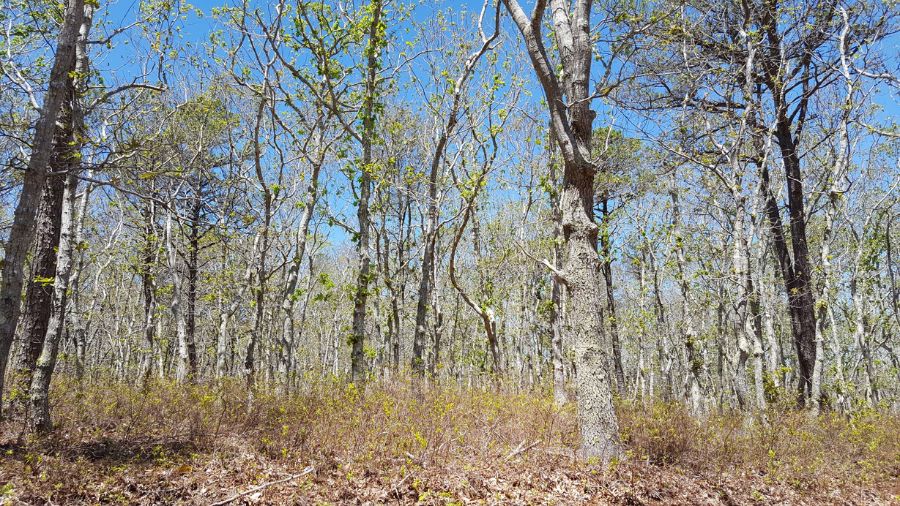
An example of an oak forest being defoliated due to spongy moths. (Photo courtesy of the WSDA)
Washington to spray Thurston County, Skagit County
But don’t worry, Washington has a plan.
The WSDA is set to begin treatments to eradicate spongy moth caterpillars starting Friday if the weather permits. The department will spray a “naturally occurring soil bacteria” through the air over around 1,400 acres in Thurston County and 900 acres in Skagit County.
The bacteria is called Bacillus thuringiensis var. kurstaki, or Btk for short. According to the WSDA, the bacteria poses a very low risk to humans, pets, birds, fish and bees.
“Btk is found naturally in the environment and has an excellent safety record while also being effective for spongy moth eradication,” the news release stated.
Residents may want to stay inside, cover cars
However, the department said even though the risk is low, as a precaution the Washington State Department of Health recommends that people who don’t want to be exposed stay indoors with doors and windows closed during the spraying and 30 minutes after.
The WSDA added to let the spray dry before allowing kids to play outside, wash with soap and water if there is skin contact and rinse eyes with water if the bacteria gets into the eye. It also noted that Btk is sticky and residents may want to cover cars parked outside, bring toys inside, etc.
To see if you are in an eradication zone, click here.
The department also noted that this is the 50th year of the spongy month program at the WSDA and has been one of the most successful.
The WSDA previously sprayed in Lacey and Kent in 2016.

The WSDA spraying bacteria to eradicate the spongy moths in Lacey, Washington in 2016. (Photo courtesy of the WSDA)
Why the name change?
The spongy moth was originally named the gypsy moth until 2022, The New York Times reported. However, the gypsy moth name was removed because it was based on a term that many Romani people find derogatory, the Times stated.
The Times also reported that the insect was nameless for about eight months before the Entomological Society of America voted on spongy moth.
“The new name comes from a translation of a French name based on the destructive forest pest’s sponge-like egg masses,” stated Connecticut’s Department of Energy and Environmental Protection’s website.
The insect’s scientific name is Lymantria dispar.
“In science, academic spaces and our societies, we should leave no room for dehumanization, racism and exploitation of cultures,” Margareta Matache, Ph.D., instructor and director of the Roma Program at Harvard University, told The New York Times.
To learn more about the spongy moth and the danger it poses, visit the WSDA’s website.
Julia Dallas is a content editor at MyNorthwest. You can read her stories here. Follow Julia on X, formerly known as Twitter, here and email her here.