Tech expert says privacy issue remains, but advancements coming for body cams
Jun 24, 2015, 10:16 AM | Updated: 12:32 pm

Local police department officials and technology experts met to discuss advancements in law enforcement technology and more on June 23. (AP)
(AP)
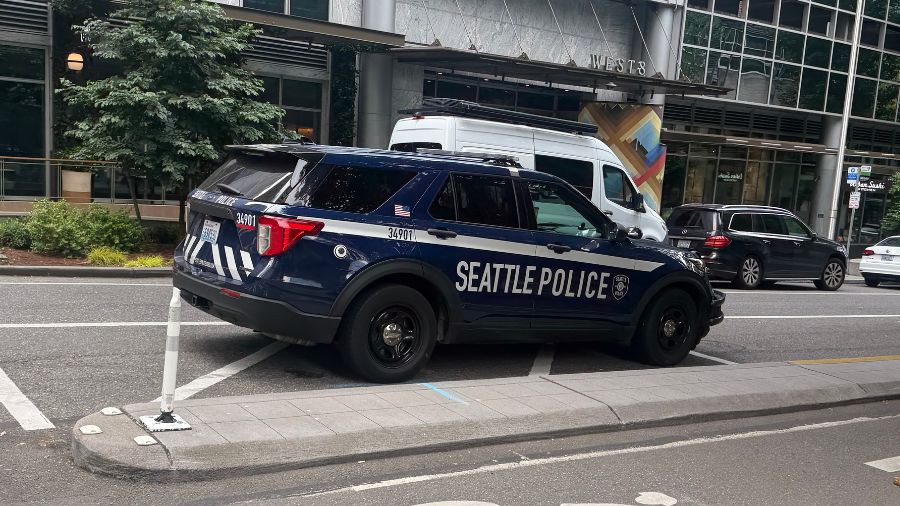
Seattle police have been recording their roadside interactions for some time now and have amassed a considerable stock of footage. But they’re not quite sure what to do with it.
“The question is: what do we do with all this video?” said Seattle Detective Drew Fowler. “That is the over-arching question that a lot of different agencies are struggling with.”
Police agencies from as far as Florida and Texas traveled to a conference hosted by the Seattle Police Department to meet with technology experts and open government advocates in an effort to answer the question.
“It was basically a meeting of minds,” Fowler said. “What can we do and how can we do it?”
For example, Seattle’s police have recorded almost 2 million videos from dash cams, according to Fowler. That amounts to 360 terabytes of data. But while that information could be disclosable to the public, what about the privacy of citizens in the footage? Or can police departments afford to sift through all the footage for public records requests?
Bill Schrier, former Chief Technology Officer with the City of Seattle, now a state adviser, attended the conference and told KIRO Radio’s Morning News that there are new technological advances in the pipeline to help the police department.
Related: Seattle police test body cameras
One such advancement, Schrier said, is a program that will allow videos of police interactions to be made available quickly and specifically feature the people involved.
“The idea is, eventually, you will be given a code when you are given a traffic citation on the street and the next day you will be able to enter the code on the Seattle police, or another police website, and actually look at the video — the dash cam video of the event,” Schrier said.
The self-proclaimed “Chief Geek” noted that no technology is available that will automatically blur the faces of individuals on the videos — and such developments could be far in the future.
“That was the main reason for the conference and workshop — to bring together industry and police departments to discuss it,” he said. “There’s research going on, but it’s not totally complete technology.”
Related: Seattle police launch body cam Youtube channel
“Seattle police have a pilot going,” Schrier said. “We were talking about seven months to a year before widely deploying it in the Seattle Police Department, assuming the pilot goes well.”
Fowler said that there is an expectation that the cameras could be on all Seattle officers by the end of 2016, but there are a lot things that must happen to support it, such as funding and support from the mayor and city council. Not to mention the logistics to handle the videos once recorded.
“It is an ongoing effort,” he said. “It is a logistical challenge.”