WA’s redistricting battle could be headed to the US Supreme Court. Here’s what’s at stake
May 25, 2026, 9:42 AM | Updated: 4:12 pm

A general view of the U.S. Supreme Court. (Photo: Al Drago, Getty Images)
(Photo: Al Drago, Getty Images)
A federal court decision earlier this month could shape who represents Eastern Washington in Olympia for years to come, and the fight is far from over.
Challengers are now asking the U.S. Supreme Court to step in before the 2026 midterms, arguing Washington’s court-drawn legislative map violates a recent ruling that sharply limits the use of race in drawing political districts.
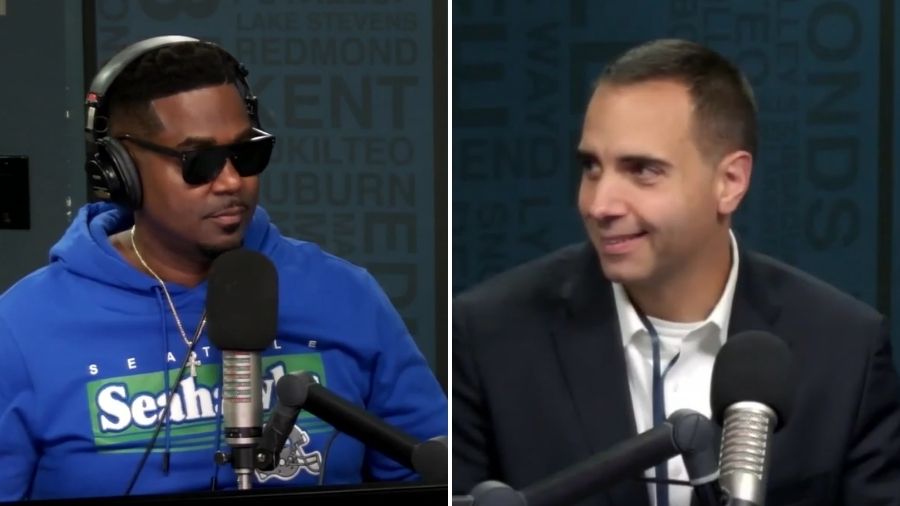
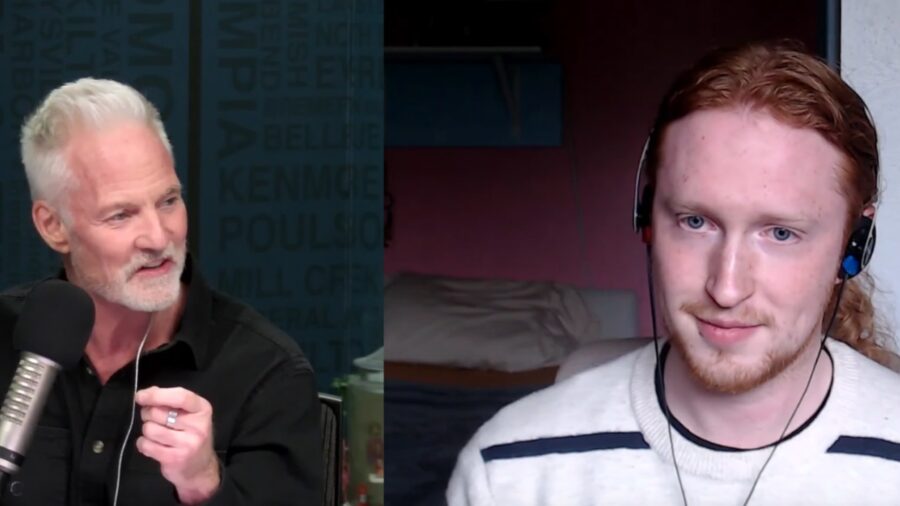
To make sense of what just happened, what comes next, and why it matters to voters across the state, KIRO Newsradio’s “Seattle’s Morning News” brought in former Washington Attorney General Rob McKenna for a breakdown.
How Washington’s 14th Legislative District got redrawn
U.S. District Court Judge Robert Lasnik approved a redrawn map in 2024 to strengthen the political voice of Latino voters in Eastern Washington, according to The Washington State Standard. The new 14th Legislative District now runs from Yakima south to the Columbia River and is drawn to give Latino voters majority status.
That map replaced one produced in 2021 by Washington’s bipartisan redistricting commission, the body the state constitution puts in charge of drawing political boundaries.
“Our state has a different way of creating districting maps than other states,” McKenna said. “We put in the Constitution that redistricting is accomplished by a bipartisan appointed committee: two Democrats, two Republicans, one nonpartisan chair.”
A balanced commission, McKenna explained, is supposed to produce fairer maps than the partisan brawls seen in states where the legislative majority controls the lines.
What happened on May 15
On May 15, Lasnik shut the door on a challenge to his redrawn map. Jose Trevino and state Representative Alex Ybarra, R-Quincy, had intervened in the case back in 2022 and were pushing to scrap the revised boundaries. According to The Washington State Standard, their legal team includes state House Minority Leader Drew Stokesbary, R-Auburn.
In a 10-page order, Lasnik ruled Trevino and Ybarra didn’t have standing to file their motion.
Their next move came almost immediately: a petition to the U.S. Supreme Court, paired with an urgent request to fast-track the case before voters head to the polls.
“Expedited consideration of this motion and the petition for writ of certiorari is warranted because the 2026 elections in Washington, like every other State, are looming,” their attorneys wrote.
RELATED STORIES


The Louisiana ruling reshaping redistricting nationwide
The Washington challengers are leaning on a U.S. Supreme Court decision that’s already shaking up map fights across the country: Louisiana v. Callais.
In that case, a group of white voters challenged Louisiana’s congressional map after the state created a second district where Black voters made up a majority. The Supreme Court ruled 6-3 that the map crossed the line into unconstitutional racial gerrymandering.
“What the majority opinion held is that historical evidence didn’t show that the state’s map was the result of intentional racial discrimination. The new map was the result of intentional racial discrimination,” McKenna said. “They’re saying you can’t draw maps for the express purpose of creating majority-minority districts where you’re using race to do that.”
McKenna said the ruling cuts both ways.
“On one hand, you can’t intentionally discriminate against minority voters by pushing them into districts where their vote will be diluted,” he added. “But on the other hand, you can’t draw maps that have the opposite effect either.”
A ‘recipe for chaos’ if maps change now
Washington’s election machinery is already in motion. Candidate filing has closed ahead of the Aug. 4 primary, with 67 candidates running for seats in the 13 districts redrawn in 2024.
Washington Secretary of State Steve Hobbs welcomed Lasnik’s ruling, warning The Washington State Standard that pulling the map at this point would be a “recipe for chaos.”
Lawyers for the Latino plaintiffs in the original case are also fighting the request to fast-track Supreme Court review. They point to the “Purcell principle,” a long-standing rule in election law that warns federal courts against changing state election rules in the run-up to a vote.
Will the Supreme Court take the case?
McKenna says the odds of a quick Supreme Court intervention are slim.
“It’s very, very challenging to get the Supreme Court to grant review,” McKenna said. “They get hundreds of appeals for every case they actually grant review in, so the odds are against it.”
But the bigger picture is more complicated. The Supreme Court recently declined to take up redistricting cases out of Mississippi and North Dakota, sending both back to lower courts to reconsider in light of the Louisiana ruling, according to The Washington State Standard.
That signals the high court may prefer to let lower courts work through the new rules before stepping back in, which could leave Washington’s challenge in the same holding pattern.
“The Louisiana v. Callais decision is on the books now, and so one can anticipate future challenges that might have a better chance of actually reaching that court,” McKenna said.
What it means for Eastern Washington voters in 2026
For voters in the 14th Legislative District, the practical answer is straightforward: the map stays as drawn for the 2026 election. Yakima, the Lower Yakima Valley, and surrounding communities will continue to anchor a district built to give Latino voters majority influence at the polls.
What happens after that depends on the U.S. Supreme Court and whether the Louisiana ruling becomes the tool that reshapes Washington’s political map all over again.
Charlie Harger is the host of “Seattle’s Morning News” on KIRO Newsradio. You can read more of his stories and commentaries here. Follow Charlie on X and email him here.
Follow @https://twitter.com/kirocharlie