We live in earthquake country. The Nisqually Earthquake proved it 25 years ago.
Feb 28, 2026, 5:01 AM

Damage caused by the Nisqually Earthquake. (Photo courtesy of the Washington Military Department)
(Photo courtesy of the Washington Military Department)
Where were you at 10:54 a.m. on February 28, 2001?
At that moment, 25 years ago, there was a whole lotta shaking going on as the Nisqually Earthquake struck western Washington.
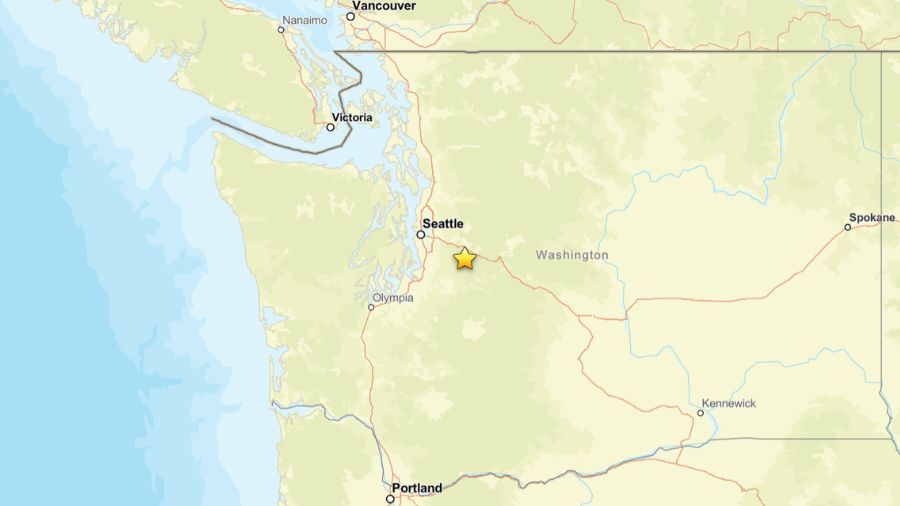
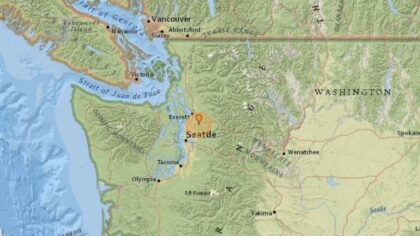
The 6.8 magnitude quake was centered about 35 miles deep near Anderson Island in South Puget Sound and shook for just under a minute. The earthquake caused $1 billion to $2 billion in damage, one person died from a heart attack, and about 400 were injured.
The most serious damage occurred near the epicenter or involved older, unreinforced masonry or concrete buildings. Damages included parts of older downtown Seattle, the Capitol building in Olympia, the Boeing Field runway, and the air traffic control tower at Seattle-Tacoma International Airport.
Elsewhere, the former State Route 99 Alaskan Way Viaduct in Seattle remained standing but suffered some support sagging and was deemed likely to fail in another earthquake. The viaduct was replaced with today’s tunnel that is designed to withstand a 9.0 magnitude earthquake. The Seattle waterfront seawall also suffered damage and has been replaced.
Western Washington is earthquake country
Western Washington is prone to earthquakes, ranking number two in the lower 48 states behind California. The primary cause of these earthquakes is the subduction of the offshore Juan de Fuca tectonic plate under the North American plate. The Juan de Fuca plate continues to slide under the North American plate at about 3.5 to 4.5 centimeters per year, placing western Washington under growing pressure.
About 100 miles off the Pacific Northwest coast is the Cascadia Subduction Zone, where the Juan de Fuca plate is sliding under the North American plate. This plate movement also generated the Cascade volcanoes and keeps them active in geologic time.

A diagram of the Cascadia Subduction Zone. (Image courtesy of the Pacific Northwest Seismic Network)
The Cascadia Subduction Zone is part of the Pacific Ocean Ring of Fire, where the majority of the globe’s biggest earthquakes and volcanic eruptions have occurred.
The subduction zone produces three types of earthquakes in our region. The big ones are rare megathrust events such as the Cascadia earthquake, the last to occur on January 26, 1700, and strike about every 300 to 500 years.
The other types include shallow North American plate events and deep intra-slab events within the subsiding Juan de Fuca plate. This last type involved the Nisqually quake as well as the April 29, 1965, and April 13, 1949 (both magnitude 6.7) earthquakes in western Washington.
RELATED STORIES


Earthquake readiness
Earthquakes are no-notice events. Yet today, an early earthquake warning system is in place, named “ShakeAlert.”
This system sends alerts to wireless devices, giving critical seconds of lead time to prepare and take action before the shaking gets started. Created by the U.S. Geological Survey (USGS), this system uses a network of earthquake sensors throughout the West Coast that can detect a quake and provide information such as the location, magnitude, and expected duration via wireless devices, as well as through mediums like TV, radio, and the internet.
Be ready for earthquakes in advance. Remember to drop, cover, and hold on when an earthquake starts. Practice this safety technique with your family. In addition, make an emergency plan and protect your home. Also include a communication plan in case the quake strikes when your family is separated at work, school, or on the road.
Visit ready.gov for all the earthquake preparedness guidelines, including what to do if an earthquake strikes while you are sleeping in bed, driving a car, or are outdoors.
Washington State Emergency Management also offers earthquake readiness guidelines along with many other local city and county agencies and organizations.
This silver anniversary of the Nisqually earthquake reminds everyone that western Washington is earthquake country. The date also serves as a reminder of the need to prepare in advance, so when the ground shakes unannounced, all are ready to respond and stay safe.
Ted Buehner is the KIRO Newsradio meteorologist. Follow him on X and Bluesky. Read more of his stories here.