Night sky double-header: Six-planet alignment and Perseid meteor shower begin this weekend
Aug 8, 2025, 12:30 PM

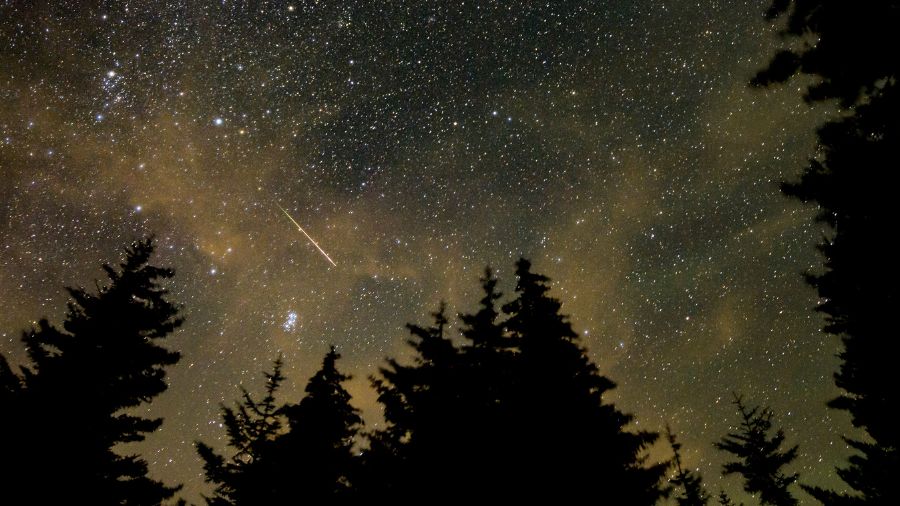
A photo of the Pereseids meteor shower. (Photo courtesy of NASA Science)
(Photo courtesy of NASA Science)
The summer months offer a great time to view the night sky. Starting this weekend and into next week, there is a great opportunity to view a nighttime double-header, the unique alignment of six planets, and the peak of the Perseid meteor shower.
Thanks to clear skies in the coming days, you can see a unique planetary event set to align in the night sky starting August 10, toward the final days of this month. Six planets will all be lined up in the night sky.
RELATED STORIES


Six planets align over Seattle
The planets include Mercury, Venus, Jupiter, Saturn, Uranus, and Neptune; the latter two need binoculars or a telescope to be seen. The others will all be visible to the naked eye.
The best time to view this exceptional event is during the early morning hours before sunrise. The six aligned planets will be in the eastern sky prior to sunrise.
This planet parade, as some call it, is rather rare. Yet, this planet positioning will be the second time this year, the first occurring in January.
From Earth’s perspective, the six planets will not be a perfect straight line, yet they will appear close together.
So if you want to see this distinctive planetary orientation, look to the eastern sky before sunrise starting this weekend until close to the end of the month.
The Perseid meteor shower
According to NASA, Earth’s rotation around the sun carries the planet through the Perseids meteor stream each year during the period of about July 17 through August 24. Although the peak period to see the meteor shower occurs from August 11th through the 14th.
Weatherwise, skies should remain clear during nighttime hours into the middle of next week, allowing great viewing of the meteor shower commonly known as the Perseids after sundown. The best time to see the surge of meteors in the night sky is between midnight and dawn.
No special equipment is needed. Just find a wide-open sky and even better, away from city lights. Your eyes may take up to 20 minutes to adapt to the dark. Perseid meteors will start to be seen hitting the planet’s atmosphere in the mid-to-late evening hours, peaking toward dawn.
In a dark sky, you may see up to 100 meteors per hour. Hang in there for at least one hour since the meteors tend to come in bursts interspersed with lulls.
The Perseid meteors are traced to the constellation Perseus, in honor of Perseus the Hero. In ancient Greek star lore, Perseus is the son of the god Zeus and the mortal Danaë. The Perseid shower commemorates the time when Zeus visited Danaë, the mother of Perseus, in a shower of gold. Quite the love story!
There is no threat of the meteors reaching the earth’s surface. The meteors are quite small and burn up about 60 miles above earth’s surface, leaving wonderful streaks of light across the night sky.
With clearing skies this weekend into the middle of next week, the weather will cooperate to view this wonderful night sky double-header.
Ted Buehner is the KIRO Newsradio meteorologist. You can read more of Ted’s stories here and follow him on X