‘It’s a big tech city, so that’s kept things slower’: Economist says Seattle’s small business economy is slowing
Nov 23, 2026, 5:59 PM | Updated: 5:59 pm

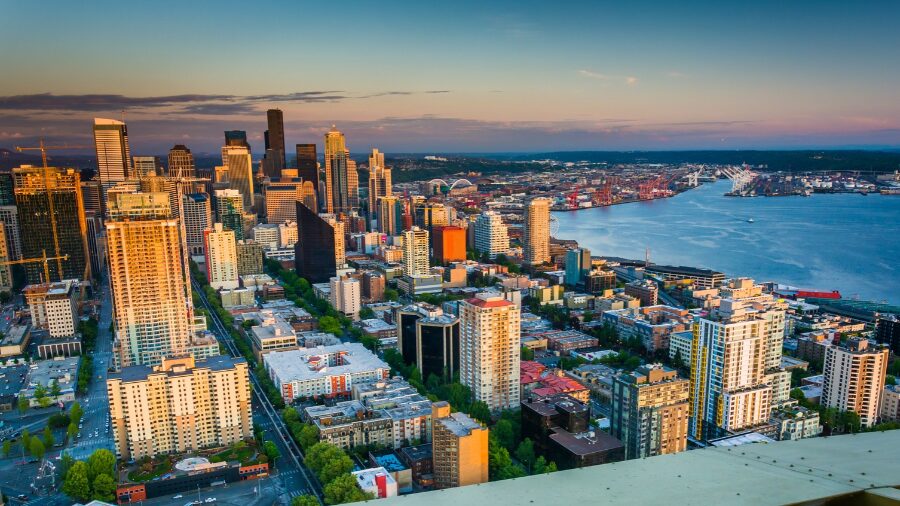
Seattle’s small business economy has slipped from growth into contraction, and the tech industry’s belt-tightening may be a major reason, according to Homebase Chief Economist Guy Berger.
New Seattle figures from Homebase show the number of open businesses it tracks fell just over 5% over the past year. That count remains well above where it stood five years ago.
Speaking on KIRO Newsradio’s “Seattle’s Morning News,” Berger pointed to the city’s reliance on the tech sector as a key factor behind the slowdown.
“It’s a big tech city, and so that’s kept things slower,” Berger said.
He described Seattle as a potential epicenter of tech-sector cutbacks, a strain he believes cities such as New York don’t feel.
“But right now that puts pressure on Seattle,” he said.
Seattle bucks national trend
Nationally, the number of open businesses is slightly higher than a year ago, according to Berger. Employment has contracted across the country, which he linked partly to restrictive immigration policy that has made it harder to find workers.
Some large Sun Belt cities also saw declines in October, Berger noted, but other major metros haven’t experienced anything as severe as Seattle.
“But I do think Seattle stands out,” Berger said.
He believes the slowdown in tech hiring and the layoffs ripple outward to neighborhood businesses that depend on spending from well-paid tech workers.
“I mean, some of them have been laid off or are looking for new jobs, and they’re spending less money on small businesses,” he said.
Workers who kept their jobs may also feel more anxious about spending, he added.
One surprising detail stood out to Berger. Although employment at Seattle small businesses has dropped a fair amount, hours worked haven’t fallen as sharply. During downturns, companies often cut hours more steeply than headcount, but that pattern isn’t showing up in Seattle.
Restaurants and bars drive much of the decline
Restaurants make up a large share of the small businesses in Homebase’s Seattle data, Berger explained. Their share of the decline isn’t disproportionate, but there are so many of them that they weigh heavily on the overall picture.
“They’re not growing by an outsized amount, but they’re a big chunk,” Berger said.
Every restaurant or bar that shuts its doors, even temporarily, pulls down both worker counts and the number of open businesses.
“You are going to have much fewer small businesses open, and so I think that’s some of it,” he said.
City leaders have tools to make it easier for small businesses to stay open, he argued, but the right approach depends on what is driving the decline. That could be a shift in business from small companies to larger ones or a broader contraction.
“I mean, this is small business data, so I think it really depends on what the hunch is about what the big driver is,” Berger said.
He posed a question for policymakers to consider.
“Are there things that can be done with policy regarding these types of small businesses that would keep more of them open?” he asked.
Lower taxes are a common proposal, but Berger cautioned that this involves a trade-off. Keeping more businesses open could bring in more revenue overall, while the city would collect less from each individual business.
Seattle is also a relatively high-wage city for small business workers, he noted. Fewer open businesses could affect sales tax and other revenue sources that fund city services.
Holiday season matters more for some than others
How much the holidays matter depends heavily on the type of business, Berger explained. Retail ramps up sharply, while home improvement businesses often hit a slow stretch this time of year.
Peak shopping activity is still ahead around Thanksgiving, but holiday hiring has already crested. Homebase’s timesheet data shows much of the seasonal retail hiring happened in October, and Berger expects businesses to begin shedding workers after Thanksgiving.
Berger also raised the possibility that Seattle retailers who survived the past year could benefit from facing less competition this season.
“I think it’s interesting if you’re still a retailer that did not shut down over the past year. Do you feel like you actually have a leg up because you have less competition than you did a year ago?” he asked.
RELATED STORIES


Room for a rebound in 2027
Looking toward 2027, Berger struck a cautiously hopeful tone. Seattle may be in a better position precisely because it is starting from a weak point, and laid-off workers could be hired back. He also cited Bureau of Labor Statistics data suggesting nonfarm payrolls in the Seattle area may be picking up after a long flat stretch.
He compared the situation to a plucked string: the further out of whack it gets, the more room there is to snap back.
“I’m kind of hesitant to become too pessimistic here,” Berger said.
He believes the city could look back a year from now and see a real recovery from a low point.
“At least I’m crossing my fingers because you guys live in a wonderful city,” he said.
Watch the full discussion in the video above.
Listen to “Seattle’s Morning News” weekdays from 5 a.m. to 9 a.m. on KIRO Newsradio 97.3