SEATTLE NEWS ARCHIVES & FEATURES
MIT scientist thinks it’s ‘more likely than not’ we live in simulation
Apr 16, 2019, 5:40 AM
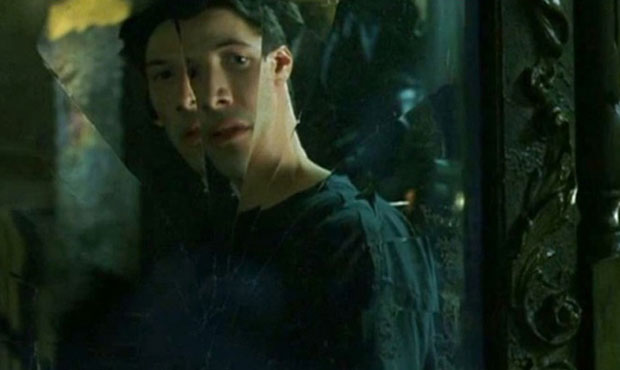
Could we be living in a simulation like in "The Matrix?" One MIT scientist thinks so. (AP)
(AP)
If you’ve ever watched a film like “The Matrix,” you may have caught yourself wondering, “Could everything in our world really be a giant simulation?”
One Massachusetts Institute of Technology scientist thinks that this scenario is not far off-base.
Rizwan Virk, director of Play Labs at MIT and author of newly-released “The Simulation Hypothesis,” told the Dori Monson Show that he believes there is at least a 50 percent chance that everything we think that we are seeing and experiencing is really just a simulation.
“I’d say it’s somewhere between 50 and 100 percent,” he said.
Virk said that the idea of questioning if one’s surroundings indeed are reality is not a new concept.
“It’s basically a modern version of an old idea that’s been around since the days of Plato, that the world we see around us is not the real world,” he said.
However, the advent of video games in the last few decades — and the creation of entire alternate worlds through these games — has given scientists a format on which to base that theory of life as we know it being unreal.
“The idea is that the physical world around us is a computer-simulated reality that’s based more on information than it is on physical objects,” Virk said.
He said that there are multiple versions of the complex theory. In one version, pioneered by Oxford Professor Nick Bostrom in 2003, people are all simulated beings, rather than humans. Virk compared it to being a character in a game like Minecraft or Fortnite.
“The world exists from the perspective of that character, but from the perspective of those outside of the video game, does that world exist?” he said.
Another version of the theory is more similar to the scenario in a movie like “Ready Player One,” in which real humans create alternate selves that they play as inside an alternate game world.
“We are conscious entities outside the game, and we take on, or roleplay, characters within the game itself,” he said. “And in that case, we exist in both realities, if you will, within the simulation and outside the simulation.”
Virk explained that thinkers from Tesla and SpaceX CEO Elon Musk, to Professor Bostrom have posed the theory, that if we have made such strides with creating alternative universes in video games in just decades, and if, following this pattern of innovation, this kind of technology “will be indistinguishable from reality” one day in the future, then who is to say that another civilization in another galaxy could not have already gotten to this point?
“If we will be able to do it at some point in the future, if you think of the galaxy — and you think of civilizations that are a million years older than us — is it possible … that some civilization has already gotten there?” he said. “And if one civilization has already gotten there, then they’ve probably created lots of simulated worlds.”
Therefore, according to the theory, we could all be living in one of these alternate worlds.
The simulation hypothesis is “actually not that inconsistent” with Christianity, Judaism, and Islam, according to Virk.
“They talk about the physical world, and the soul that enters the physical world, and that’s an immortal soul,” he said. “And after you leave the physical world, you’re going to exist in this other world. In the Eastern traditions, like Buddhism and Hinduism, it’s even more explicit — you come in, you play a role, you die, you go back around.”
Being held accountable for one’s sins at the end of life could even be compared to being rated on a game performance at the end of a game, he said.
“It tends to bridge this growing gap between scientists who have their faith in science and technology, and religious people who have their faith based on these ancient texts,” he said. “This is the only model that I’ve seen that actually crosses and bridges that gap, and provides a scientific model for some of the things that spiritual people have been saying.”
Dori found the topic fascinating, but admitted that he personally believes the chance life is all a simulation is a solid “zero percent.”
Virk rebutted that in “The Matrix,” the character of Neo, played by Keanu Reeves, also did not realize at first that he was living in a simulation.
“He would’ve probably also said, ‘zero percent,’ just like you’re saying,” Virk said.