SEATTLE NEWS ARCHIVES & FEATURES
WA Transp. Commission: Pay-per-mile less regressive than gas tax
Dec 18, 2019, 4:07 PM

(AP)
(AP)

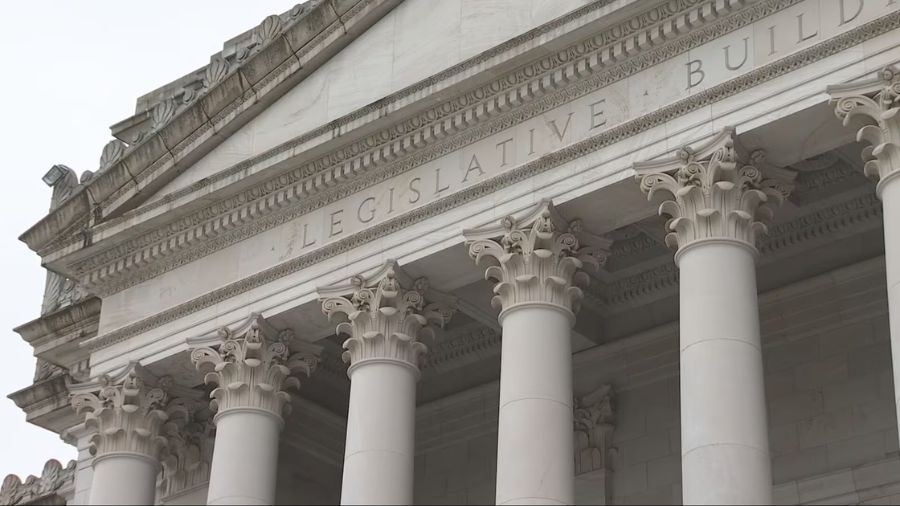
Some drivers are worried about commutes getting more expensive after the Washington State Transportation Commission voted on Tuesday to recommend a pay-per-mile tax to the Washington State Legislature — but WSTC Executive Director Reema Griffith said that this tax will actually make driving more equitable for low-income commuters who cannot afford to live near their place of work.
KIRO Radio’s Dori Monson contended that the pay-per-mile tax, or road usage charge, would hurt working families. Griffith countered that this would not be the case, because it would replace the gas tax and work out to fewer cents per mile than the gas tax.
“At the end of the day, taxpayers under this proposal, or set of recommendations, would be asked to pay one or the other [gas tax or pay-per-mile tax],” she said. “So, overall, some drivers are actually going to see a reduction in the amount of taxes they’re paying for the roads today.”
In contrast, people with more fuel-efficient cars who do not have to buy gas very often might be paying a bit more with the road usage charge than they previously were with the gas tax, she said. Because electric and hybrid cars tend to be purchased by those who are more financially well-off, Griffith said that this will be a much more equitable tax than the gas tax. Essentially, the electric car drivers will be subsidizing road maintenance for lower-income drivers.
Dori: Pay-per-mile tax the fight of our financial lives
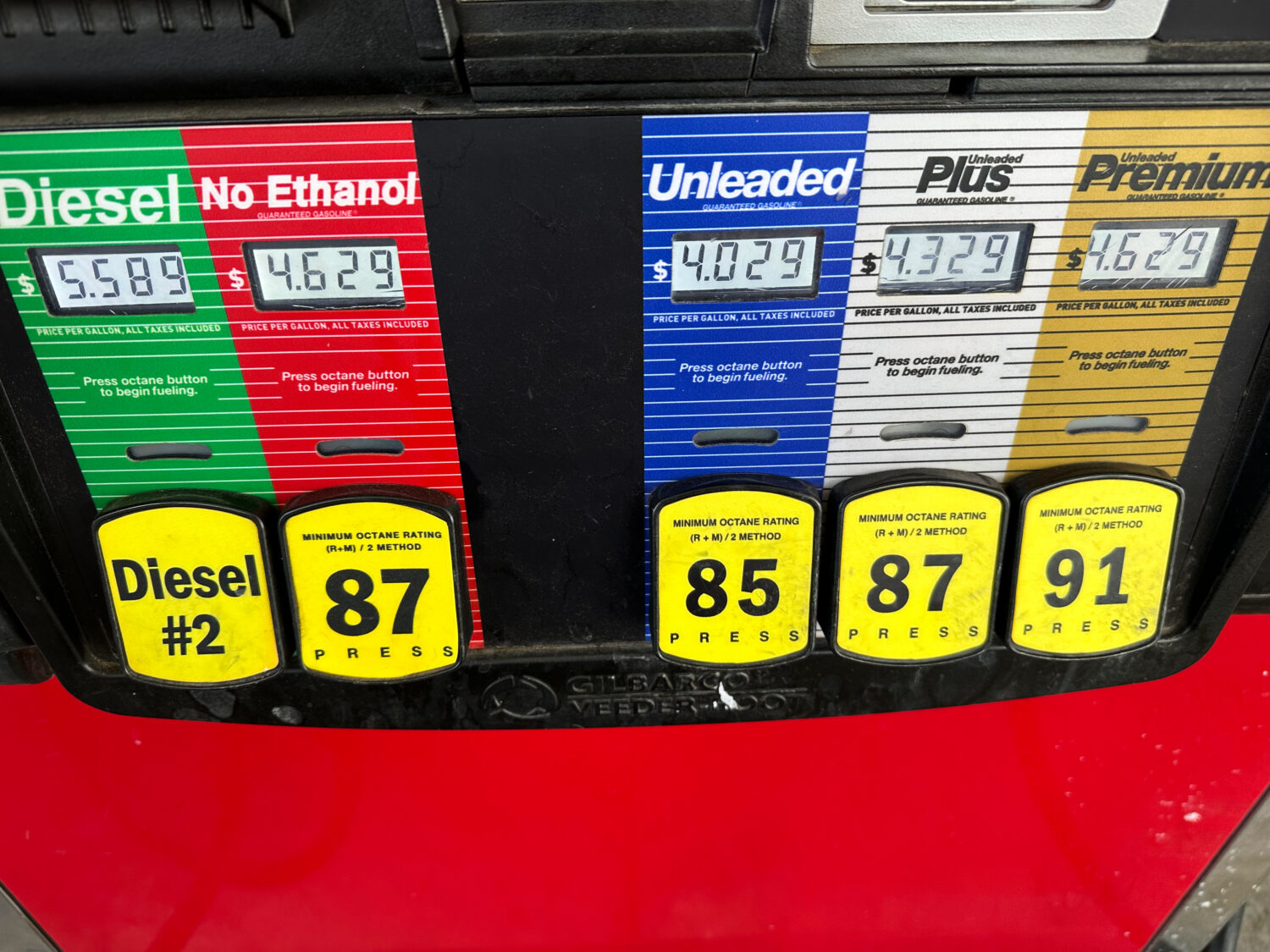
“The cars that are getting those lower-gas MPGs … today [with one of these cars] I’m paying 5 cents a mile, I’m paying a ton of money to use these roads through the gas tax. Is that fair to me as a person driving that older car?” she said. “No, it’s not, and it’s not fair that someone who can pay a more efficient car is getting to pay a penny a mile for the same road, and that’s exactly what a road usage charge corrects.”
The average driver of an older, less fuel-efficient vehicle pays more than $300 per year in gas tax.
“If you’re paying a lot today because you’re filling up a lot, and you don’t have the luxury of buying a car that [allows you to] fill up hardly ever, you’re paying more in taxes,” she said. “If I can go from paying that 5 cents a mile to 2 cents a mile, that’s a benefit to me as a taxpayer, and I get a break — and I’m driving the same amount of miles.”
She also disputed Dori’s use of the term “toll for every road” to describe the new tax.
“Tolling is a tool that works in very specific situations — it’s not something we can do all over the state,” she said.
For instance, tolls, such as the ones on the 520 bridge, can vary in price depending on whether or not it is rush hour. The pay-per-mile tax would be a flat rate, Griffith said.
However, the Seattle Department of Transportation said in a letter to the Washington State Transportation Commission, “The RUC should include congestion factors in its pricing model, such as charging more to use roadways during peak commute periods.”
Griffith said that while some groups may push for this, the WSTC is committed to doing a flat-rate system. Part of the reason for this is that tolls require a GPS tracker in each vehicle, and the WSTC knows that some residents are strongly opposed to this. During the road usage pilot project, half of participants did not pick the GPS option, she noted.
“It’s a much more conservative approach to how we’re looking at this than what maybe the City of Seattle or others may advocate for … road charging will only work if drivers will have a choice of how to send in their miles,” she said.
Non-GPS options could include texting a photo of their odometer to the state via a free app. While there could potentially be ways to cheat on this — such as taking a photo of one’s odometer many months and miles before the due date, or taking a photo of an odometer with lower mileage on a car that is not one’s own, Griffith said that the company being used will have methods in place to root out cheating.
“I think those are not insurmountable challenges, but definitely do present a challenge that we’re going to have to work on, without a doubt,” she said.
Pay-per-mile costs and revenues
The tax-collection costs of the pay-per-mile tax will be higher than the implementation costs of the gas tax, according to Griffith. In 2015, the WSTC estimated that it could cost up to 13 percent of revenues, as opposed to the gas tax, which costs less than a percent.
“We can contract a lot of this out to the private sector — that creates jobs and does a lot of things,” she said. “Aside from that, we’re not anticipating a massive government empire being built from this — the more we can delegate out and contract out, the better.”
She added that the stats above are a “worst-case scenario.”
“Nothing will ever beat the gas tax in its efficiency,” she said. “And we hate to see it go away, but the reality we’re all having to face, which is sobering, is that cars are just getting more efficient. By 2035, half our revenues are going to vanish.”
Griffith adamantly stated that the revenues collected through the pay-per-mile fee would go toward maintaining roads and bridges that drivers use every day, as dictated by the 18th Amendment of the Washington State Constitution.
“All fees collected by the State of Washington as license fees for motor vehicles and all excise taxes collected by the State of Washington on the sale, distribution or use of motor vehicle fuel and all other state revenue intended to be used for highway purposes, shall be paid into the state treasury and placed in a special fund to be used exclusively for highway purposes.
“The commission has a specific recommendation to the Legislature that says, ‘If road charging moves forward, revenues should be dedicated under the 18th Amendment,'” she said.
There is “no question” that overall tax reform is needed in Washington, Griffith said, but transportation taxes “are a very small percentage of all the taxes that people pay.”
Listen to the Dori Monson Show weekday afternoons from 12-3 p.m. on KIRO Radio, 97.3 FM. Subscribe to the podcast here.