SEATTLE NEWS ARCHIVES & FEATURES
Bellevue conference studies near-death experiences
Sep 6, 2018, 9:07 PM
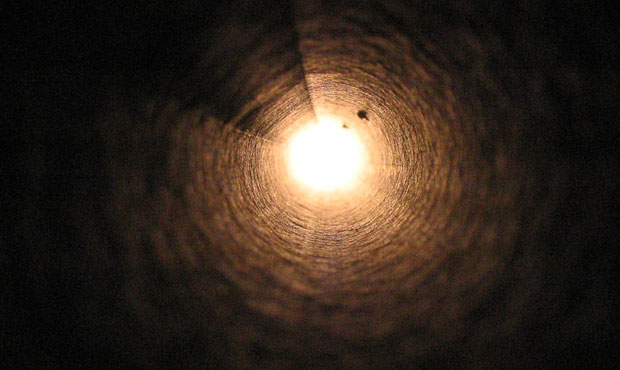
Are near-death experiences real? A recent Bellevue conference explored this very question. (VinnyPrime/Free Images)
(VinnyPrime/Free Images)

The medical conference that Dr. Jeff O’Driscoll, a longtime emergency room physician from Salt Lake City, presented at in Bellevue last weekend was unlike your typical gathering of docs. The International Association of Near Death Studies conference at the Hilton Bellevue explored the question of what happens after we die — and whether some people have glimpsed some insight into that question.
After 25 years at a level 1 trauma center, O’Driscoll said that he has seen the spirits of loved ones in the room with patients, and has even witnessed people’s spirits leave their bodies as they die.
“I’ve seen people die, and I’ve seen them leave their mortal bodies behind and communicate before they leave and depart to another realm, and I’ve had that experience a number of times in the emergency department,” O’Driscoll told KIRO Radio’s Dori Monson.
RELATED: Dori explains how grieving Orca reaffirms his belief in a higher power
In one case two decades ago, a patient had been involved in a serious car accident that took the lives of his wife and son, and left him critically injured. O’Driscoll said that he saw the man’s deceased wife standing over him while he lay in a coma.
“I experienced her presence — I saw her and I communicated with her,” O’Driscoll said.
Later, when the patient was conscious, O’Driscoll found that he had had a near-death experience speaking to his wife at the scene of the accident.
O’Driscoll said that he looks at these near-death experiences not as a religious experience, but as a spiritual one, noting that near-death experiences have common similarities among people with all types of beliefs. People tend to experience a “bright or brilliant light,” “an encounter with deceased loved ones and/or some being that they represent as being a deity,””a profound sense of love,” and “an endowment of profound knowledge.” Many people, after a near-death experience, tend to set aside the desire for money and material goods in favor of the desire to make a difference in the world.
O’Driscoll said that very few doctors discuss this sort of encounter due to a feeling that the experience was sacred or due to a fear of being ridiculed by skeptics; he himself needed 20 years to come out about his experiences. Now, however, the medical community is far more open to discussing this phenomenon.
“There is an increasing number of physicians who are willing to talk about these experiences that they’ve had personally,” he said.
To learn more about O’Driscoll’s own near-death experiences and his book on the subject, “Not Yet,” visit his website.