Turn your backyard into a Certified Wildlife Habitat
Sep 15, 2021, 8:31 AM | Updated: Oct 10, 2024, 1:40 pm
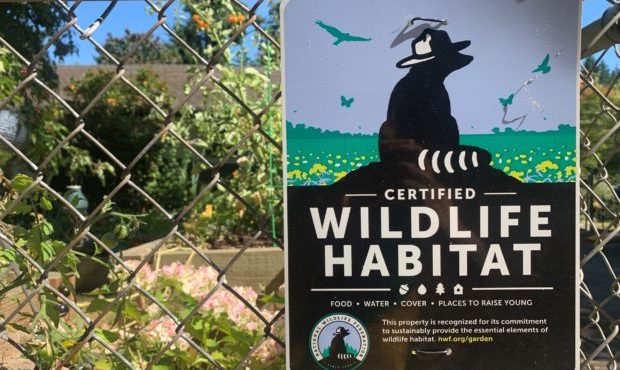


Lisa Ryan lives on a quiet residential corner in Edmonds, Washington, but attached to the chain link fence in her front yard is an official, metal sign that says “Certified Wildlife Habitat.”
It’s a program run by the National Wildlife Federation, and there are five requirements to turn your yard, balcony container garden, schoolyard, work landscape, or roadside greenspace into a Certified Wildlife Habitat.
“You have to provide food for wildlife,” Ryan said, as she toured me around her lush yard. “We have lots of fruit trees and bushes and native berries. This is bee balm, the insects and birds love it. It’s probably the most popular plant in the yard.”
There needs to be a water source.
“I have a fountain with fresh bubbling water on the patio, and I provided a couple of terracotta saucers. I keep the water clean and put rocks in them so anyone who falls in can climb back out,” Ryan said. “I see the crows bathing in there and the insects coming to drink.”
You must provide shelter.
“Right over here in this flower bed is a place where a bunny had a nest,” she said. “But we do have places all over the yard.”
There needs to be a place to raise young.
“We have little bird houses everywhere, but they mostly like to pick their own spots. We have some dead trees and we’ve seen, I think it’s the nuthatches, that will actually excavate into the dead wood and build a nest in there,” Ryan said. “It was so much fun to sit outside and watch them raise their babies, feed them, and teach them to fly.”
Lastly, you must maintain sustainable practices.
“We don’t use anything toxic — no pesticides, no fertilizers that are not organic,” Ryan said.
There’s a $20 application fee that supports National Wildlife Federation’s programs, and no one comes out to certify your yard. It’s all based on the honor system. The federation’s website provides a guide for selecting plants that will create a healthy habitat. Ryan said she already had nearly everything required.
“And then I went and got some that I didn’t have. I try and get a lot of native plants, that way the native pollinators have something to come to,” she said.
State agencies ask residents to check backyards for invasive insects
To have a Certified Wildlife Habitat, you don’t have to have a big space, and your yard doesn’t have to look like a jungle. There are simple ways to attract bees, bugs, and critters.
“We’ve had a big change in the number and type of insects that are showing up. More types of birds we’ve seen in the last two years, lots of bunnies and squirrels; way too many squirrels. I like to share, I don’t mind sharing, and they’re welcome to all the apples they want, but I didn’t get a lot of fruit this year because I guess I was too liberal in allowing them to help themselves,” she laughed.
Creating a wildlife habitat in a the yard of a home goes against most of the natural instincts garden growers have. We usually try to keep bugs off of our plants, we compost piles of leaves instead of leaving them for bugs to burrow in, and we shoo away birds and critters who want to eat our fruits and veggies.
“I have read that if something is eating your plants, it’s a sign that your garden is healthy, so I just live with it,” Ryan said. “I do wish that I had enough fruit to make jam this year but, oh well!”
For Ryan, giving up some berries and apples is worth the joy she gets from knowing she’s created an inviting habitat for the birds and the bees.
“I have always liked wildlife, I’ve always liked wild places, and I wanted to have my yard be kind of a refuge,” she said. “We have lots of places to sit and just watch what nature is doing. To have them come to my yard and be able to sit and share the space with them is nice.”
Listen to Rachel Belle’s James Beard Award nominated podcast, “Your Last Meal.”