Harger: Corey Rattleff stole from stores for 13 years to feed his fentanyl addiction. Now he’s clean, working, and asking Washington to fund what saved him
Jun 16, 2026, 7:51 AM | Updated: 4:16 pm
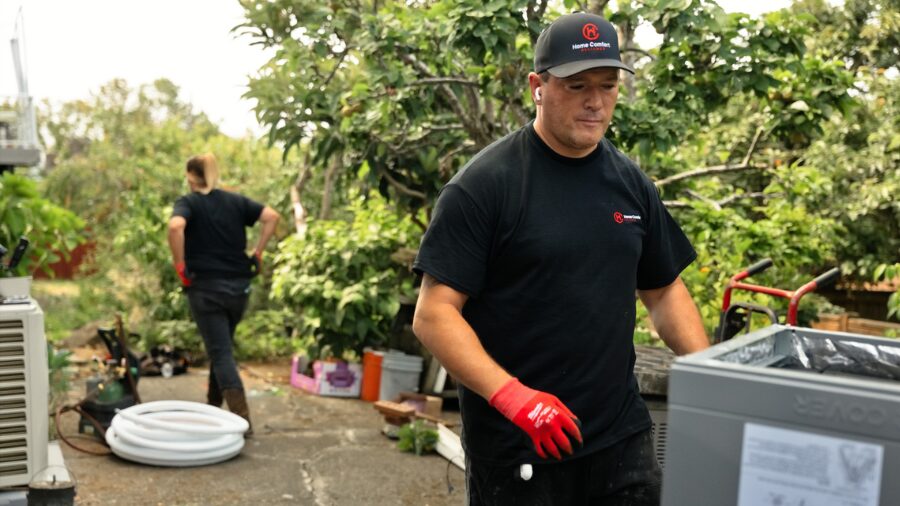
Corey Rattleff heads out most mornings now with a Battlefield Addiction crew. Yard work. Dump runs. Hard, clean labor in the sun for honest money.
It’s not a lot. He doesn’t care. He’s getting paid to show up sober and swing a shovel, and that’s a feeling he said he hasn’t had in so many years he lost count.
He’s not using fentanyl. He’s playing baseball again. His family’s back in his life. He’s got money saved. He’s clearing his warrants. People he used with on the street are calling him and asking how he did it.
Four months clean.
For 13 years, Corey Rattleff was the guy who made you furious
Before all that, Corey was somebody you might recognize.
Thirteen years on the street. Aurora Avenue all the way to Tacoma. He stole to feed his addiction. He’d walk into a store, grab stuff, and walk right out. He racked up warrants. He cycled through the system, in and out, and nobody along the way asked enough of him to make him stop.
He’s the guy in the security camera footage at your neighborhood hardware store. The open drug use. The chaos. The version of this city that makes people shake their heads.
He knows that. He’s deeply sorry for it. And he’s not making excuses.
“There’s no struggle being homeless anymore,” Corey told me on “Seattle’s Morning News.” “You get fed, you get housed, you get bathed, you get high, and all safely. And that’s what they call harm reduction. You can get high safely. But really, it’s just behind closed doors. You’re still at risk of dying, overdosing, and the public doesn’t see it, so they think that the problem is being helped or being fixed, but it’s making it worse in my eyes.”
Inside Seattle’s permanent supportive housing: ‘Every person in that whole complex is high’
I asked Corey what it’s actually like behind the doors of the permanent supportive housing buildings this region has spent hundreds of millions of dollars building.
“To be honest with you, it’s ugly,” he said. “You’re being given the tools to get high, you get permanent housing, you get fed once a day. You can go out and do all your crime and have a safe place to hide. And behind these closed doors, there’s still prostitution. There are still drug dealers. On every floor, five floors, six floors high, every person in that whole complex is high.”
The tools he’s talking about are the pipes, the foil, the straws, and the needles. The county and its providers hand them out. Clean supplies, no questions, so you can use them without dying tonight. That’s what supporters say harm reduction does.
But fentanyl changed everything. It’s killing thousands a year here in Washington. Many of those deaths happened with safe tools in hand.
“Every single one I’ve been in has been just like that,” he said. “They pick us up off the street, in a tent or an encampment, they’ll put us in a hotel, or they’ll build a brand new building and fill it with us from the streets. If you think that’s going to make us magically stop doing what we’ve been doing for years overnight, you’re crazy.”
Corey has seen it all over the years.
“Now we just have an apartment that we didn’t have to pay for, free for six months or forever, however long. Now we have a safe place to get even more high, increase our habit intake, and get so comfortable that there is no thought of getting my life together because my life’s together.”
45 days in jail, an overdose, four Narcan, and the night everything changed
What finally worked wasn’t a free apartment.
Corey went to jail for 45 days. He says it gave him the first clear-headed stretch he’d had in years.
After he got out, he tried a program through Hope and Chance. But fentanyl found its way in anyway. He took a hit one night, and he overdosed.
Four Narcan. Fifteen minutes of CPR.
“And that’s the first time I ever overdosed,” Corey said. “Being in the streets for 13 years, I never overdosed.”
Thirteen years of fentanyl and meth on the street, and he never went down. The first time he overdosed was after he’d started trying to get clean. That’s how razor-thin the margin is.
That overdose was the moment it turned. His mother reached out to Andrea Suarez at We Heart Seattle, who stepped in and got him into a 21-day inpatient program at Evergreen Health in Monroe, and he finished it. From there, he found Battlefield Addiction and Art Dahlen.
Corey told the story on the air. He went to a Tuesday support group meeting at Battlefield’s Kent location. After the group, he walked up to shake Art’s hand for the first time and thank him for having him out.
Art didn’t shake it. He looked at Corey and asked what he thought he was doing. Go get your stuff. You’re moving in tonight.
“I was like, ‘Damn,'” Corey said. “I went and packed my stuff, came back 10 minutes later, and I’ve been there for a couple of months.”
No waitlist. No intake assessment. No bed-available-in-three-weeks. A handshake turned into a home the same night. That’s what it looks like when somebody actually catches you, when somebody demands that you get better.
Corey Rattleff’s mother, Rebecca, got her son back after 13 years
Rebecca Rattleff watched all of it. The 13 years. The streets. The overdose. The recovery.
After Corey got clean, she wrote on Facebook about what it meant.
“I haven’t seen his beautiful, amazing smile and heard his laugh in 10 years or more,” she wrote, “and now I get to see it and hear it almost daily.”
She didn’t soften what saved him.
“They need inpatient, detox, sober houses, the right support,” she wrote. “Not free supplies, funds, housing, and the ability to stay in their addiction and the help killing themselves.”
“I have my son back in my life, off the street, out of addiction, and happy,” she wrote. “That is the biggest, best gift I could have ever been given.”
Why Battlefield Addiction and We Heart Seattle get no state funding
The programs that pulled Corey out of 13 years of addiction and crime don’t get government money.
Art Dahlen said it on the air.
“Our organizations don’t get any money from the government,” Art said. “We are the organizations that are trying to get people clean and independent, and we need to raise money. We’re just fighting with every dollar we’ve got to help somebody reach their potential.”
We Heart Seattle is paying part of Corey’s program costs out of its own fundraising. Many of their donors are the same. Two organizations stretching every dollar while the system that Corey said kept him high collects the federal grants, the capital campaigns, and the regional contracts.
Pause on that. The model with the 282% jump in overdose deaths inside its buildings gets the money. The programs that got Corey clean, housed, and working passed the hat.
RELATED STORIES



Snohomish County just voted to give recovery programs a fair shot at the same money
There’s change in the air.
Last week, the Snohomish County Council adopted Ordinance 26-019 after nearly three hours of public testimony. People in recovery stood up and spoke for it.
The ordinance is short and simple. Snohomish County can no longer require or reward Housing First as a condition of grant funding. It can no longer push sobriety and treatment programs to the back of the line. Every approach competes on equal footing. The recovery house competes with the low-barrier shelter. The program that asks something of people competes with the program that asks nothing.
That’s the whole idea. Let the approaches compete, and fund what works.
Councilmember Nehring, who brought the package forward, called it a step toward balancing compassion with accountability to protect the most vulnerable.
Snohomish County didn’t ban a single program. It didn’t kick anyone off the street. It just stopped putting its thumb on the scale for one model that, by the region’s own overdose data, is failing the people inside it.
Washington should fund recovery, not just harm reduction
Now put the question to Olympia and King County.
Put sobriety and treatment programs on the same footing as Housing First in state grant criteria. Stop forcing one model. Let the programs that actually get people well compete for the money on equal terms.
If a recovery house gets people sober, working, clearing their warrants, playing baseball again, and back with their families, it shouldn’t have to pass the hat while the program down the street collects the grant.
Corey’s got a long road ahead. Recovery is rough. It’s not a straight line, and it’s not easy.
But right now, on a morning in June 2026, he’s heading out to swing a shovel with a crew that grabbed him by the shoulders and said, ” Move in tonight. ” He’s got money in his pocket. He’s got his family back. He’s got people who used with him on the street calling and asking how he did it.
That’s what recovery looks like when somebody actually asks something of you. Not warehousing, not keeping people sick inside a system with no push toward anything better. But a life getting built.
Charlie Harger is the host of “Seattle’s Morning News” on KIRO Newsradio. You can read more of his stories and commentaries here. Follow Charlie on X and email him here.