Seattle Mayor Wilson signs first-of-its-kind grocery pricing law
Oct 5, 2026, 2:00 PM
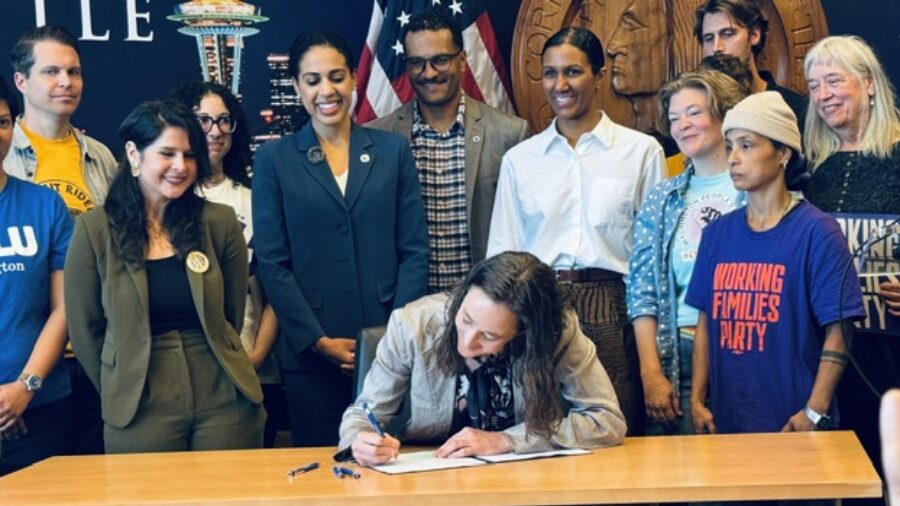
Seattle Mayor Katie Wilson signs a first-of-its-kind grocery pricing policy into law. (Photo: James Lynch, KIRO Newsradio)
(Photo: James Lynch, KIRO Newsradio)
A shopper’s browsing history, social media activity, or personal profile should not determine the price they pay for groceries. That’s the principle behind a new law signed by Seattle Mayor Katie Wilson this morning.
Approved by the Seattle City Council on Sept. 22, the Fair and Transparent Pricing policy aims to prevent large grocery retailers from using sensitive personal information to charge different customers different prices. Seattle describes the measure as the nation’s first city-led policy of its kind.
“People have been clear: they don’t want their data fed into algorithms that decide how much they pay at the grocery store,” Wilson said. “Everyone deserves transparent pricing and equal treatment, not hidden systems that charge some shoppers more than others.”
The policy applies to large online and brick-and-mortar grocery retailers. It prohibits using information such as employment status, race, gender, browsing history, social media activity, or chatbot conversations to manipulate the prices customers pay. Prices must be clearly posted and available to all shoppers.
Traditional coupons and transparent discounts for groups such as seniors and veterans remain protected.
RELATED STORIES



Supporters say Seattle pricing law will protect grocery shoppers’ personal data
The measure arrives as families face rising grocery costs and concerns about how companies collect and use consumer data.
Seattle City Councilmember Alexis Mercedes Rinck said the policy is intended to put limits on how businesses can use personal information, particularly when households have less money to spend on food. Seattle Councilmember Dionne Foster echoed that statement.
“Grocery prices should be based on the cost of an item, not how valuable the customer’s information is to the company selling it,” Foster said.
Supporters argued the rules will protect shoppers from pricing systems that use data to estimate what an individual might be willing, or able, to pay. Grace Gedye of Consumer Reports said people should not pay more for basic necessities because of information collected about them online or elsewhere.
Union praises Seattle pricing policy as major grocery chains oppose it
UFCW 3000 Secretary-Treasurer Sean Embly praised the partnership between workers and elected officials, saying it could help protect neighborhood stores from “predatory practices that put profits over people.”
The policy was developed over several months with labor partners, industry stakeholders, and community advocates.
Most major grocery store chains oppose the measure.
Follow James Lynch on X. Read more of his stories here. Submit news tips here.