Crusade underway to keep Seattle Opera from outsourcing set design
Apr 17, 2017, 10:21 AM | Updated: 12:27 pm
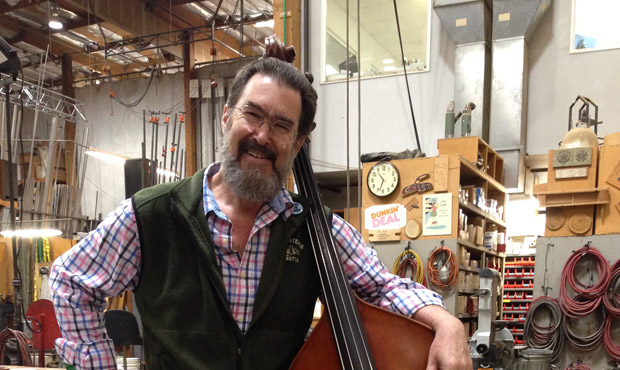
Michael Moore is fighting to keep the Seattle Opera from outsourcing its sets. (KIRO Radio)
(KIRO Radio)
A piece of the local art community is going away.
It’s a small warehouse-type building next to the PACCAR Plant in Renton. The sign on the front door says “Seattle Opera Scenic Studios.” And inside, welders, painters, and carpenters are building stage sets.
RELATED: Hidden past of Seattle Center’s ‘orphan’ arena quietly being demolished
Since 1980, Michael Moore and his crew have been designing and building the gigantic set pieces used by the Opera, the Fifth Avenue, and other local companies. But a few weeks ago, Seattle Opera sent out one of those letters every arts organization sends out sooner or later.
“Seattle Opera has recently had to make some difficult decisions in order to ensure we have a sustainable future” it began.
And one of those decisions was to shut down the scene shop and use it for storage.
And Moore is on a crusade to keep it open.
Seattle Opera fight
This Michael Moore is not to be confused with Michael Moore the filmmaker, who made his name fighting outsourcing. But Seattle’s Moore says that’s exactly what’s happening here.
When I met Michael, he was wearing a button that said: “Save Our Shop.” He said they got word on March 15 that the company needed to save money and that closing the facility would save $500,000 a year.
Would this mean we would never see a locally built opera set again?
“Yes, it would have to go certainly out of the area, out of state, possibly out of the country,” Moore told me. “There is a shop in Whales. I know that Aidan is associated with the Welsh National Opera. It’s a big shop, about the size of this. And for a mere $8,500 per shipping container and a small wait of 35 days, you can have scenery built over there and ship it over here.”
The Aiden he mentioned is Aidan Lang, general director of Seattle Opera, who says they just can’t afford to keep the shop open anymore. But Moore can’t let it go without a fight. He considers it an important cultural asset — and part of Seattle’s history.
“What the opera could do would be to reach out to the other organizations and say, let’s collaborate on keeping the shop alive and that would keep it more desirable to give to the Opera and help them in this time of financial need,” he said. “But closing the shop has the opposite effect — it hurts the entire arts community and makes the opera look bad.
“… In my opinion, Seattle Opera belongs to the citizens of Seattle and what they want to do needs to be heard by the Board of Trustees and I urge anyone who is interested in keeping scenery construction and the arts alive and healthy in Seattle to write to the Board of Directors and share their opinions.”
But according to the Opera, it’s the donors who’ve forced this decision. They can’t keep making up the Opera’s deficit every year.
Lang is currently out of the country but said through his press contact that times have changed. You can use digital projection now instead of painting backdrops. New productions will either be rented from other companies or put out to bid.
And as much as they’d like to keep the scene shop open, it’s just not practical any longer.
Whatever happens, Michael will keep busy. His hobby is flying small planes, towing giant banners over public events, and he also plays bass with the Seattle Philharmonic Orchestra. In fact, he keeps his bass nearby — so we did a quick duet:
Follow @http://www.twitter.com/thedaveross
-
 Tune in to KIRO Newsradio weekdays at 5am for Dave Ross on Seattle's Morning News.