‘I’m pretty angry’: Washington Secretary of State blasts federal voter fraud investigation
Sep 1, 2026, 4:00 PM
Washington is one of nine states being targeted in a new federal voter fraud crackdown.
Department of Homeland Security (DHS) agents are arriving in several states to investigate voter fraud, including Washington, starting Tuesday. Other states to be investigated include Wisconsin, Missouri, Georgia, California, Pennsylvania, Nevada, New York, and Connecticut.
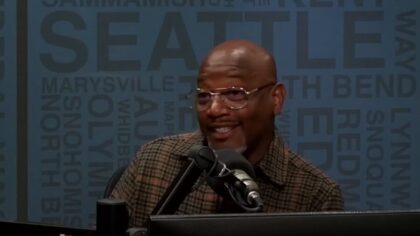
“I wish they would just pick up the phone and call us. Instead, we got to read about it in the news,” Secretary of State Steve Hobbs said on “The Gee and Ursula Show” on KIRO Newsradio. “We’re reaching out to other states to see if they have been contacted. We will attempt to fight when we need to fight, and we will cooperate when we need to cooperate, but we don’t know anything because we just heard about it in the news.”
Washington joined a 25-state lawsuit in late August challenging a new U.S. Postal Service rule that stems from an executive order President Donald Trump signed in March restricting mail-in voting. The rule requires ballot envelopes to carry USPS-approved barcodes and directs the Postal Service to deliver ballots only to voters on a federally approved list. A federal court issued a temporary restraining order blocking the rule, with a hearing scheduled for Sept. 3 on a longer-term injunction; without it, the rule would take effect Sept. 10.
When asked how he felt about the timing, Hobbs didn’t hold back.
“I’m pretty angry, to tell you the truth,” Hobbs said. “We just keep on getting monkey wrenches thrown at our face. We need help from the federal government because of cybersecurity attacks from nation-state actors, influencing operations. And the feds are usually with us, and they’re not. Instead, they’re doing this. They’re trying to undermine our elections.”
Hobbs said the current dynamic marks a shift from Trump’s first term.
“It wasn’t like this in the first Trump administration,” Hobbs said. “He would say things, but the government itself — Department of Homeland Security, CISA — they would help us. They would assist us.”
Washington is one of several states, along with Oregon, Hawaii, Colorado and Utah, where more than 90% of voters cast ballots by mail, and the state mails ballots to more than 5 million registered voters each election.
Experts have stated there is no evidence that widespread voter fraud has occurred in recent elections.
The barcode dispute and what voters should do if the rule takes effect
Hobbs said the Postal Service rule creates a practical problem regardless of intent, since the state’s ballot return envelopes aren’t equipped with the individual outgoing-and-return barcodes the rule would require.
“It’s horrifying, because it was the USPS rulemaking that said you had to put these individual barcodes on it,” Hobbs said. “It begs the question — was this on purpose to cause this issue, the holdup? This is me, unfortunately, being paranoid because of the situation we’re in currently.”
According to Hobbs, the state’s contingency plan, if the rule ultimately takes effect, is to steer voters toward drop boxes rather than the mail.
“If this rule stands, take it to a drop box,” Hobbs said. “The good news is Washingtonians have been using drop boxes more and more. In fact, the latest percentage was 75% of voters using the drop box. We would just really push that hard if our backs are against the wall and we have to live with this rule.”
Voters should consider using drop boxes regardless of how the legal fight plays out, pointing to a separate change in how USPS handles ballot postmarks.
“You should do that anyway, because the USPS changed how they do postmarks,” Hobbs said. “If you’re a week out from the election, you really should take your ballot to a drop box to have it counted.”
RELATED STORIES

WA won’t share voters’ private data with the federal government
Asked whether the federal government could obtain Washington voter data, Hobbs distinguished between public voter rolls and protected personal information.
“If anyone wants the public data, they can get it,” Hobbs said. “What we’re not going to do is give you the private information — last four of your Social Security number, driver’s license, full date of birth. The reason I’m not going to do that is because it’s against state law. It’s actually against federal law, because there’s the Privacy Act.”
Hobbs, who was deployed to Kosovo and Iraq during his military service, said the current environment reminds him of tactics he saw used against elections abroad.
“In other countries, when I was deployed to Kosovo, when I was deployed to Iraq, you had mis- and disinformation. You had nation-state actors trying to disrupt an election,” Hobbs said. “I didn’t expect it to happen here, but it almost looks like it’s happening here.”
Watch the full discussion in the video above.
Listen to Gee and Ursula on “The Gee and Ursula Show” weekday mornings from 9 am to 12 pm on KIRO Newsradio.