‘It doesn’t look good’: King County council member deflates return-to-office protest arguments
Apr 26, 2026, 5:00 AM

King County Executive Girmay Zahilay is actively working to enforce a mandate requiring King County employees to return to the office at least three days a week — something King County Councilmember Reagan Dunn has been demanding for a long time.
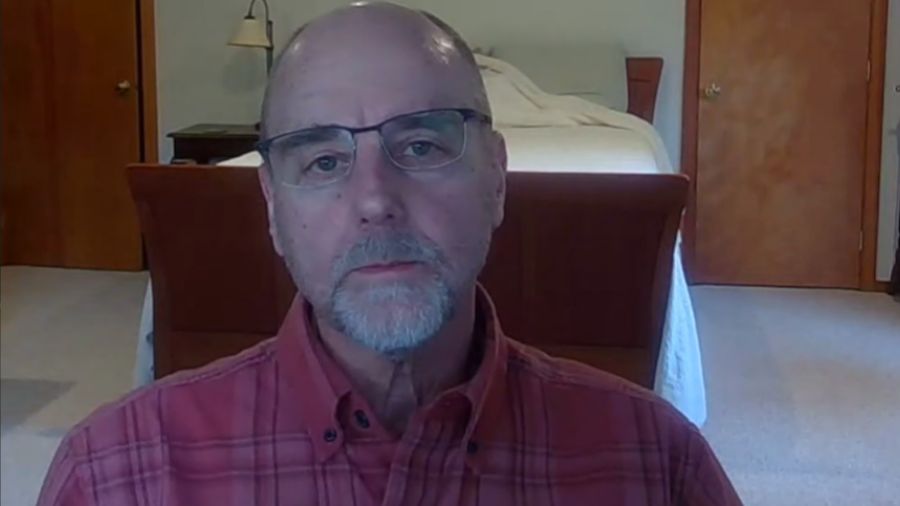
“There’s a new sheriff in town bringing employees back to King County so they can hang out around the water cooler and collaborate and do the people’s work and open up the permitting offices and all the places you need to go to get your documents and forms and everything else,” Dunn said on “The John Curley Show.” “Sadly though, they decided to protest and come into the office, which I appreciate, just because they didn’t want to come back into the office.”
In response to the mandate, roughly 75 King County workers packed themselves into the lobby of the county’s downtown Seattle office building Tuesday to protest the return-to-office requirement. Dunn referenced the public outcry in the comments of a Seattle Times article covering the protest, in which people wrote, “Wait, you don’t want to come in three days a week? That’s too much for you?”
“It doesn’t look good, I don’t think, for the employees to make that kind of political statement,” Dunn said.
“I’m going to take their point of view,” KIRO host John Curley countered. “If they can still do the work, whatever that is, and if you have metrics to prove that they’re doing the work, the upside to society is, No. 1, they’re not on the roads. No. 2, they’re at home, and maybe they’re doing the work, and they’re happier, and they are saving money, and they’re staying at home. So there are benefits to them not asking them to come in, right?”
“I think there’s something to be said about that, and that’s why we’ve requested a three-day in-office work week,” Dunn responded. “But the problem with your assumption is that is not what’s happening. I mean, a lot of the offices that people come into, where they’re supposed to be, for example, the administration building, are not open. You can’t get there. I showed NPR around the facilities here the other day, and she got to see how it’s just crickets in these buildings during the middle of the work week. We’re not getting the efficiency we need. We’re not getting the collaboration we need. Requests for information aren’t getting back as quick. Services aren’t being done. That’s the concern.”
The protest was organized by the PROTEC17 union. Union leaders said employees have worked remotely for years without issues and that the mandate lacks clear reasoning.
The county has approximately 18,000 employees in total, of whom 2,500 are represented by PROTEC17.
RELATED STORIES



Local economy suffers from increased remote work
Curley shared that, in Germany, in response to local economies taking significant hits as more employees stay home (and not spend their money on food, dry cleaning, etc.), the country implemented a tax on remote workers to stay home, which is then distributed to help local businesses.
“Interesting idea, I’m open to it, John. The problem is, these are union-protected employees,” Dunn said. “They’re paid with a salary that assumes they’re in the office, and much of what the government does is stovepiping. They’ve got to work together. They’ve got to collaborate within their department, and then share that information.”
Watch the full discussion in the video above.
Listen to John Curley weekday afternoons from 3 – 7 p.m. on KIRO Newsradio, 97.3 FM. Subscribe to the podcast here.
Follow @https://twitter.com/jcurleyshow


-
 Tune in to KIRO Newsradio weekdays at 3pm for The John Curley Show.