Harger: Seattle took in 40% more in taxes, spent all of it, and now wants the highest sales tax of any major city in America
Jul 29, 2026, 6:58 AM | Updated: 5:26 pm
This fall, Seattle voters will decide whether to raise the sales tax to expand bus service, and whether to boost the library levy. Both are admirable goals. Who doesn’t want better bus service and world-class libraries?
And Seattle voters are generally open to raising taxes on themselves. Six years ago, four out of five of them approved the last transit levy. That’s their prerogative.
I don’t live in the city. I work here, I pay sales taxes here, I eat lunch here, and I’ll keep spending money here regardless of how November goes. My property tax bill doesn’t change either way.
The squeeze lands on people with a Seattle address. A little more comes out of their wallets every year, and they ought to see the whole bill before they vote on the next piece of it.
The city’s general fund is taking in 40% more than it did in 2019. Past $2 billion a year now.
The Census Bureau’s American Community Survey puts the median Seattle household income up about 16% over the same stretch.
The city’s income grew 2.5 times faster than yours. And it’s still short. Seattle is projecting a $175 million deficit next year.
If you got a 40% raise at work and came home deeper in debt than before the raise, your family would have questions. Seattle voters should have the same ones.
Where did it go? Mayor Wilson herself put the real number on camera: the structural gap is $400 million, papered over by raiding a tax that was supposed to build housing. Half the JumpStart payroll tax now covers general operations. Hundreds of millions in federal pandemic money stood up new programs that outlived the funding. Rate hikes, property tax levies, and a proposed sales tax increase that would give Seattle the highest combined rate of any major American city are all moving through the council at the same time, and nobody in City Hall is adding them up. One councilmember tried. He got zero votes.
Councilmember Bob Kettle is the one putting it in writing
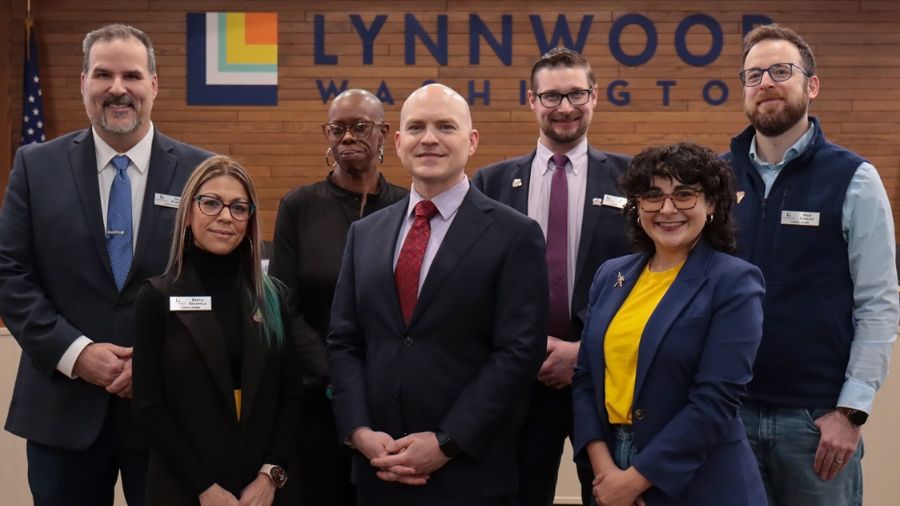
Seattle City Councilmember Bob Kettle, who does live here, sent a letter to Mayor Katie Wilson this week laying all this out. Carleen Johnson at The Center Square was the first to report on it.
Kettle ran the same arithmetic. Revenue climbing, deficit climbing with it, a shortfall that “has ballooned to $175 million.” His diagnosis: “We have asked voters to shoulder additional property tax levies for separate programs every year for the past six years.”
The taxes pass one at a time. A transit levy here. A library levy there. A utility rate bump on a Tuesday. Each one sounds reasonable on its own, and nobody in City Hall is assigned to add them up.
Kettle proposed three fixes: budget from priorities instead of rolling over last year’s spending, ask whether the city should be in every line of business it’s currently in, and rework the payroll tax so it stops chasing the tax base out of town.
He also tried to trim the transit measure. Not kill it. Just a haircut. He got zero votes, so he voted yes with everyone else. In Seattle, even the budget hawk lands on the same wire.
Where the 40% went: The JumpStart transfer
Kettle’s $175 million is the polite version of the number.
The mechanics are simple. Seattle’s proposed 2026 budget moves about $200 million from the JumpStart payroll tax fund to the general fund, roughly half of the tax’s total revenue.
Wilson said it plainly on the Seattle Channel.
“The only reason why it’s $150 to $200 million instead of $400 million is because of the transfers from JumpStart that we have started doing year after year,” she said. “Even if we wanted to paper it over with one-time fixes, we’re kind of out of tools.”
Four hundred million.
That’s the hole underneath the $175 million.
To her credit, Wilson is pulling back on it. Her proposed budget cuts the transfer by $75.5 million from what the previous council endorsed, and that’s part of why next year’s gap looks the way it does.
The other half of the answer sits in a city performance report published last July. Seattle took in more than $300 million in federal pandemic money and used it to launch 25 new programs. The city’s own summary says some of them “will continue to be offered in 2026 and beyond.” The federal cash ran out last year.
One-time money. Ongoing programs.
So the housing tax covers the light bill, the pandemic programs outlived the pandemic, and the council is asking you for a sales tax on top of both. Other than that, the budget is fine.
Two Tuesdays at Seattle City Hall
Take the last two Tuesdays in July.
On July 14, the council voted unanimously to expand the city’s Utility Discount Program, broadening eligibility for both Seattle City Light and Seattle Public Utilities in a single ordinance. Roughly 31,000 more low-income households qualify.
A week later, the council unanimously approved back-to-back Seattle City Light rate hikes, 9.5% two years running. About $20 more a month once both land.
Raise the price for everyone, hand a coupon to a few, and file it under affordability.
The same day, the council put a transit measure on the November ballot. A county transportation tax already enacted by the district board takes Seattle to 10.65% in January. If voters add the transit measure, the combined rate hits 10.8%. The Tax Foundation’s latest major-city comparison already ranked Seattle first in the nation, before either increase.
Number one. Out of every major city in the country.
Seattle City Light’s costs did rise. Wire and cable prices have nearly doubled since 2020, and transformers aren’t far behind.
Groceries are up 33%, and Seattle keeps asking
Zoom out from City Hall to the checkout line.
The Associated Press reported this week that grocery prices in U.S. cities are up 33% since 2019.
Housing is up. The median Seattle household is running harder to stay in place, and every year for six years, the city has come back to that same household with a new, separate, individually reasonable ask.
The transit measure’s defenders make a fair case. The median household pays about $29 a year, and the money buys tens of thousands of additional bus trips and free passes for low-income riders. Councilmember Alexis Mercedes Rinck argues that good transit lets families skip car ownership entirely, and with cars drifting further out of reach, she has a point.
But $29 for transit sits on top of the new electric rates, on top of a library levy, on top of six straight years of property tax levies, on top of the highest sales tax of any major city in the country, applied to groceries that already cost a third more.
Each one is a little. Together it’s a lot.
RELATED STORIES


Bellevue is running the control group
The Downtown Seattle Association, a business advocacy group, just published a comparison of Seattle and Bellevue. Take their framing with a grain of salt, but the numbers underneath come from the King County Assessor.
Since 2019, Seattle’s property tax rate has risen by 48%. Bellevue’s fell 16%.
Same state. Same laws. Same construction costs, same tariffs, same regional economy. Ten miles apart.
Downtown Seattle office vacancy went from under 7% to 32%. Bellevue’s office values held while Seattle’s fell by nearly half. And per the association’s math, Seattle’s payroll tax costs affected employers as much as $9,390 per job. Bellevue charges zero.
When the businesses leave, though, their share of the tax bill doesn’t leave with them. It moves to whoever stays. Residential property owners now carry 83% of King County’s tax base, up from around 65%, according to King County Assessor John Wilson.
That happens with every new levy. The base is shrinking while the asks keep growing.
Vote however you want. Just add it up first
Forty percent more revenue, and the city is further behind than when it started. You deserve to know that before you vote on the next ask.
Maybe better buses are worth $29 a year to you. Maybe the library levy is too. In November, that’s your call, and there are honest cases for both.
Kettle is asking for a pause. Add up the total bill and understand what it costs before adding another layer. For that, he got a polite hearing and zero votes.
So the adding up falls to you, at your kitchen table, with your grocery receipts.
Go into this clear-eyed. Nobody at City Hall is going to hand you a calculator. They’re too busy handing you the next bill.
Charlie Harger is the host of “Seattle’s Morning News” on KIRO Newsradio. You can read more of his stories and commentaries here. Follow Charlie on X and email him here.