Harger: Mayor Katie Wilson dodged press questions. Governor Ferguson built a system to do it statewide
May 4, 2026, 6:13 AM | Updated: 1:04 pm
In a democracy with genuine political competition, bad ideas get challenged at the ballot box. Reporters ask tough questions. The other party pushes back. Voters have something to compare.
When one party runs everything, the press becomes the last line of accountability. Which is exactly why it matters when leaders decide the press is a problem to be managed rather than a function to be answered.
Seattle and Olympia are getting very good at this.
Katie Wilson and the press conferences on her terms
KOMO journalist Chris Daniels was at a recent Mayor Katie Wilson press conference. He asked about surveillance cameras. Wilson said that wasn’t the subject of her press conference. Her communications staff physically stepped in. Daniels stood his ground calmly and professionally. And kept at it. After several minutes, Wilson came back and answered the question. Good for her for eventually realizing how it looked. Good for him for making sure she did.
At a separate press conference, KIRO 7 reporter Jake Chapman asked Wilson about Starbucks moving thousands of jobs to Nashville. She said it wasn’t what the press conference was about, gave a curt answer, and moved on.
Some context worth noting: Before becoming mayor, Wilson worked sporadically for the Transit Riders Union. Sometimes paid, sometimes not, along with occasional odd jobs. This is, by any honest measure, her first real job. Not just her first leadership role. Her first real job. The mayor of a major American city needs to understand that reporters don’t come to press conferences to stay on script. That’s not how this works.
Both Daniels and Chapman deserve credit. Pushing back on a mayor who doesn’t want to answer questions is not a neutral act. It strains relationships with communications offices. It creates friction. They did it anyway, because that’s the job.
The job has nothing to do with whether the reporter agrees with the policy. A good reporter asks hard questions even when they personally support what the mayor is doing. Because a sizable number of their audience have questions, and someone has to ask them. The reporter’s job is to think of the questions the public would want answered and ask them. Regardless of where the reporter stands.
Seattle is the 11th-largest media market in the country. We have a lot of young, earnest reporters working hard and learning the craft. What some people read as bias is often just inexperience. Green reporters sometimes pull their punches. They worry about access. They want to be liked. That’s human. But it’s also where the habits that erode accountability begin.
Young reporters learn by watching how the experienced ones handle it. The way Daniels held his ground at that press conference. The way Chapman kept pushing at a separate event. The way a reporter at Axios dug through a public disclosure request last week and found a story that state officials didn’t want told. Those moments matter. That’s how the craft gets passed on.
RELATED STORIES



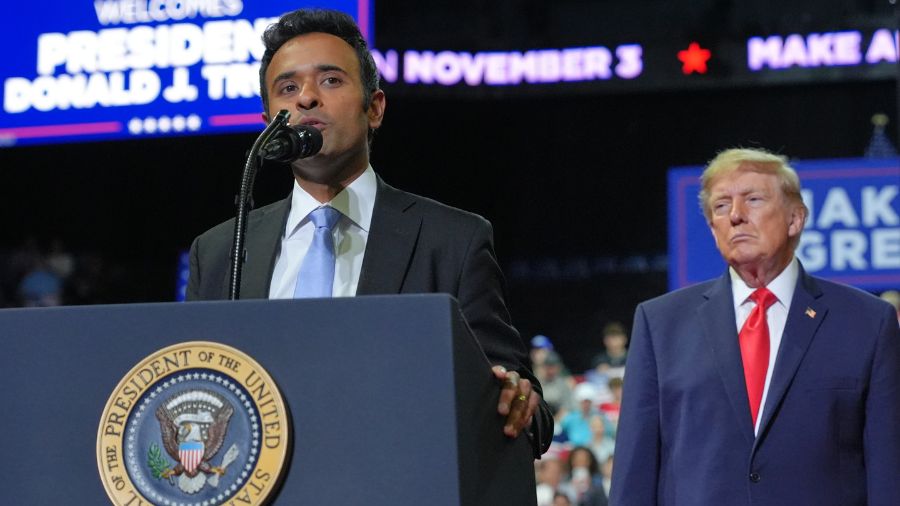
Trump did it too. The impulse to control the press follows power, not party
The impulse to control the press has no party affiliation. It follows power.
The Trump administration barred The Associated Press from press events because the publication wouldn’t adopt the term “Gulf of America” in its style guide. A federal judge later ruled that the move violated the First Amendment. The White House also took control of daily press pool assignments, deciding which reporters get to cover the president, and stopped publishing transcripts of Trump’s remarks. U.S. Secretary of War Pete Hegseth implemented new Pentagon credentialing requirements so restrictive that virtually every major news outlet walked away from access rather than accept them.
If you found any of that repellent, good. You should have. Controlling who gets to ask questions and punishing outlets that don’t play along is exactly the kind of behavior that makes a free press impossible.
Now look at what’s happening in Olympia.
Governor Ferguson’s media approval policy: Agencies can’t talk to reporters without permission
Last week, Axios Seattle published a story that deserves more attention than it got. Using a public disclosure request, the outlet obtained internal emails from current and former state officials. The reporter behind it was Melissa Santos, who covers the state Capitol in Olympia. What she found was remarkable.
Ferguson’s office requires state agencies to get approval before responding to most media requests. Interview requests. Press releases. Talking points. Follow-up questions from reporters. All of it must go through the governor’s office first. The policy took effect last July.
Three former governors’ staffers told Santos no such policy existed under their administrations.
The results have been predictable. Rachelle Alongi, a former communications manager at the Health Care Authority, described the process as “grueling,” “painful,” and a “continual barrier” causing delays of days or weeks. Agencies have missed reporter deadlines entirely. One agency was instructed to decline all interview requests about WIC food aid funding, specifically to avoid questions about the state budget shortfall.
Ferguson was personally involved in reviewing and editing certain materials, which contributed to the delays. Santos obtained records showing that a Washington Department of Transportation (WSDOT) news release about the Revive I-5 construction project went through multiple rounds because it wasn’t what the governor was looking for.
“The governor personally going back and forth over what a press release should look like on I-5 construction really undermines the people who are working at the agencies who do that communication day to day and who are experts in that,” Santos told FOX 13.
The governor was also personally editing talking points for the state epidemiologist on bird flu for a response to Politico.
Santos is the kind of reporter who makes comms offices nervous, which is exactly the kind of reporter the public needs.
Ferguson’s office told agencies: Don’t tell reporters this policy exists
Here’s what moves this from inconvenient to something worse.
Agencies were explicitly instructed not to tell reporters the policy exists. Former Department of Health communications director Maranatha Hay wrote to staff, “They’ve requested that their office not be mentioned at all.”
The policy is: We control what you say. And we’d prefer you didn’t mention that we control what you say.
Three of the agency communications officials quoted in Santos’s story have since left for agencies not subject to the same oversight. When the people paid to communicate start leaving because they can’t communicate, that tells you something.
Ferguson media policy: 29 years covering this office. Zero replies
On Oct. 3, I emailed Ferguson communications director Brionna Aho with two simple questions. Is it accurate that all media requests must be vetted and approved by the governor’s office? If so, what’s the rationale?
On Oct. 14, I followed up with Aho and staffer Dan Jackson. Nothing.
On Oct. 15, I sent a third email. I noted that I have covered the governor’s office since 1996, starting as a news director at a community college radio station. That Governor Locke’s staff returned my calls even then. That this is the first time in nearly 30 years I have received zero reply from a sitting governor’s office.
“If the governor’s office is now declining to answer basic questions from one of the state’s largest newsrooms, that raises real concerns about transparency,” I wrote.
Zero response. To any of the three.
The public pays these people to communicate with the media. That’s the job. Not to manage the message. Not to run every question through a bottleneck until the deadline passes. To answer.
Seattle and Olympia media avoidance: when reporters stop asking, the public stops knowing
Washington is a one-party state right now. Democrats run Olympia, King County, and Seattle. That’s not an accusation. That’s a fact. In that environment, the press is the primary check on power. Not the ballot box, at least not every year. Not the opposing party, which hasn’t fielded a viable statewide candidate in years. The press.
When leaders treat the press as a threat to be neutralized, a room full of inconvenient questions to be managed, an institution to be handled rather than answered, the public loses. Not journalists. The public.
Watchdogs ask hard questions. House pets don’t.
Charlie Harger is the host of “Seattle’s Morning News” on KIRO Newsradio. You can read more of his stories and commentaries here. Follow Charlie on X and email him here.