Jake, Spike questions Vision Zero’s effectiveness: ‘No way to achieve zero if you still have cars and people in the same space’
Aug 25, 2026, 9:11 AM

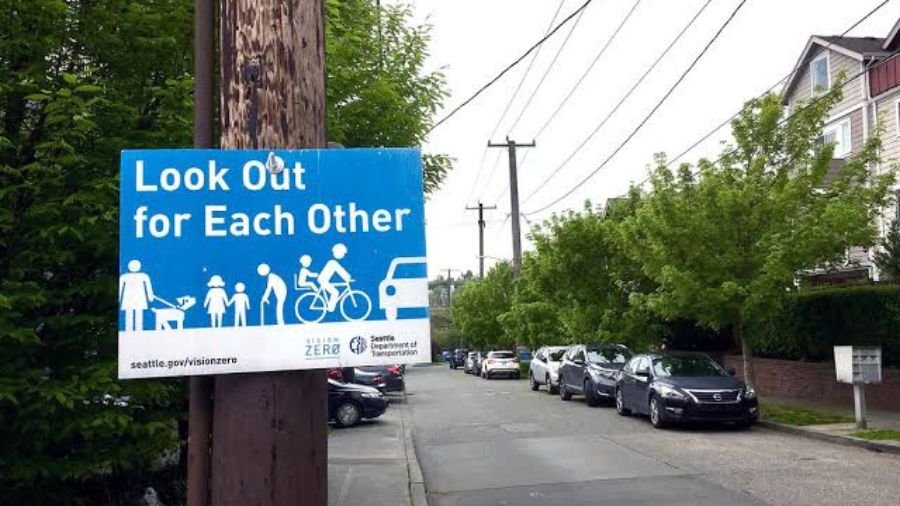
As Vision Zero in Seattle turns more than a decade old, Mayor Katie Wilson signed an executive order Friday directing the Seattle Department of Transportation (SDOT) to accelerate priority safety projects.
Vision Zero aims to eliminate traffic deaths and serious injuries by 2030. The city recorded 27 traffic fatalities last year.
“We are not on track to eliminate serious injuries and fatalities by 2030, and we still see too many headlines, too many ghost bikes, too many families in mourning,” Wilson said at the executive order announcement.
Wilson’s order came the same week the Seattle City Council began advancing a separate measure, the Seattle SAFER Streets Act, that would formally adopt SDOT’s Vision Zero into city code.
Despite the urgent approach from city leadership, KIRO hosts Jake Skorheim and Spike O’Neill questioned whether the plan’s focus on infrastructure and car restrictions addresses the full cause of crashes.
RELATED STORIES


“You can make all the additions to marking, to lighting, to traffic signals, to dedicated bike lanes, to physical barriers,” Spike said on “The Jake and Spike Show.” “You’re only equating half the problem: Drivers knowing where pedestrians will be. The other half of this equation is distracted pedestrians, whether they be on foot or on bicycle, or bicycle or scooter riders who are cavalier about the rules of the road.”
Wilson’s executive order includes prioritizing high-injury streets like Aurora Avenue N and Rainier Avenue S, creating new protected bike lanes, improving intersection visibility, and adding automated speed enforcement cameras.
“I think the problem with this, too, is I feel like they’re saying that any means of restricting cars — getting rid of lanes to make them bus-only lanes or bike-only lanes or pedestrian lanes, no parking spaces — is justified if you’re holding it up against the lens of we have to save these human lives,” Jake added. “We don’t live in a risk-free society. The city still has to function, and if the goal is zero across the board, there’s no way to achieve that if you still have cars and people in the same space.”
Seattle already requires riders to affirm they have a helmet before renting a shared bike or scooter, though the city doesn’t verify compliance at the point of rental. Both Jake and Spike argued that enforcement, not just infrastructure, is the piece missing from the executive order.
“How about every bicycle or scooter that you rent in this city is fitted with smart technology, like a sensor in the front,” Spike suggested. “How about if you roll through a red light, your scooter stops? How about you’re just charged a huge fine? Hit them in the pocketbook. That’s always rule No. 1.”
“We have helmet laws in Washington, in Seattle,” Jake said. “I don’t think I can count on more than a handful of times that I’ve ever seen somebody driving a Lime bike or a Lime scooter wearing a helmet. And we have stories all the time about how the bad head injuries are up through the roof statistically.”
“I think the ne’er-do-wells who aren’t abiding by safety or road rules, they’re probably causing more of this damage than the cars are,” Spike said. “Problem is, they’re the ones that lose every battle with a car.”
Watch the full discussion in the video above.
Listen to “The Jake and Spike Show” weekdays from noon to 3 p.m. on KIRO Newsradio 97.3