Harger: WA Supreme Court could rewrite bail rules in 8 days. The 84-footnote proposal never mentions victims once.
Apr 22, 2026, 5:00 AM
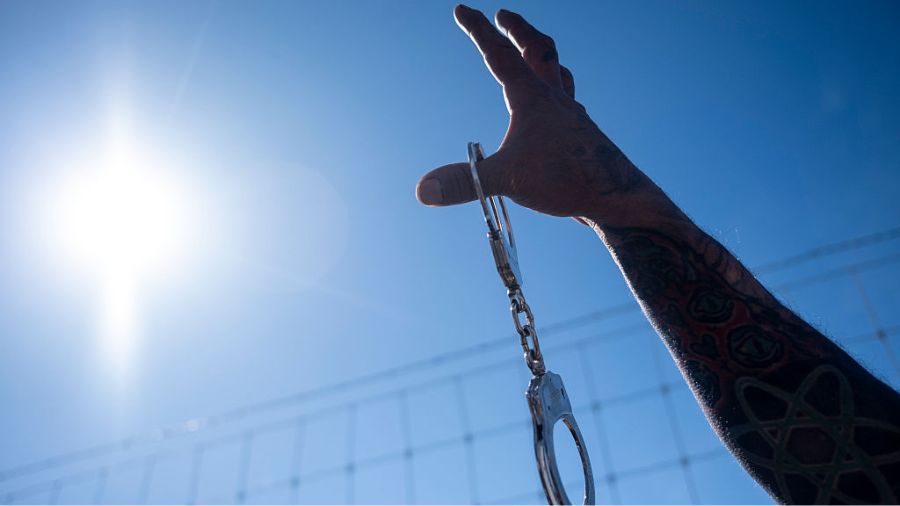
A person raises handcuffs in the air. (Photo: Joel Angel Juarez, Getty Images)
(Photo: Joel Angel Juarez, Getty Images)
Twenty dollars.
That’s what a misdemeanor defendant would post to walk out of jail under a proposed rule change now pending before the Washington Supreme Court. Not $200. Twenty dollars. Ten percent of the $200 cap is paid directly to the court.
No legislative vote, floor debate, or public hearing. Nine justices and a procedural rule-making process. Done.
The public comment period closes April 30, eight days from now.
WA Supreme Court bail proposal bypasses legislature, public vote
A coalition of public defense organizations petitioned the court directly, asking the justices to rewrite the rules governing pretrial release and bail across the entire state. The justices are elected, yes. But a change of this magnitude would normally move through the legislature. Public testimony. Floor votes. Elected representatives answering to constituents on the record.
None of that is happening here. A procedural rule-making process is doing the work of a major policy overhaul.
The court said this proposal has drawn more public comments than any pending rule change it can remember. Most people I’ve talked to have never heard of it. That gap between public impact and public awareness is the whole problem.
Pretrial release proposal would cap misdemeanor bail at $200, require proof of intentional flight risk
Right now, a judge can set bail if there’s a reasonable chance the defendant won’t show up for court. Under the proposed rules, prosecutors would have to prove the defendant is intentionally trying to dodge the system.
Missing a court date isn’t enough. You’d have to miss court repeatedly before a judge could even begin to label you a flight risk. The first missed appearance is essentially a free pass.
For misdemeanors: bail capped at $200, strong presumption that the defendant posts only 10% of that. Twenty dollars.
For felonies: no dollar cap, but the same elevated standard applies. Critics say that the bar is nearly impossible to clear early in a case, before any pattern of behavior has been established. For many non-violent or lower-level felonies, meaningful bail becomes very difficult to impose.
For capital offenses, the proposal strips the special provision that currently allows judges to deny bail outright based on flight risk or danger to the community. Under current rules, a judge weighs the severity of the charge and can simply say no. Under the proposed rules, if the defendant has no prior history of skipping court, the presumption is release.
Murder suspects. Presumed eligible.
Poor defendants and wealth-based detention: the problem the proposal gets right
Supporters raise a legitimate concern. Poor defendants sometimes sit in jail simply because they can’t afford bail, even for minor offenses. Jobs get lost. Housing falls apart. Families absorb the damage. That is a problem worth solving.
But you can address wealth-based detention without stripping meaningful discretion from every judge in the state.
The proposal runs 84 footnotes. Eighty-four citations to research, legal theory, and academic literature, all building the case for who deserves release and under what conditions.
You know how many footnotes mention victims?
Zero.
An entire framework for who gets out of jail, written without asking once what happens to the people on the other side of those cases. The woman with the protective order. The store owner who has been robbed six times. The family waiting for their day in court. Not a footnote.
Crime Victims United, King County prosecutors oppose Washington bail overhaul
The District and Municipal Court Judges’ Association opposes the proposal. The King County and Pierce County prosecutors say it needs to be reconsidered before moving forward. Crime Victims United warned that it would endanger victims, communities, and witnesses.
These are not fringe voices. These are the judges who will be forced to apply these rules, the prosecutors who will be forced to meet an impossible standard, and the advocates who spend their lives working with the people the proposal never got around to mentioning: the victims.
Public comment period closes April 30:
No legislature. No public vote. Nine justices will decide.
Twenty dollars to walk out of jail. A free pass to skip your first court date. Murder suspects presumed eligible for release.
The proposal runs 84 footnotes. Eighty-four citations to research, legal theory, and academic literature.
Zero studies on victim safety. Zero references to victim advocacy organizations. Zero discussion of protective order violations. Zero mention of what happens to the people on the other side of those cases.
The court is accepting public comments here through April 30.
Charlie Harger is the host of “Seattle’s Morning News” on KIRO Newsradio. You can read more of his stories and commentaries here. Follow Charlie on X and email him here.