Seattle City Light voices concerns as Sourdough fire threatens infrastructure
Aug 8, 2023, 9:15 AM
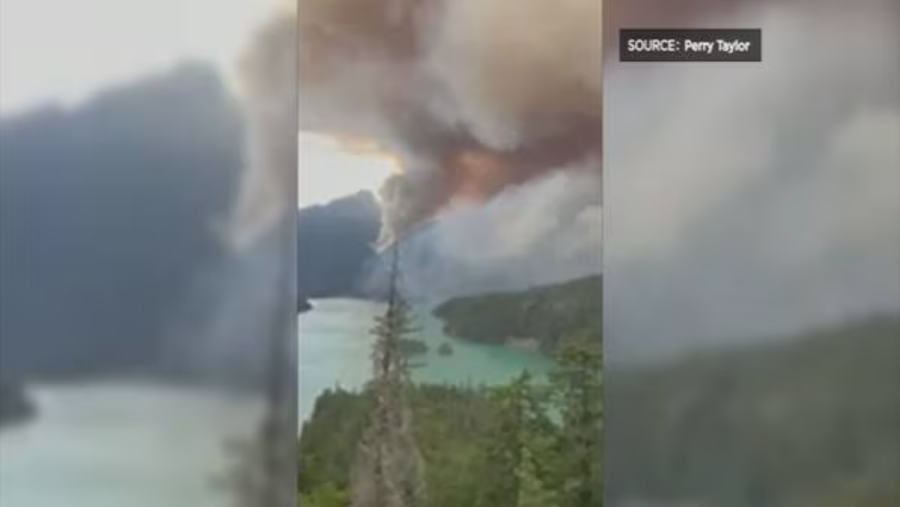
(Photo from KIRO 7)
(Photo from KIRO 7)
Wildland firefighters continue to fight the flames being emitted from the Sourdough fire near Ross Lake. The fire broke out on July 29 near the Ross Lake Recreation Area. The fire, caused by a lightning strike, was believed to have burned almost 4,000 acres but upon closer inspection this past weekend, infrared helicopters discovered the fire burned just over 1,400 acres.
As of Monday, the fire is 0% contained. Unfortunately, steep mountain slopes and rolling debris throughout the area are presenting firefighters with quite a challenge, but there is some hope in the forecast for this week.
At the National Weather Service in Seattle, Science and Operations Officer, Kirby Cook told us that, “more typical Pacific Northwest Washington weather with cooler, cloudier, and high humidities,” will help with mitigating the fire.
Another helpful weather element will be mixed into the forecast, rain.
Cook said, “We have a weak storm system that’s expected to come through the area [Tuesday] into Wednesday and that’s going to bring some widespread precipitation.”
While that precipitation will not put out the fire alone, it will be considered a “wetting rain” which will help slow the fire down and saturate untouched landscapes.
While there is some hope coming in the short-term forecast, there have also been concerns over “close calls” prompting companies like Seattle City Light to step up and help firefighters by offering space for fire agencies to set up command centers, using heavy machinery to clear debris, and offering boat access for crews to travel around Diablo and Ross lakes.
Seattle City Light’s interim Officer for Generation Environmental Project Delivery and Engineering, Andrew Strong told us Monday, “Much of the danger has passed at this point at least to our immediate infrastructure but as you know any fire is dynamic and we’re a wind shift away from having more of our infrastructure threatened.”
That would include City Light’s powerhouses, townships, transmission lines, and three dams with the Skagit Hydroelectric Project, an infrastructure that supplies 20-30% of power and electricity to Seattle City Light customers.
Strong added that Seattle City Light will continue to be “good partners” to fire agencies fighting this fire because they have the resources to help and frankly, “this is infrastructure that can’t be easily replaced and it is very very valuable to the city of Seattle.”