How Washington’s political divisions are driving a troubling rise in recalls
May 19, 2021, 8:59 AM | Updated: 11:37 am
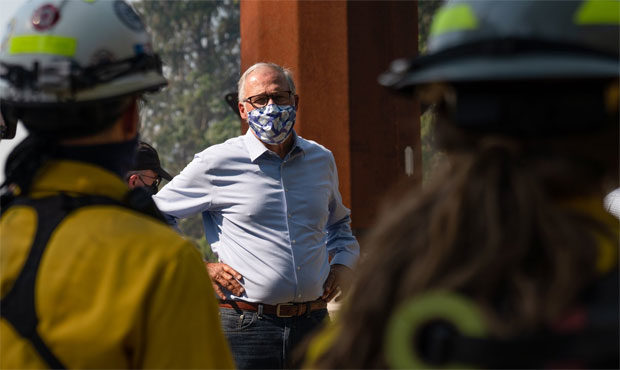
Gov. Jay Inslee is facing a recall bid for the second time since 2019. (Facebook)
(Facebook)

Recall elections have been around in Washington since the early 1900s, devised as a way to hold politicians accountable and put more power in the hands of the people. But in recent years, it’s become more of a political cudgel used by an increasingly divided populous.
Recall campaign, Kshama Sawant dig in for lengthy battle
In past years, recall efforts have largely been used for lower profile elected positions like county clerks, school board members, and port commissioners, with higher profile bids occasionally rearing their heads.
In just the last two years, a new trend has developed, evidenced by attempts to recall state Attorney General Bob Ferguson, Seattle Mayor Jenny Durkan, Snohomish County Sheriff Adam Fortney, Thurston County Sheriff John Snaza, Seattle Councilmember Kshama Sawant, and most recently, the second recall attempt for Jay Inslee since 2019.
As for what’s driving this movement, Washington State University political science professor Cornell Clayton believes there are a few factors at play.
“One, of course, is the pandemic, and the government’s response in terms of lockdown measures, mask mandates, closing schools,” he told MyNorthwest. “That’s obviously produced some pushback, as people have challenged officials who are enforcing or not enforcing those restrictions.”
We’ve seen that in recall efforts against Snaza and Fortney — both of whom had vowed to not criminally enforce certain COVID restrictions implemented at the state level — as well as Inslee, who’s being challenged for his handling of the pandemic.
That said, there’s something much larger at play here, Clayton notes.
“The broader explanation goes beyond these events, and it’s really the result of polarization,” he said. “Not so much along the left-right axis, but polarization along the top-down axis, the populist cultural line that’s dividing our country today, and a lot of the anti-elite sentiment that goes along with that division in our politics.”
That’s a divide that political scientist Boris Shor has been tracking for years based on bipartisan votes in state Legislatures, indicating that many states — including Washington — are seeing less and less cooperation across the aisle by both parties.
We’ve also seen that “top-down” populist battle play out repeatedly over the last year, as the strategy on the right has shifted toward relitigating election results, be it through claims of voter fraud, or attempts to recall leaders they don’t agree with politically.
“This goes back to the populist drive, that if your government’s not doing what you want it to do, then you try to take matters into your own hands and play Constitutional hardball, and use whatever kind of mechanism you can to rein in politicians you don’t agree with, don’t think should have been elected, or don’t think were legitimately elected,” Clayton described.
There’s also a good deal of history to support that theory, given that the push to allow for recall elections — both in Washington and the greater United States — began with the populist movement of the late 1890s.
During that period, recalls, initiatives, and referendums were part of a populist effort led by farmers who sought to assert more direct control of government at the local level. That was then picked in the Progressive Era by middle class voters who wanted to hold politicians more accountable to voters.
Given that, Clayton sees many parallels between the populist origins of the recall mechanism and the deeply divided current political climate in Washington state.
“It makes perfect sense that in an era where we’re having a resurgence in populism that there would be a resort to measures like recall efforts,” he said. “When elected officials don’t pursue the policies that people in this populist movement feel like they should, then they want to take power into their own hands.”
Washington’s recall rules
Despite the rise in actual recall attempts the state has seen in the last year-plus, it’s also exceedingly difficult to remove an elected official through that mechanism. And as University of Washington law professor Hugh Spitzer points out, Washington actually has some of the more stringent recall rules of any state.
As an example, California’s recall laws allow for the removal of an elected official for any number of reasons, from allegations of malfeasance to simply not being satisfied with how that official has performed in their role. The only real requirement is that enough valid signatures are gathered to trigger a recall election.
In Washington, the bar is set significantly higher.
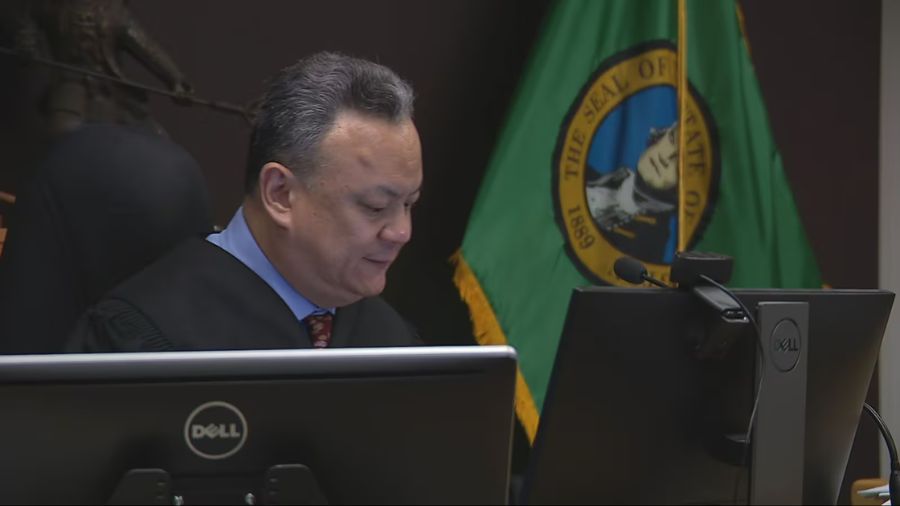
“Historically, Washington’s recall law is quite strict, and as a result, most recall petitions are not permitted to be filed against public officers,” Spitzer told MyNorthwest.
In order to recall an elected leader in Washington, a petition needs to be carefully worded to assert specific claims of “substantial wrongful conduct.” We saw that line drawn in 2019 with a previous attempt to recall Gov. Inslee, alleging that he was “absent from Washington too frequently” while campaigning for president, that he “failed to notify the lieutenant governor of these absences,” and that he hadn’t acted appropriately to address the state’s homeless crisis.
In a response brief filed by Deputy Solicitor General Jeffrey Even, he pointed out that “policy differences such as this form no basis for a recall charge, and these charges are factually and legally insufficient.”
That’s a standard applied frequently by Washington courts over the years, and one that’s actually designed to limit recall petitions from moving forward excepting extremely specific situations.
“I would say that the court draws the line such a way that it tends to discourage recalls,” Spitzer said. “The courts are very cautious and consistent.”
So, where does that leave Washington now? There’s little indication that the frequency of recall petitions will slow any time soon, despite the fact that those efforts have a low likelihood of succeeding. But if the state is going to move forward together, its voters will likely need to find a way to bridge a political divide that’s opened across the country.
Questions, comments, or feedback? Follow Nick Bowman on Twitter at @NickNorthwest to weigh in, or reach him by email at nbowman@bonneville.com.