Reducing traffic stops: Bill proposes warnings by mail, targeted enforcement for safer roads
Feb 10, 2025, 6:22 PM

Traffic in Seattle. (Photo: Julia Dallas, MyNorthwest)
(Photo: Julia Dallas, MyNorthwest)
Democrats have tried to pass a revised traffic safety bill for five years and they are trying again this legislative session.
The House Community Safety Committee held a public hearing on Monday for House Bill 1512, a bill that makes some changes to previous drafts but still faces strong opposition from law enforcement.
The bill is centered around two main components.
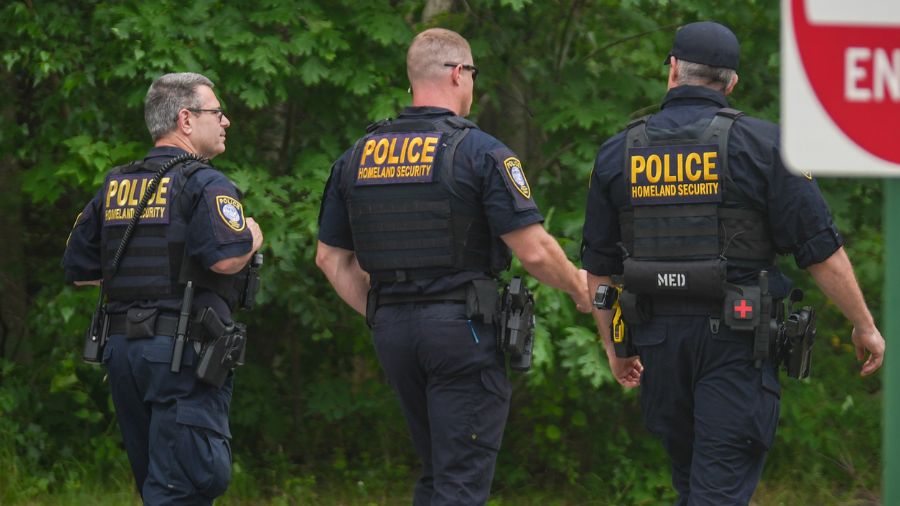
First, it seeks to limit when law enforcement can pull over drivers. Under the bill, officers would still be able to stop drivers for serious violations, such as DUI or speeding. However, for minor infractions that don’t immediately pose a safety risk, officers would no longer be able to stop the vehicle in person.
Instead, they would be authorized to mail a warning, with some believing this could pave the way for future legislation to mail more formal traffic infraction notices. The idea is that fewer people will be detained for small issues, reducing unnecessary tension during interactions with law enforcement.
Second, the bill proposes a grant program aimed at helping low-income drivers with nonmoving violations, like expired registration or missing paperwork. By providing funding for programs such as helmet vouchers, fix-it tickets and repair vouchers, the goal is to give financially struggling drivers a chance to fix issues without facing harsh penalties that often lead to a cycle of violations.
More MyNW politics: Democratic state lawmakers push back against Trump’s deportation policies with new clemency bill
Why supporters back traffic bill
Supporters argue that traffic stops for minor infractions disproportionately impact low-income drivers and people of color.
Data provided by bill supporters shows that Black, Latino and Indigenous drivers are stopped and searched at higher rates than white drivers, even for seemingly minor violations. By allowing a warning to be mailed, HB 1512 is seen as a step toward reducing these disparities and giving people a fairer chance to resolve issues without facing punitive consequences.
The bill also proposes a more targeted approach to traffic enforcement, where law enforcement can focus on violations that actually put public safety at risk, such as speeding or driving under the influence.
Representative Chipalo Street (D-Seattle), the bill’s sponsor, reinforced the need for targeted enforcement.
“One of the things I’m hearing about public safety is that there’s a layer of lawlessness in our society,” Street said.
He emphasized that the bill would allow law enforcement officers to focus on infractions more closely tied to road safety, rather than spending time on issues like expired tabs or minor vehicle defects.
He stated, “If I use a crude example, if there were people walking down the street yielding machetes, I’d rather have our law enforcement officers addressing those folks with machetes, as opposed to writing tickets for parking violations.”
One of the key changes in the bill from earlier versions was the amendment regarding misdemeanor warrants.
While the previous bill prohibited officers from pulling over individuals with a misdemeanor warrant (except in some cases, like domestic violence), the new version allows law enforcement to stop people with any type of warrant.
Street explained that the bill had undergone multiple revisions based on feedback from law enforcement and community groups.
“We’ve been working on this for quite some time,” he said, referencing consultations with over 14 different law enforcement agencies, 12 community groups, and 30 legislators.
Curtis Robinson, from the Washington Coalition for Police Accountability, expressed support for the bill, urging lawmakers to consider the broader picture of public safety.
He said, “We must ask ourselves, what are the agendas behind the resistance, especially when the real question should be, how can we do a better job at protecting all people?”
Other news: Legislation to lower school bond approval threshold stalls on eve of important elections
Law enforcement pushback on bill
As with previous years, HB 1512 faces significant opposition from law enforcement. Police groups argue the proposal, including the mailing of warnings instead of in-person stops, could undermine their ability to ensure public safety.
The main concern is that mailing a warning rather than directly interacting with the driver could make it harder to catch more serious issues.
For example, if a driver with a suspended license or a vehicle linked to criminal activity is stopped only for an expired registration, police worry they might miss a crucial opportunity to investigate further.
Officers also worry that by removing their ability to immediately stop a vehicle, they could miss out on vital information that might surface during a face-to-face encounter.
Brian Smith, police chief for Port Angeles, voiced strong opposition, stating that House Bill 1512 would place “significant restrictions on law enforcement in the area of traffic stops,” and result in a reduction of productivity.
“The possibility of being stopped for a vehicle code violation incentivizes voluntary compliance,” Smith argued.
He also emphasized the importance of traffic stops in uncovering more serious crimes, saying, “During these stops, officers sometimes uncover impaired drivers, stolen vehicles and individuals with arrest warrants.”
James McMahon, Policy Director for the Washington Association of Sheriffs and Police Chiefs, echoed Smith’s concerns, adding, “We reject the implication that an interaction with a law enforcement officer is more dangerous to the public than the equipment violations in this bill.”
McMahon also criticized the bill for undermining the rule of law, suggesting that if legislators wanted to allow drivers to operate vehicles with defective equipment, they should “simply eliminate those provisions from the law.”
A committee vote on HB 1512 has not been scheduled. Its companion bill in the Senate, SB 5512, has not been scheduled for a public hearing.
Matt Markovich often covers the state legislature and public policy for KIRO Newsradio. You can read more of Matt’s stories here. Follow him on X, or email him here.